Batch

A batch is the set of cast copies ordered and produced together, in one resin grade and one color per pour.

Every Batch article of the Vacuum Casting Resources, newest first, each written from published standards, research and makers’ data.

Meaning

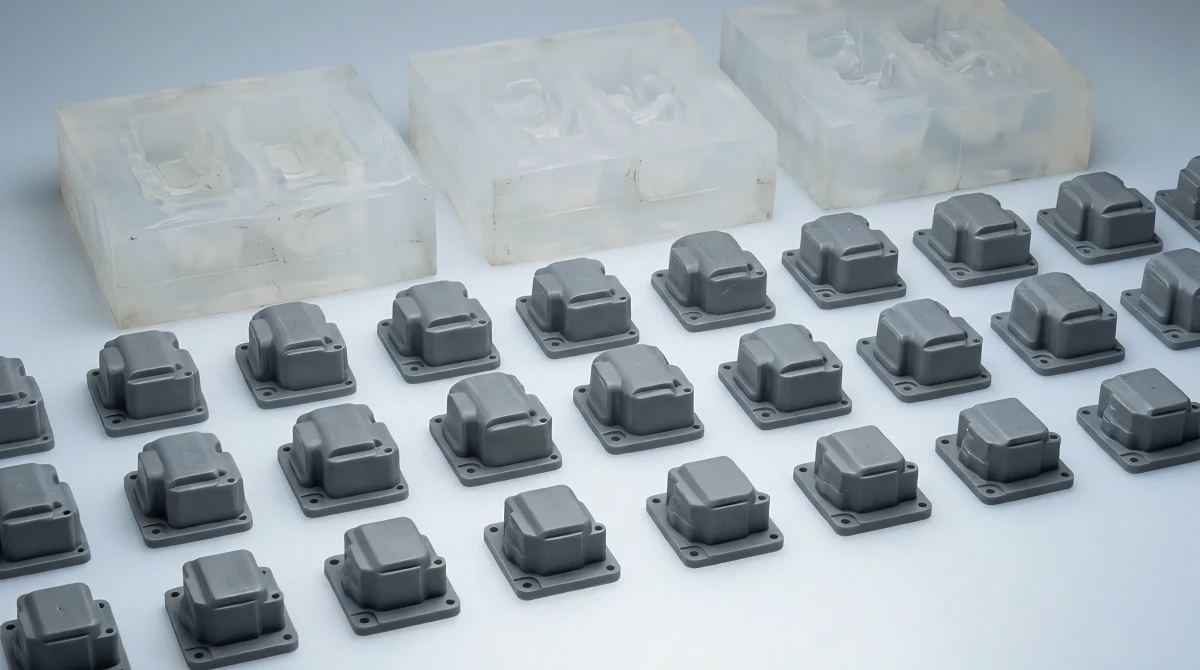
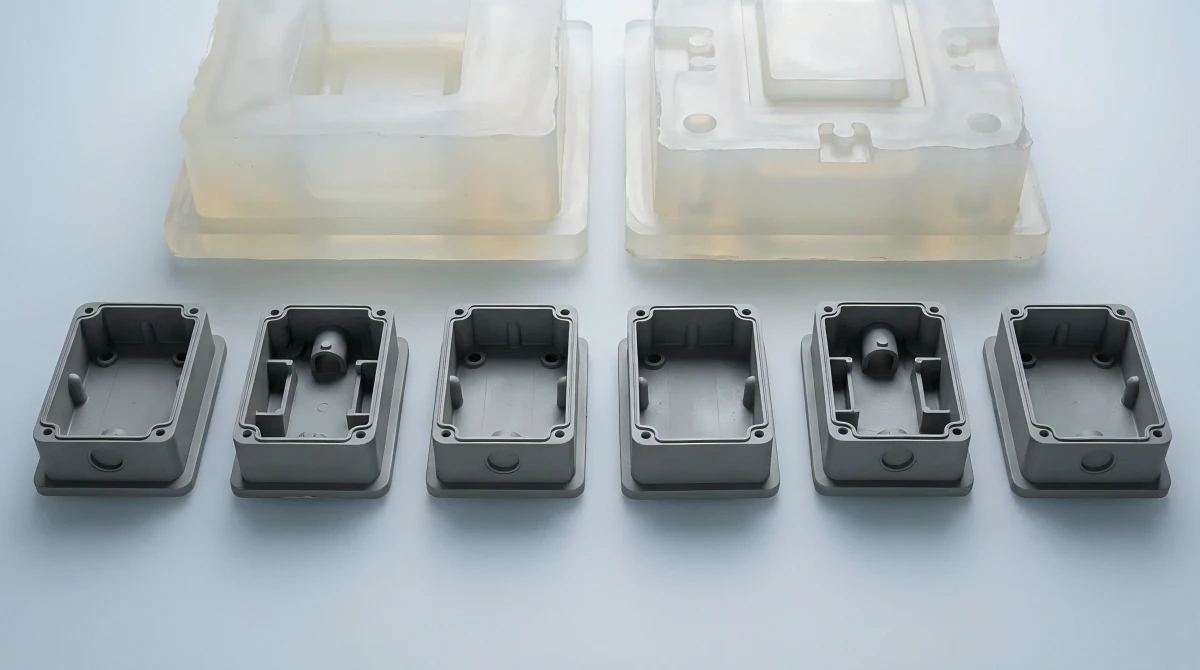
A batch is the set of cast copies ordered and produced together, in one resin grade and one color per pour. Its quantity sets how many silicone tools, pours and oven loads the work needs. Each tool in a batch is a separate cavity with its own first parts. A batch is therefore planned in tools and pours, and the parts count alone says little.

Tool Count

Tool count is the order quantity over each tool’s yield, rounded upward. Renishaw’s brochure caps a mold at 50 parts, with 30 to 50 color-matched copies as the typical yield. At those figures, 50 parts need 1 tool at the ceiling and 2 at the working figure. A batch of 51 needs 2 tools even at the ceiling. Because tools come in whole numbers, a batch just over a multiple pays for a whole extra tool and its silicone cure.
Read More

Color and Grade Split

An order of 300 parts often hides several grades and colors. Each grade and each color needs its own pour. With 30 copies to a mold, a single-color run of 300 takes 10 tools. The same 300 parts in 7 colors need 14. A pilot of 25 parts in 3 grades needs at least 3 tools, since no mold serves 2 resins. Sika’s clear PX522 calls for a mold that no other resin has touched.

Pouring Time

Each copy is one pour through the vacuum chamber. Each pour needs both components degassed for about 10 minutes, a mix and a vent before the pot life ends. The degassing load therefore grows with copies, whatever the tool count. Formlabs cites up to 50 castings in 2 days on one machine. At that rate, 1,000 copies occupy one chamber for roughly 40 working days.

End Date

On a grade with a post-cure, the batch ends after the last copy’s schedule of 14 to 20 hours. The final copy can be measured the following morning at the soonest. Inspection then adds its own day. On a Renishaw grade without post-cure, the last demold ends the run.

Inspection Unit

Inspection inside a batch is organized tool by tool. A batch of 100 parts from 4 tools holds 4 small populations of copies. A sound plan measures a first article from each tool and a later copy from the same tool. It checks hardness and color on parts from each pour. Each copy is marked so its tool and pour can be traced.

Batch Record

A short record makes one batch comparable with the next. It logs each component’s minutes under vacuum and the resin and tool temperatures when poured. It notes the time from mixing to venting and the condition of the opened cans. For a clear grade it adds the room humidity on the day of casting, and for every grade the post-cure hours.

Batch-to-Batch Control

Hardness under ISO 868 works as an acceptance check between batches, read with the same scale, temperature and reading time. A casting room that wants stable dimensions keeps its preheating and cure times fixed between batches of one part. Later batches in the same grade and cure are judged against that first record. A later batch also keeps the same master process as the first.

Repeat Orders

Tools are normally spent on the batch they were made for. A repeat batch starts from the master, with new tools and new first parts. A batch delivered in 2 parts can share its tools if they are kept in good order between deliveries. Whether the second delivery continues the batch or starts a new one, with new first parts, is settled in writing.

Size Signals

At 250 parts per resin and color, a batch needs 5 to 9 tools at 50 and 30 copies per mold. Repeated every quarter, the same count becomes a standing load of tools, masters and first articles. That repeat pattern, more than any single batch, is what moves a part toward an injection mold.
Vacuum Casting Defects in a Batch Traced to Their Cause

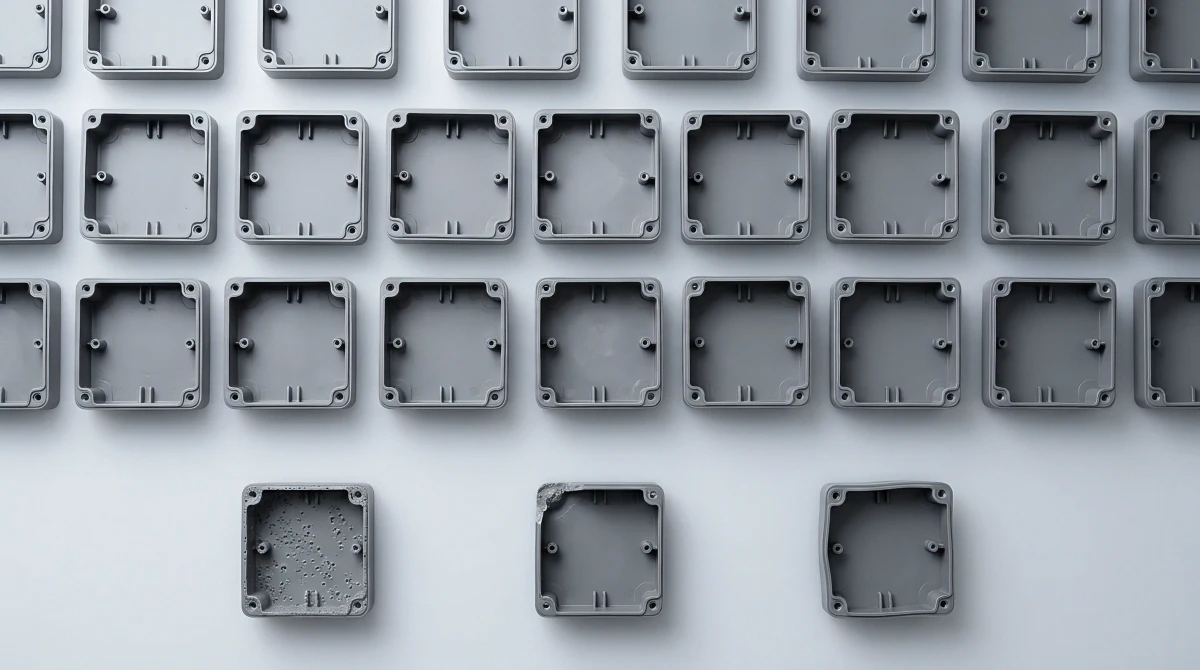
A vacuum casting defect points to its cause by where it sits on the part and which castings of the batch show it, from one wet pour to a mold near its end.

The List of Casting Defects and the Cause Behind EachVacuum casting defects trace to six causes: moisture in the components, air folded in during mixing and pouring, a mixing ratio upset by weighing or crystallization, a mold or master fault copied into every part, a cure or demold cut short, and a silicone mold wearing out over the run. The table pairs the defects named in the opened documents with those causes and with what a buyer or inspector sees.

Color Matching a Vacuum Cast Batch to a RAL or Pantone Reference

A vacuum cast color is fixed as a weighed recipe on an approved first article, measured with an agreed formula and tolerance, and repeated for every pour.

How a Vacuum Cast Batch Is Matched to a RAL or Pantone ColorA vacuum cast batch is matched to a reference by pigmenting each pour with a paste dosed within the resin maker's limit, casting a first part, measuring it against the reference under agreed conditions, adjusting the recipe, and then holding that recipe for every pour, with parts checked against the approved first article. Renishaw describes the casting system as producing typically 30 to 50 color-matched parts from a single mold, which is the batch size the recipe has to stay steady over.

Painting and Texturing Vacuum Cast Parts After Demold

A cast urethane part is painted only after its release agent is washed off and its surface keyed, with flexible coatings on parts that bend.

Painting Vacuum Cast Parts Step by StepA vacuum cast part is painted by removing the release agent, keying and degreasing the surface, applying an adhesion promoter where the substrate calls for one, priming, and then applying the color and clear coats, with flexible additives in every layer when the part bends. The car refinish makers write the sequence most completely, because they paint new plastic parts every day.

Making the Master Pattern for Vacuum Casting From SLA or CNC

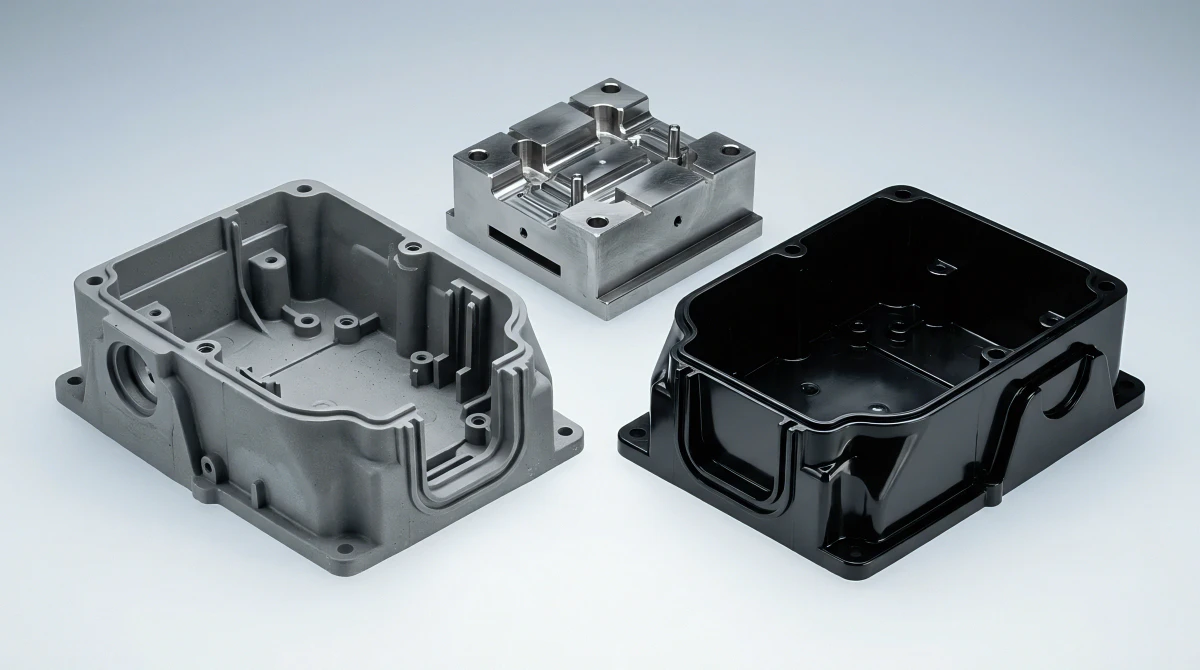
The master is finished, sealed and fitted with its parting line, gate and risers before the silicone is poured, because the mold copies every mark into the batch.

What the Master Pattern Has to Deliver Before the Silicone Is PouredA master pattern for vacuum casting is the physical original from which the silicone mold is cast, and the mold reproduces it so faithfully that every cast part inherits its shape, its surface and its faults. Loughborough University's vacuum casting guide puts it plainly: the mold replicates the master extremely faithfully, so the master's surface finish and accuracy are what the moldings will have.

Surface Finish of Vacuum Cast Parts and How the Master Sets It

A vacuum cast part copies its master's roughness and comes out slightly smoother, so the finish is specified and measured on the master before the mold is poured.

How Closely a Vacuum Cast Surface Follows Its MasterA vacuum cast part's surface roughness is set by its master within about a tenth of the master's value, in the two studies on file. In the 2020 study by Mustafa and co-authors, parts cast from FDM, SLA and multi jet fusion (MJF) masters all came out smoother than the master, by 1.84 %, 9.62 % and 6.09 % respectively.

Flatness and Warp of Large Vacuum Cast Parts

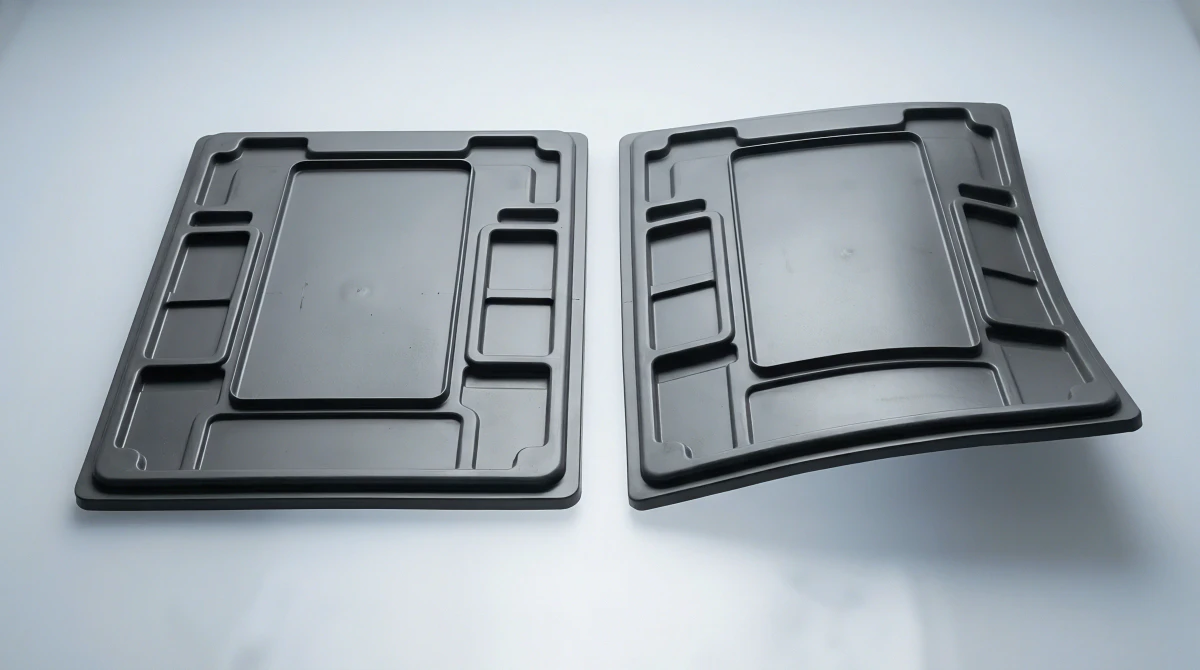
Large vacuum cast panels stay flat through a uniform thin wall, a slow cure, a conformer in post-cure and a temperature kept well below heat deflection.

What Sets Flatness and Warp on a Large Vacuum Cast PartFlatness on a large vacuum cast part is set by five conditions: the heat the resin releases as it cures, the wall thickness against the grade's maximum, how evenly and how long the part cures before demold, whether it is supported during post-cure, and the temperature it later works at. No resin maker, guide or study opened for this piece prints a flatness or warp tolerance for vacuum cast parts.

ISO 527 Tensile Values on Polyurethane Casting Resin Data Sheets

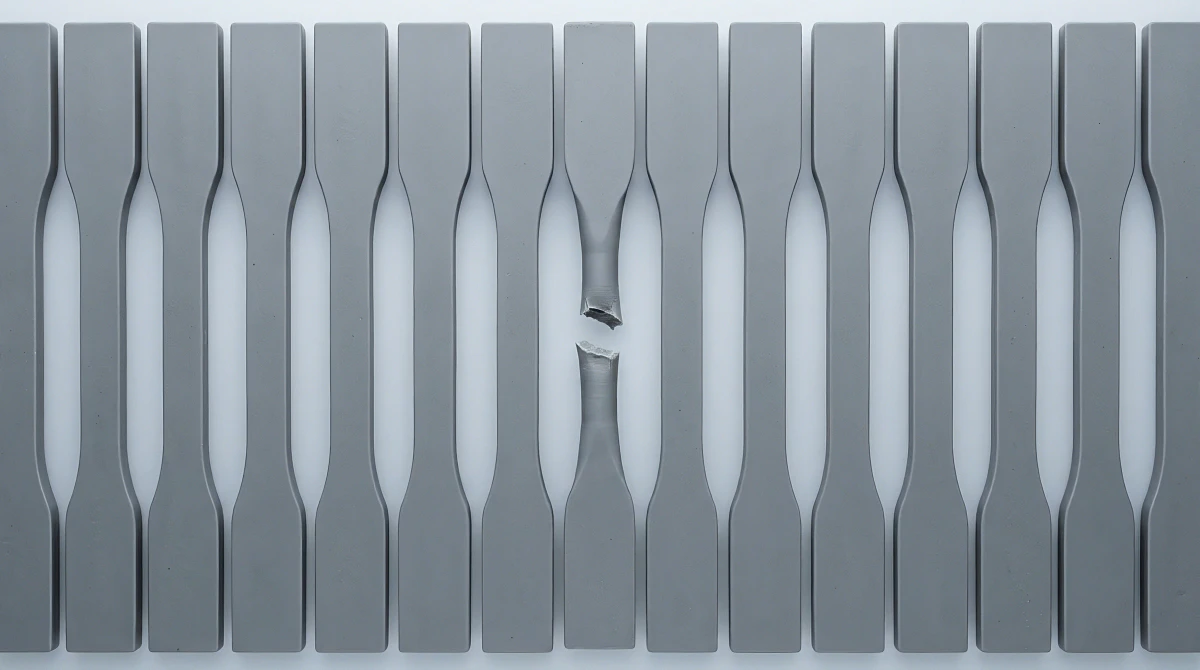
A tensile value on a casting resin sheet belongs to standard bars after one stated cure, so a requirement on parts is set on bars cast and cured with the batch.

What ISO 527 Covers on a Casting Resin Data SheetISO 527 is the international method for tensile properties of plastics, and casting resins fall inside it. The scope of ISO 527-1, as published by the Estonian standards body, sets out the general principles for determining tensile strength, tensile modulus and other aspects of the stress and strain relationship under defined conditions.

ISO 179 and ISO 180 Impact Strength on Cast Resin Data Sheets

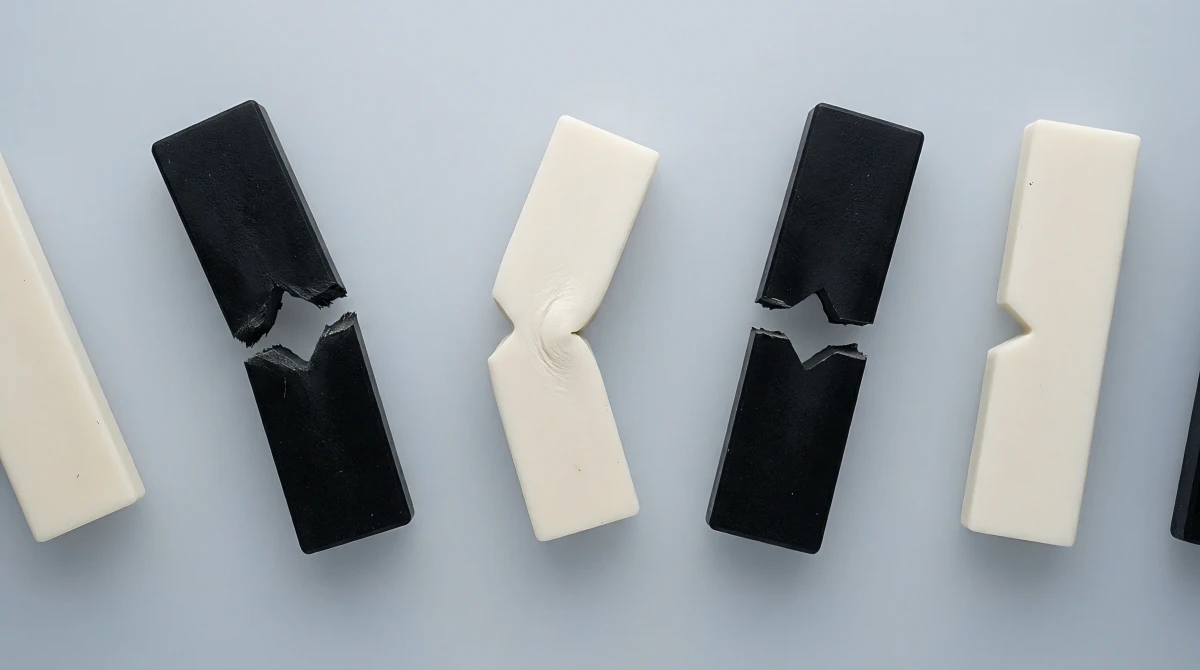
Impact values on cast resin sheets are comparisons tied to method, notch, specimen and cure, so a part's toughness is set by tests on batch bars or the part.

What ISO 179 and ISO 180 Measure on a Cast ResinBoth standards measure how much energy a pendulum hammer loses breaking a small bar of plastic at a high strain rate. ZwickRoell, a maker of the testing machines, describes the principle in its pages on both methods: a hammer of specified energy and drop height strikes the specimen, does not swing back to its starting height, and the height difference is taken as the energy absorbed.

When a Vacuum Cast Run Should Move to an Injection Mold

Silicone molds carry a pilot, and a hard tool follows once the quantity, colors and repeat orders outgrow a handful of tools.

Where Silicone Tools Stop and the First Injection Mold StartsInjection molds are rated in classes by the construction they are built to and the cycles they are expected to give. The classification belongs to the plastics industry's trade body, PLASTICS, formerly the Society of the Plastics Industry, and its own text was not opened for this piece.

Silicone Molds, Pours and Lead Time for a Vacuum Cast Batch

A batch needs one silicone mold per set of copies, per resin and per color, and pours run one at a time through the chamber.

How Many Silicone Molds a Vacuum Cast Batch NeedsThe tool count is the quantity divided by the copies one tool gives, rounded up. Renishaw states that a mold can produce up to 50 parts before retooling and typically between 30 and 50 colour matched parts.

Demolding and Post-Curing Vacuum Cast Parts

Each grade prints its own demold time and its own post-cure, and thin or long parts are supported in the oven while it runs.

Demolding Vacuum Cast Parts at 70 °CDemolding means opening the silicone tool and taking the copy out once the resin has gelled and hardened far enough to hold its form. In every sheet on file the tool stays at 70 °C (158 °F) in the oven for that time.

Degassing Silicone and Resin in Vacuum Casting

Each resin component is evacuated alone for about ten minutes, the silicone twice, and the air returns before the pot life ends.

Why Silicone and Resin Are Degassed Under VacuumMixing puts air into any liquid. Stirring two viscous components together folds the surface into the bulk, and a general guide from the mold supplier ArtMolds puts the air picked up by mixing at 5 % to 20 % of the volume, calling it the primary cause of bubbles in cast parts.

Linear Shrinkage of Cast Polyurethane Resins Per 100 mm

Printed shrinkage belongs to one bar and one cure, so the master is scaled from it as a starting point and the first article confirms each critical dimension.

Linear Shrinkage Read as Millimeters Per MeterLinear shrinkage is the fractional loss in length between the mold cavity and the cured part. A resin that fills a cavity 100 mm long and cures into a part that measures 99.3 mm has shrunk by 0.7 percent, which is the same as 7 mm per meter.

Shore Hardness Standards for Cast Polyurethane Parts

Shore hardness is a control number tied to a scale, a temperature, a cure state and a reading time, and a drawing callout needs all four.

Hardness Standards Behind a Cast Polyurethane Shore ValueThree documents appear most often around cast polyurethane. ISO 868 is the plastics method named on the resin sheets, ASTM D2240 is the American test method that reaches rubber and some plastics, and ISO 48-4 is the rubber method that covers softer grades.

Clear Polyurethane Casting Resin for Vacuum Casting

A clear polyurethane grade is chosen by section thickness first, and its post-cure has a printed ceiling that protects the color of the part.

How Clear a Casting Resin Is in Datasheet NumbersOn a datasheet, clear is a claim with two numbers behind it at most. PX522 is described as water clear, with a coefficient of light transmission of 89 percent measured by the laboratory LNE, and PX523 prints a refractive index of 1.511.

Send the Drawing of Your Cast Part

Send the 2D drawing and the 3D file, with the quantity and the stage of the project. An engineer replies within 1 working day.

The quote form, the mutual NDA and the private folder for your files are on Protolis Atelier, with Vacuum Casting chosen.

Request a Quote