Test Method

A test method is the defined procedure a standard sets for measuring one property, covering the specimen, the load, the temperature and the reading.

Every Test Method article of the Vacuum Casting Resources, newest first, each written from published standards, research and makers’ data.

Meaning

A test method is the defined procedure a standard sets for measuring one property, covering the specimen, the load, the temperature and the reading. Every figure on a casting resin sheet comes from one. A pair of figures compares only if both come from the same method. A ranking across grades therefore needs the method printed beside each value.

Impact Figures

The ABS-like sheets on file report impact 3 ways. PX331 gives 26 kJ/m² (12.4 ft·lbf/in²) on Sika’s ISO 179 Charpy test. Renishaw 6230 gives 15 kJ/m² (7.1 ft·lbf/in²) as Izod. Another sheet names ASTM D256. The notch types differ, so these sheets cannot rank the grades on toughness.
Read More

Tensile Figures

ISO 527-1 gives the general principles for tensile properties, with specimen types suited to different materials. A molded thermoplastic’s tensile figure and a cast grade’s compare only when both name that method. A table of grades with the method each sheet names is the honest form of the comparison.

Hardness Figures

ASTM D2240 covers 12 durometer types and states that it is not equivalent to other hardness methods. ISO 868 covers types A and D for plastics. Switching durometer type means starting the comparison over.

Flame Figures

A flame claim is checkable only with its test named. UL 94 vertical, or an equivalent such as IEC 60695-11-10 method B, is the usable answer. Sika’s PX331 sheet calls its EN 60695-11-10 result a glow-wire test, while that standard describes a 50 W small-flame test. A buyer who needs a glow-wire result asks which test was run.

Fixed Conditions

A method fixes its conditions on purpose, and its results hold only for them. Some materials, ASTM D635 warns, are unusually sensitive to these settings. ASTM D3801 states that its results are valid only for the exposure it describes.
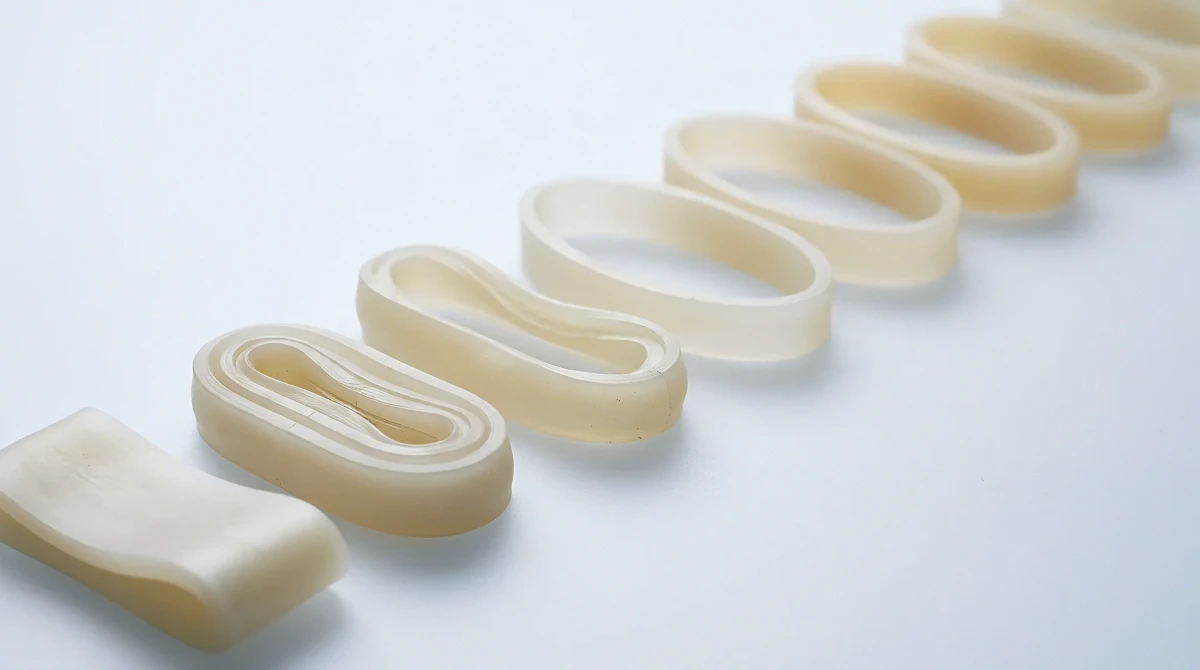
Rubber-Like Polyurethane Resins From Shore 30 A to 90 A

A rubber-like urethane is specified by grade, hardness method and a tested service temperature, because hardness alone leaves strength and heat behavior open.

Rubber-Like Vacuum Casting Grades and the Hardness Each CoversRubber-like vacuum casting resins are two- or three-component polyurethanes that cure in a silicone mold to an elastomer, with a Shore A hardness chosen for the part. The variable-hardness systems reach the range by adding a third component to a fixed A:B pair.

When a Vacuum Cast Run Should Move to an Injection Mold

Silicone molds carry a pilot, and a hard tool follows once the quantity, colors and repeat orders outgrow a handful of tools.

Where Silicone Tools Stop and the First Injection Mold StartsInjection molds are rated in classes by the construction they are built to and the cycles they are expected to give. The classification belongs to the plastics industry's trade body, PLASTICS, formerly the Society of the Plastics Industry, and its own text was not opened for this piece.

Shore Hardness Standards for Cast Polyurethane Parts

Shore hardness is a control number tied to a scale, a temperature, a cure state and a reading time, and a drawing callout needs all four.

Hardness Standards Behind a Cast Polyurethane Shore ValueThree documents appear most often around cast polyurethane. ISO 868 is the plastics method named on the resin sheets, ASTM D2240 is the American test method that reaches rubber and some plastics, and ISO 48-4 is the rubber method that covers softer grades.

ABS-Like Polyurethane Casting Resins for Vacuum Casting

An ABS-like polyurethane resin is a stiff thermoset named for its use, and its datasheet numbers depend on post-cure, thickness and test method.

Why a Polyurethane Resin Is Called ABS-LikeThe phrase is a maker's shorthand, not a standard. Sika describes its SikaBiresin PX331 as having mechanical properties similar to thermoplastics like filled ABS, and Renishaw lists its 6230 as having properties similar to ABS.

Send the Drawing of Your Cast Part

Send the 2D drawing and the 3D file, with the quantity and the stage of the project. An engineer replies within 1 working day.

The quote form, the mutual NDA and the private folder for your files are on Protolis Atelier, with Vacuum Casting chosen.

Request a Quote