Degassing

Degassing is drawing a vacuum over liquid silicone or resin so the air in it expands, rises and breaks before the pour.

Every Degassing article of the Vacuum Casting Resources, newest first, each written from published standards, research and makers’ data.

Meaning

Degassing is drawing a vacuum over liquid silicone or resin so the air in it expands, rises and breaks before the pour. It is the step vacuum casting is named after. Mixing 2 viscous components folds air into them, which a general guide puts at 5 % to 20 % of the volume. Lowering the pressure swells a small bubble until it can float out of the thick liquid.

Cycle Points

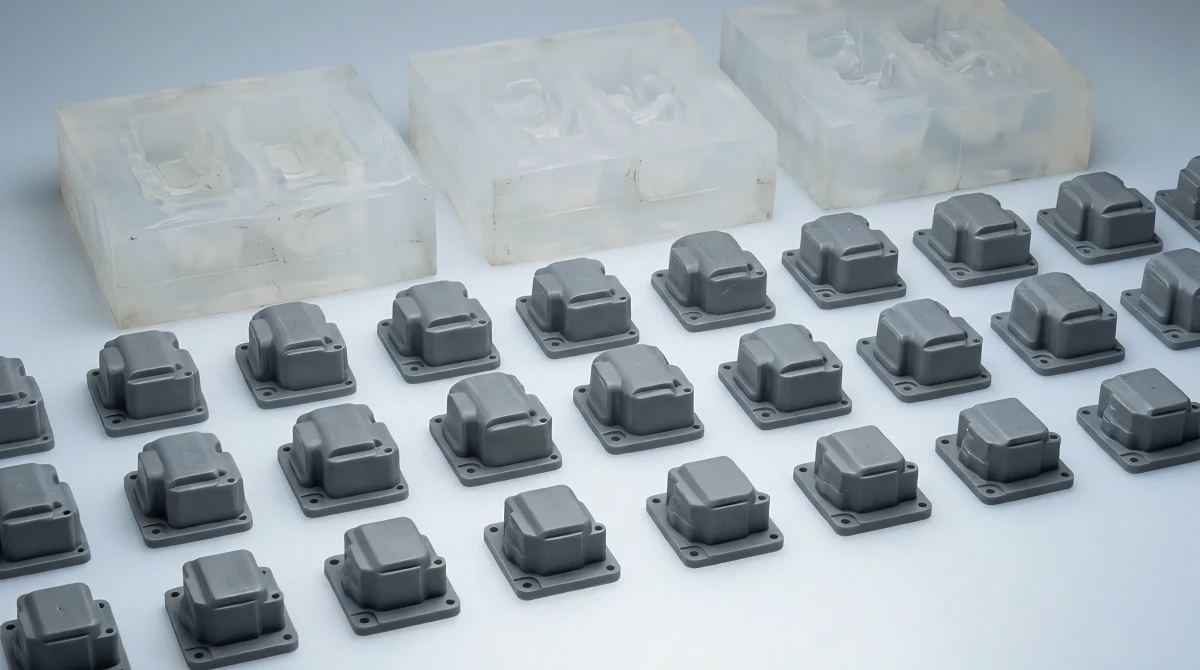
Degassing happens at 4 points in a tool’s life. The silicone is degassed once in its cup and again after it is poured round the master. Each copy starts with both resin components degassed in separate cups. The mixed resin is then poured under vacuum before air is let back in. Each step has its own clock, 90 minutes for the silicone and minutes for the resin.
Read More

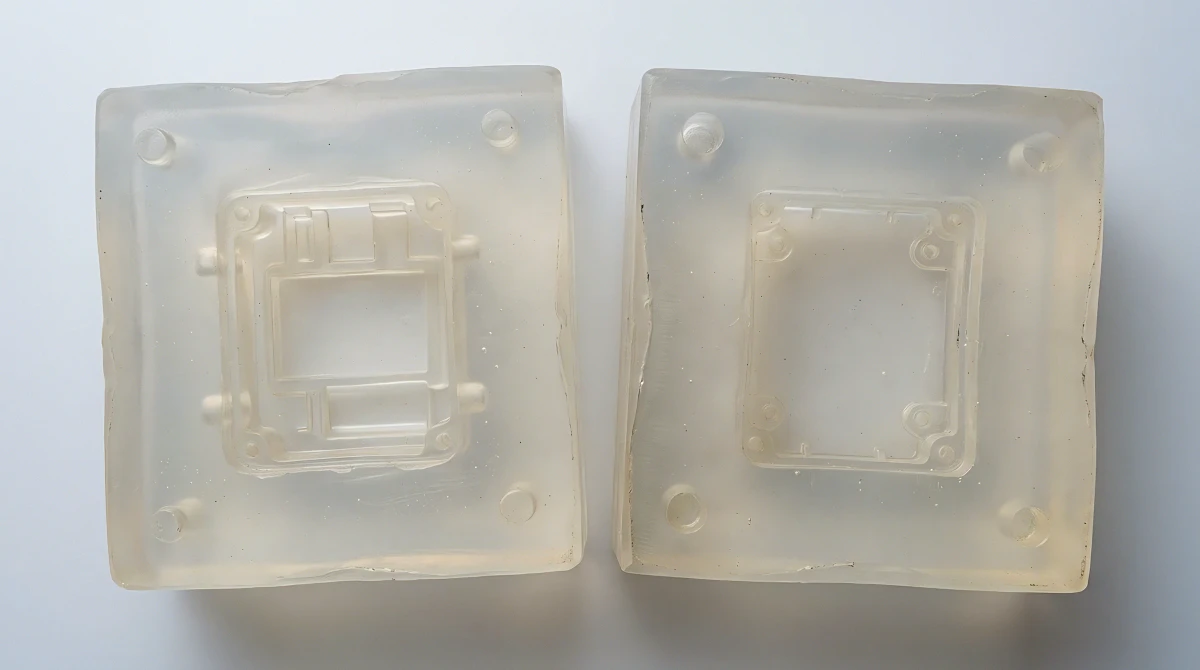
Silicone Degassing

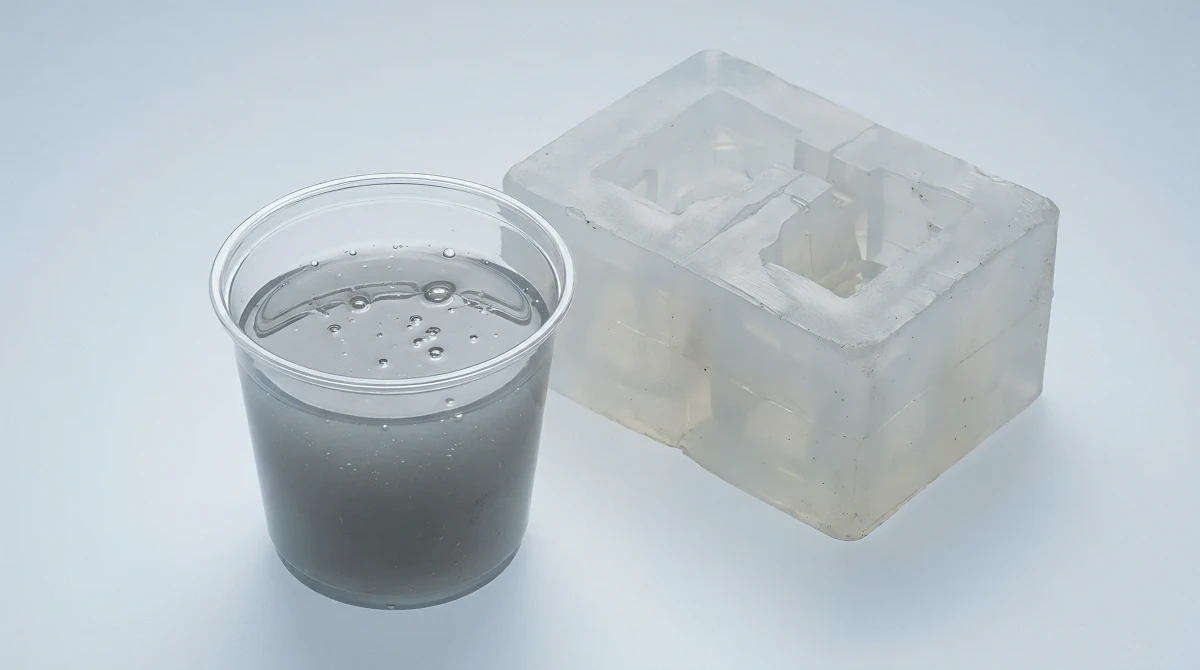
Renishaw’s Vacusil 2000 sheet asks for a cup 4 to 5 times the silicone’s volume. Vacuum then runs for about 2 to 3 minutes. The silicone can expand up to 7 times its volume while the air leaves. Polytek advises degassing any silicone above about 20,000 mPa·s (20,000 cP), and Vacusil 2000 mixes to 45,000 mPa·s (45,000 cP). A second degassing after the pour clears voids under the master.

Resin Component Degassing

Polyol and isocyanate are never degassed together, since their pot life starts the moment they meet. Sika evacuates each component alone for 10 minutes. Renishaw waits 10 minutes after the chamber reaches maximum vacuum before mixing. A warmer component degasses faster and also gels sooner.

Moisture Gas Limit

Air stirred in during mixing comes out under vacuum. Gas produced inside the resin by moisture is another matter. Water meeting isocyanate forms that gas, and it shows as fine bubbles through the whole part. A damp component goes on bubbling however long the pump runs. The fix is a fresh or sealed can.

Vacuum Level

Halving the pressure on a bubble roughly doubles its volume. At a gauge vacuum of 982 mbar (29 inHg) a bubble grows to about 32 times its sea-level size. Each half step near full vacuum doubles the expansion. Sheets give minutes under vacuum and no target pressure.

Degassing Record

Most degassing disputes are settled by 4 records. They cover minutes at full vacuum per component and the resin and tool temperatures. The time from the start of mixing to venting is set against the pot life. The condition of the opened cans completes the record.

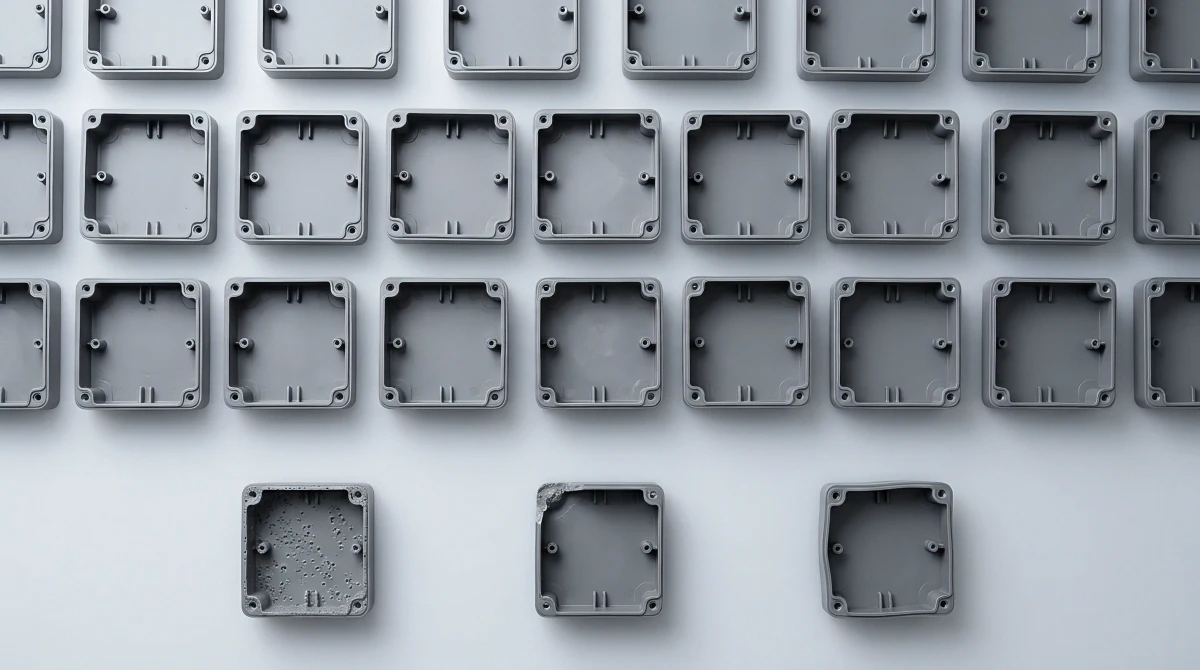
Vacuum Casting Defects in a Batch Traced to Their Cause

A vacuum casting defect points to its cause by where it sits on the part and which castings of the batch show it, from one wet pour to a mold near its end.

The List of Casting Defects and the Cause Behind EachVacuum casting defects trace to six causes: moisture in the components, air folded in during mixing and pouring, a mixing ratio upset by weighing or crystallization, a mold or master fault copied into every part, a cure or demold cut short, and a silicone mold wearing out over the run. The table pairs the defects named in the opened documents with those causes and with what a buyer or inspector sees.
Color Matching a Vacuum Cast Batch to a RAL or Pantone Reference

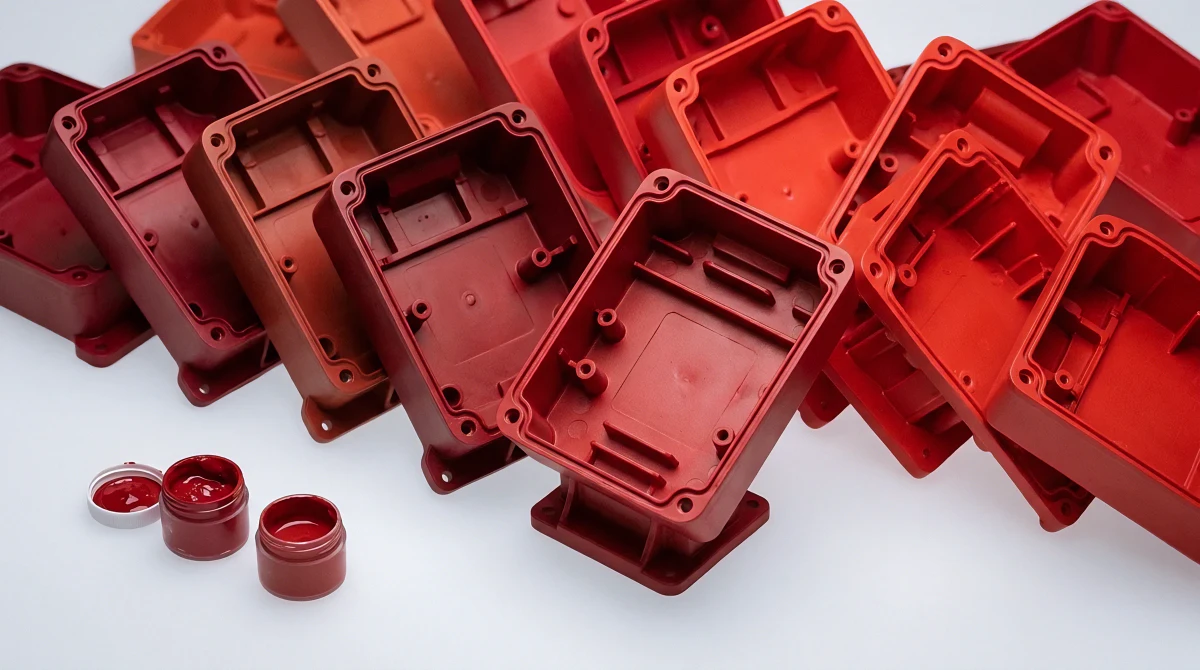
A vacuum cast color is fixed as a weighed recipe on an approved first article, measured with an agreed formula and tolerance, and repeated for every pour.

How a Vacuum Cast Batch Is Matched to a RAL or Pantone ColorA vacuum cast batch is matched to a reference by pigmenting each pour with a paste dosed within the resin maker's limit, casting a first part, measuring it against the reference under agreed conditions, adjusting the recipe, and then holding that recipe for every pour, with parts checked against the approved first article. Renishaw describes the casting system as producing typically 30 to 50 color-matched parts from a single mold, which is the batch size the recipe has to stay steady over.

Overmolding and Inserts in Vacuum Casting Step by Step

Inserts in a cast part are held by knurls and undercuts, located on pins in the silicone, and surrounded by resin mixed and poured under vacuum.

The Vacuum Casting Steps for a Part With InsertsA vacuum cast part with molded-in inserts is made in eight steps: the insert is chosen and shaped for mechanical retention, the master is prepared so the mold can locate it, the insert's surface is prepared, it is placed in the opened silicone mold, the mold is closed and preheated, the resin is degassed and mixed under vacuum, the mold is filled and vented, and the part is cured and demolded around the insert. An overmolded part adds a second mold and a second pour.

Making the Master Pattern for Vacuum Casting From SLA or CNC

The master is finished, sealed and fitted with its parting line, gate and risers before the silicone is poured, because the mold copies every mark into the batch.

What the Master Pattern Has to Deliver Before the Silicone Is PouredA master pattern for vacuum casting is the physical original from which the silicone mold is cast, and the mold reproduces it so faithfully that every cast part inherits its shape, its surface and its faults. Loughborough University's vacuum casting guide puts it plainly: the mold replicates the master extremely faithfully, so the master's surface finish and accuracy are what the moldings will have.

Surface Finish of Vacuum Cast Parts and How the Master Sets It

A vacuum cast part copies its master's roughness and comes out slightly smoother, so the finish is specified and measured on the master before the mold is poured.

How Closely a Vacuum Cast Surface Follows Its MasterA vacuum cast part's surface roughness is set by its master within about a tenth of the master's value, in the two studies on file. In the 2020 study by Mustafa and co-authors, parts cast from FDM, SLA and multi jet fusion (MJF) masters all came out smoother than the master, by 1.84 %, 9.62 % and 6.09 % respectively.

Silicone Molds, Pours and Lead Time for a Vacuum Cast Batch

A batch needs one silicone mold per set of copies, per resin and per color, and pours run one at a time through the chamber.

How Many Silicone Molds a Vacuum Cast Batch NeedsThe tool count is the quantity divided by the copies one tool gives, rounded up. Renishaw states that a mold can produce up to 50 parts before retooling and typically between 30 and 50 colour matched parts.

Degassing Silicone and Resin in Vacuum Casting

Each resin component is evacuated alone for about ten minutes, the silicone twice, and the air returns before the pot life ends.

Why Silicone and Resin Are Degassed Under VacuumMixing puts air into any liquid. Stirring two viscous components together folds the surface into the bulk, and a general guide from the mold supplier ArtMolds puts the air picked up by mixing at 5 % to 20 % of the volume, calling it the primary cause of bubbles in cast parts.

Silicone Rubber for Vacuum Casting Molds

Mold silicone is an addition-cure rubber chosen for hardness and resin resistance, checked against every material it touches, and treated as a consumable.

Silicone Rubber as the Mold Material in Vacuum CastingA mold silicone is a two-component liquid rubber that is poured round a master, cured at room temperature or a little above, and cut open to release the master. Renishaw describes Vacusil 2000 as a two-component addition-cure liquid silicone rubber designed for mold making, curing at room temperature to a translucent, high-strength elastic rubber, and names vacuum casting of polyurethane resins among its uses.

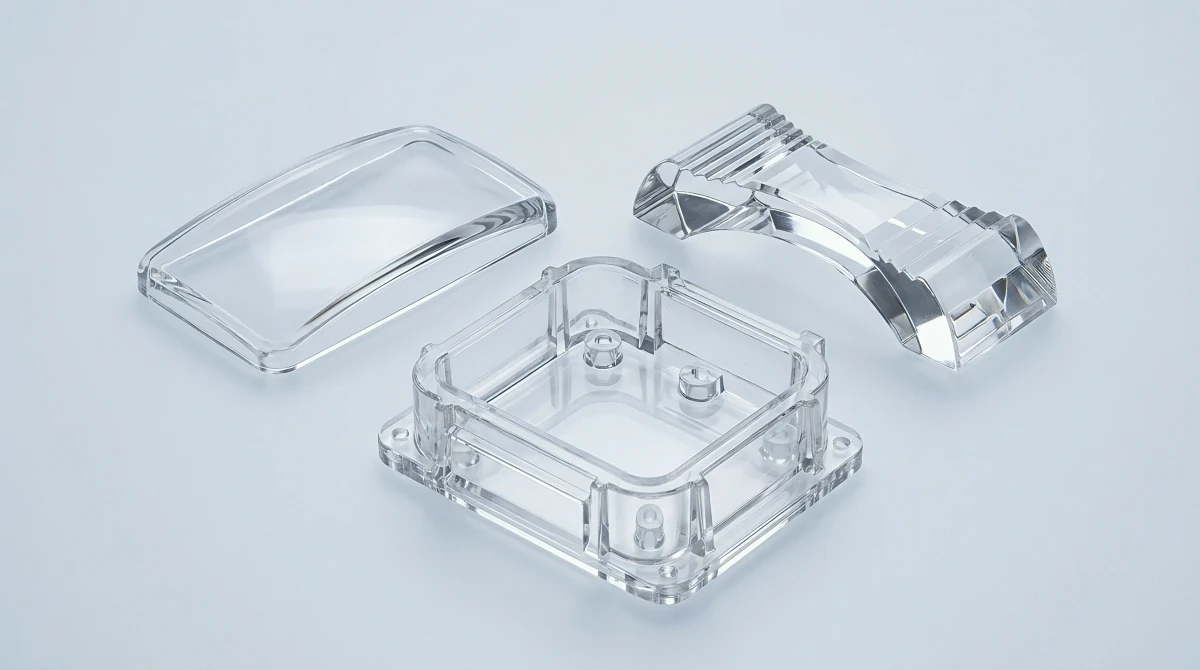
Clear Polyurethane Casting Resin for Vacuum Casting

A clear polyurethane grade is chosen by section thickness first, and its post-cure has a printed ceiling that protects the color of the part.

How Clear a Casting Resin Is in Datasheet NumbersOn a datasheet, clear is a claim with two numbers behind it at most. PX522 is described as water clear, with a coefficient of light transmission of 89 percent measured by the laboratory LNE, and PX523 prints a refractive index of 1.511.

Send the Drawing of Your Cast Part

Send the 2D drawing and the 3D file, with the quantity and the stage of the project. An engineer replies within 1 working day.

The quote form, the mutual NDA and the private folder for your files are on Protolis Atelier, with Vacuum Casting chosen.

Request a Quote