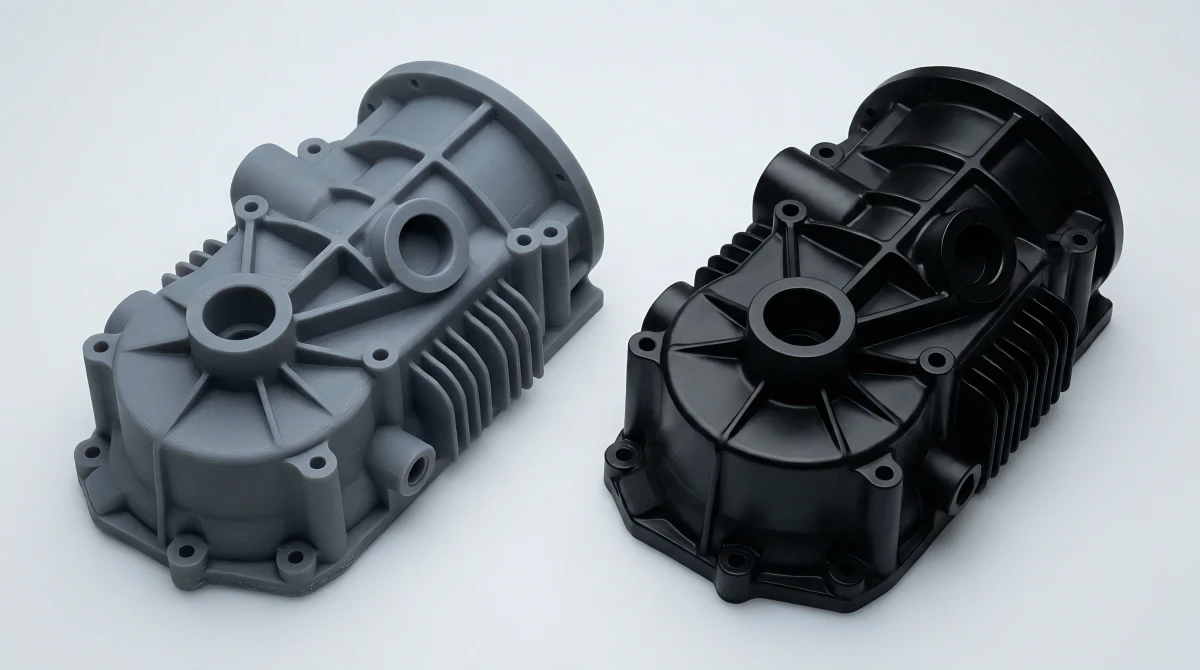
Silicone Mold

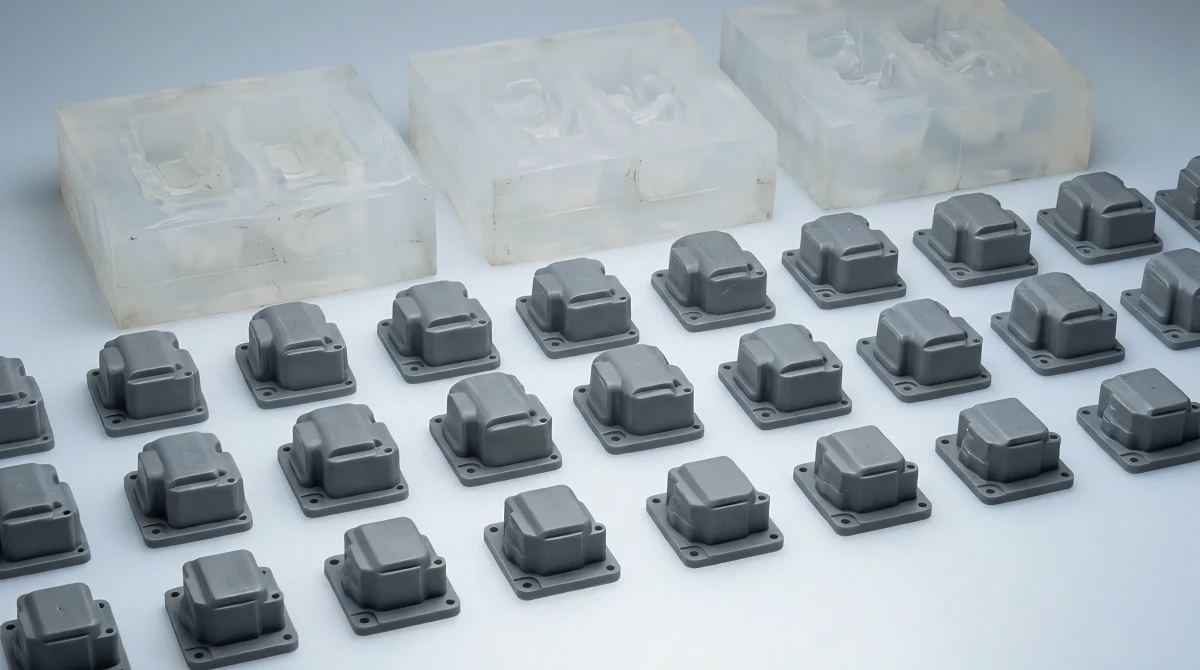
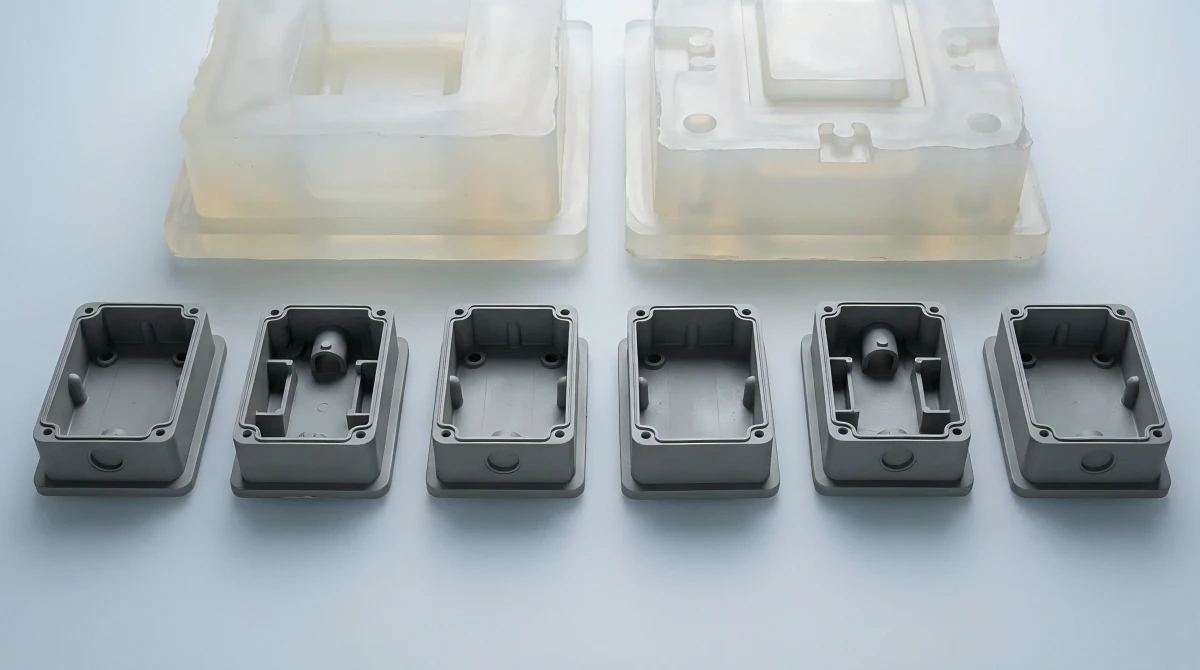
A silicone mold is the flexible tool of vacuum casting, a block of cured silicone rubber cut open around a cavity in the master's shape.

Every Silicone Mold article of the Vacuum Casting Resources, newest first, each written from published standards, research and makers’ data.

Meaning

A silicone mold is the flexible tool of vacuum casting, a block of cured silicone rubber cut open around a cavity in the master’s shape. Resin is poured into it under vacuum and cures inside it at 70 °C (158 °F). The rubber flexes, so a copy with undercuts can be pulled out without slides. Each mold gives a limited number of copies and is then replaced.

Tool Construction

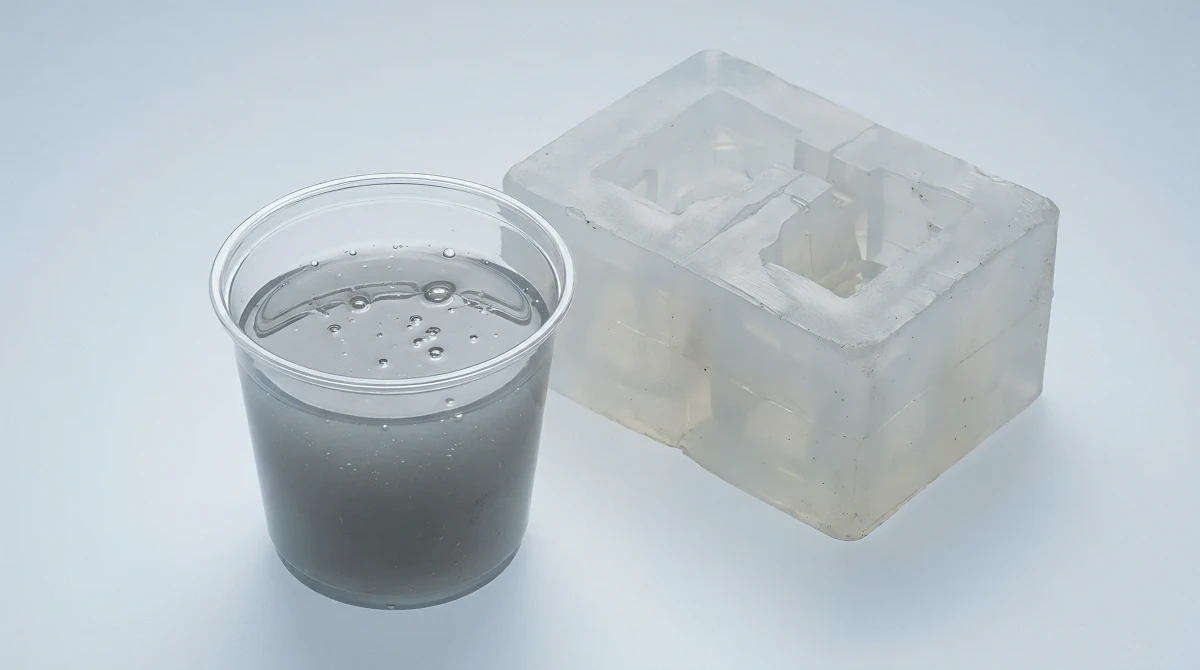
Renishaw sums up the method in a few steps. A master is encapsulated in two-part liquid silicone, a vacuum removes the trapped air, and the block cures. Cutting the block along a split line frees the master. Vacusil 2000 cures in 24 hours at 23 °C (73 °F), and heat can speed a silicone cure. The finished block is a tool that carries the master’s form and surface into every copy.
Read More

Trapped Air

The silicone is degassed twice, once in its cup and once after it has been poured round the master. Overhangs, downward recesses and flat faces of the master still trap air. A void against the master’s surface becomes a bump on every copy from that tool. A cloudy or sticky skin is a different fault, cure inhibition, and a patch test prevents it.

Wear per Pour

A pour costs the tool 3 things: heat, chemical contact and mechanical stretch. The tool sits at 70 °C (158 °F) for each copy’s demold time. The resin touches the rubber through the pot life and the cure. Opening the tool stretches the rubber around the part and through every undercut.

Opening and Closure

Most parts release from 2 halves. Renishaw handles highly complex shapes with multi-segment molds, and each extra parting line leaves another seam on the copy. A 2004 dissertation closes the halves with tape or staples that hold them firmly. Large tools, it notes, may need supporting. A translucent rubber such as Vacusil 2000 lets the operator see the master and any trapped air through the wall.

Size Stability

The silicone contributes very little to a cast part’s loss in size. Wacker describes its mold silicone as non-shrinking, and a 2004 dissertation lists its silicones at under 0.1 % after 7 days. Molds in a 2020 study were preheated to 65 °C (149 °F). The study’s authors attributed the growth of one copy dimension to the mold expanding at longer preheat times. Holding the preheat and cure times steady keeps that effect constant.

Separate Cavities

Each new mold is poured round the master and forms a cavity of its own. The third mold’s copies may differ from the first mold’s. A batch spread over 4 molds is 4 populations of copies. Inspection therefore runs within each mold, with a first article from each.

Copy Count and Retirement

Renishaw gives a ceiling of 50 parts per mold and a usual 30 to 50 matched copies. Renishaw’s resin sheets add that the correct release agent and demolding right after curing increase mold life. Clear PX522 needs a mold free of any earlier resin. A mold is retired when its last copies differ from its first by more than the drawing allows.

Batch Tool Count

Divide the quantity by copies per mold and round up to get the molds needed. Every resin grade and every color needs its own molds. Tools from one master are made one after another, since the master stays in the block until it is cut. A day of silicone cure per mold is the usual cost of each extra tool.

Consumable Status

Silicone molds are rarely kept for a later order. Each is used up on its own order. Reorders mean new molds poured from the master. Between deliveries, the master is what is kept, and molds are consumed.
Vacuum Casting Defects in a Batch Traced to Their Cause

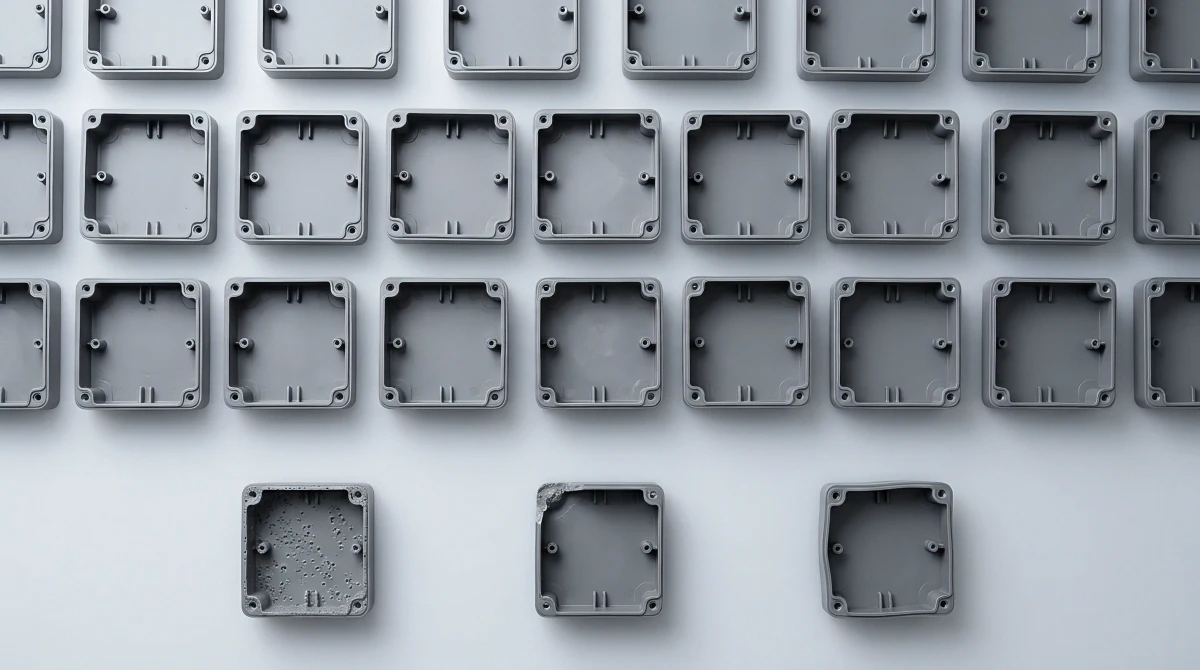
A vacuum casting defect points to its cause by where it sits on the part and which castings of the batch show it, from one wet pour to a mold near its end.

The List of Casting Defects and the Cause Behind EachVacuum casting defects trace to six causes: moisture in the components, air folded in during mixing and pouring, a mixing ratio upset by weighing or crystallization, a mold or master fault copied into every part, a cure or demold cut short, and a silicone mold wearing out over the run. The table pairs the defects named in the opened documents with those causes and with what a buyer or inspector sees.

Painting and Texturing Vacuum Cast Parts After Demold

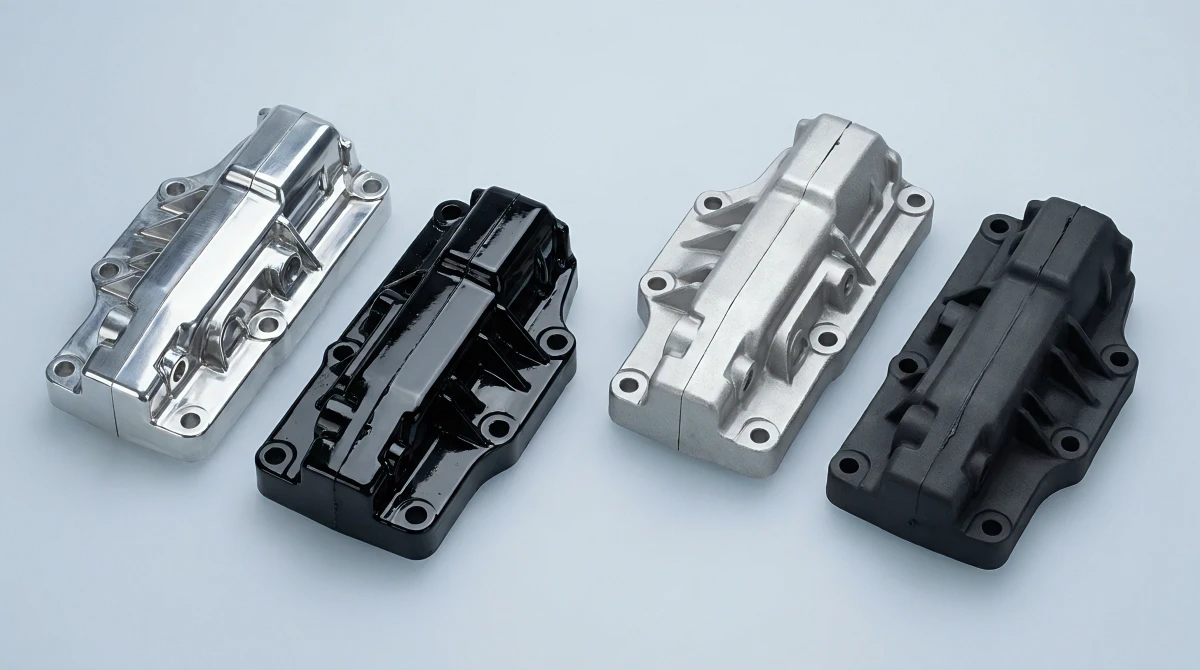
A cast urethane part is painted only after its release agent is washed off and its surface keyed, with flexible coatings on parts that bend.

Painting Vacuum Cast Parts Step by StepA vacuum cast part is painted by removing the release agent, keying and degreasing the surface, applying an adhesion promoter where the substrate calls for one, priming, and then applying the color and clear coats, with flexible additives in every layer when the part bends. The car refinish makers write the sequence most completely, because they paint new plastic parts every day.

Overmolding and Inserts in Vacuum Casting Step by Step

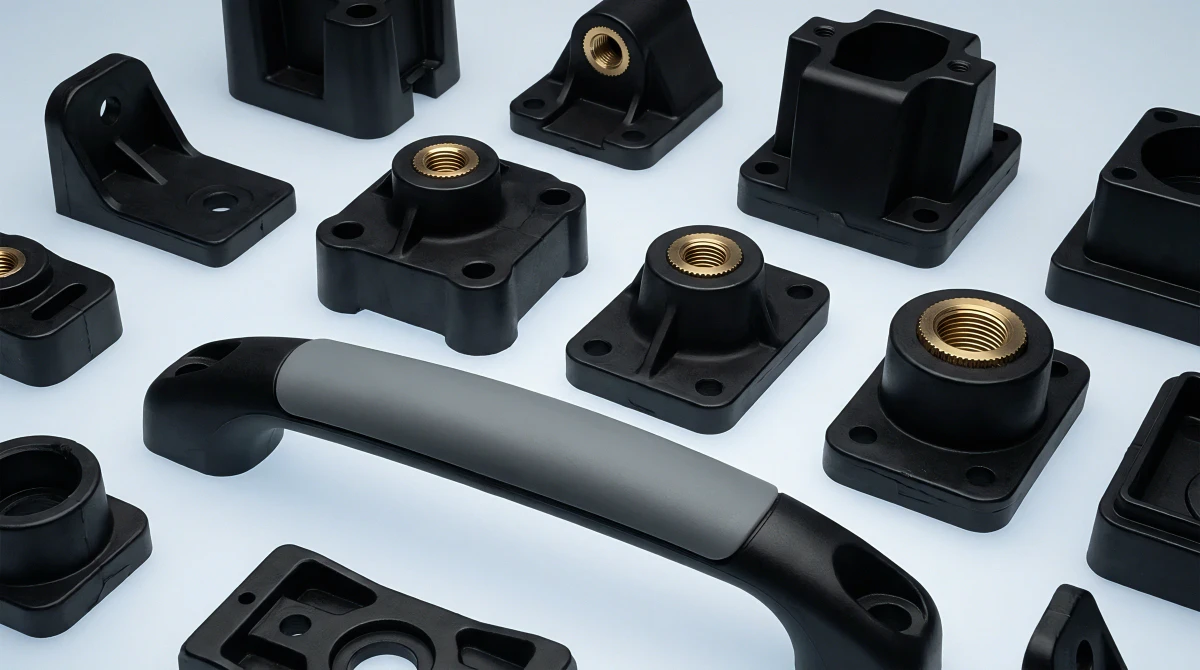
Inserts in a cast part are held by knurls and undercuts, located on pins in the silicone, and surrounded by resin mixed and poured under vacuum.

The Vacuum Casting Steps for a Part With InsertsA vacuum cast part with molded-in inserts is made in eight steps: the insert is chosen and shaped for mechanical retention, the master is prepared so the mold can locate it, the insert's surface is prepared, it is placed in the opened silicone mold, the mold is closed and preheated, the resin is degassed and mixed under vacuum, the mold is filled and vented, and the part is cured and demolded around the insert. An overmolded part adds a second mold and a second pour.

Making the Master Pattern for Vacuum Casting From SLA or CNC

The master is finished, sealed and fitted with its parting line, gate and risers before the silicone is poured, because the mold copies every mark into the batch.

What the Master Pattern Has to Deliver Before the Silicone Is PouredA master pattern for vacuum casting is the physical original from which the silicone mold is cast, and the mold reproduces it so faithfully that every cast part inherits its shape, its surface and its faults. Loughborough University's vacuum casting guide puts it plainly: the mold replicates the master extremely faithfully, so the master's surface finish and accuracy are what the moldings will have.

Surface Finish of Vacuum Cast Parts and How the Master Sets It

A vacuum cast part copies its master's roughness and comes out slightly smoother, so the finish is specified and measured on the master before the mold is poured.

How Closely a Vacuum Cast Surface Follows Its MasterA vacuum cast part's surface roughness is set by its master within about a tenth of the master's value, in the two studies on file. In the 2020 study by Mustafa and co-authors, parts cast from FDM, SLA and multi jet fusion (MJF) masters all came out smoother than the master, by 1.84 %, 9.62 % and 6.09 % respectively.

Flatness and Warp of Large Vacuum Cast Parts

Large vacuum cast panels stay flat through a uniform thin wall, a slow cure, a conformer in post-cure and a temperature kept well below heat deflection.

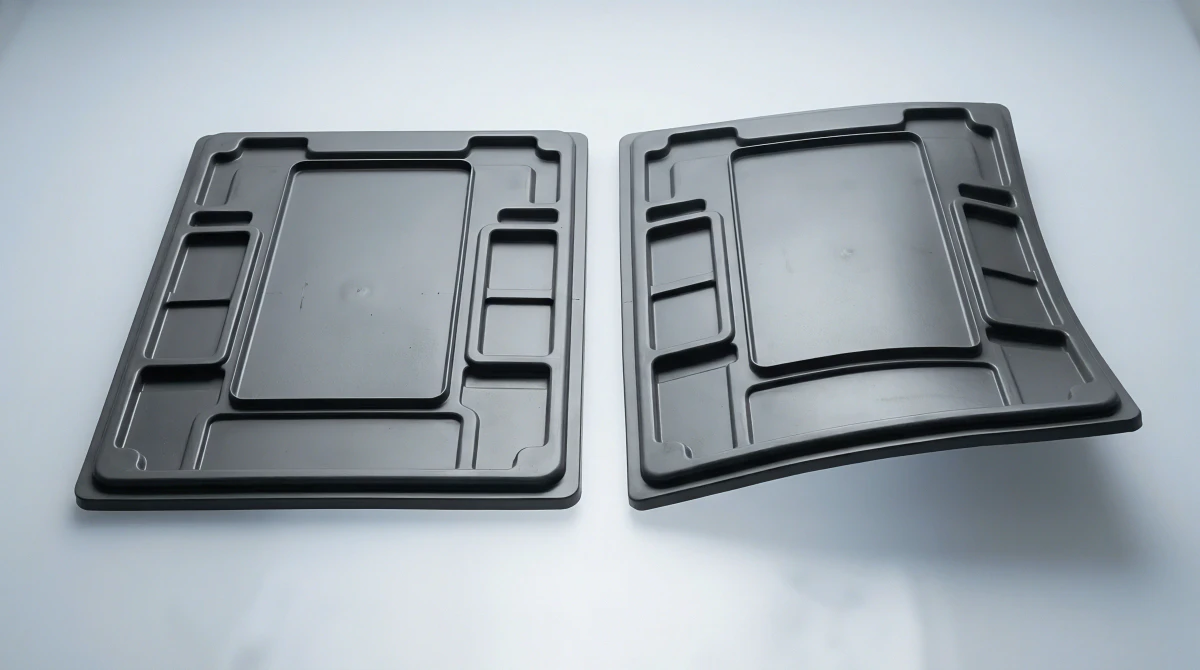
What Sets Flatness and Warp on a Large Vacuum Cast PartFlatness on a large vacuum cast part is set by five conditions: the heat the resin releases as it cures, the wall thickness against the grade's maximum, how evenly and how long the part cures before demold, whether it is supported during post-cure, and the temperature it later works at. No resin maker, guide or study opened for this piece prints a flatness or warp tolerance for vacuum cast parts.

ISO 527 Tensile Values on Polyurethane Casting Resin Data Sheets

A tensile value on a casting resin sheet belongs to standard bars after one stated cure, so a requirement on parts is set on bars cast and cured with the batch.

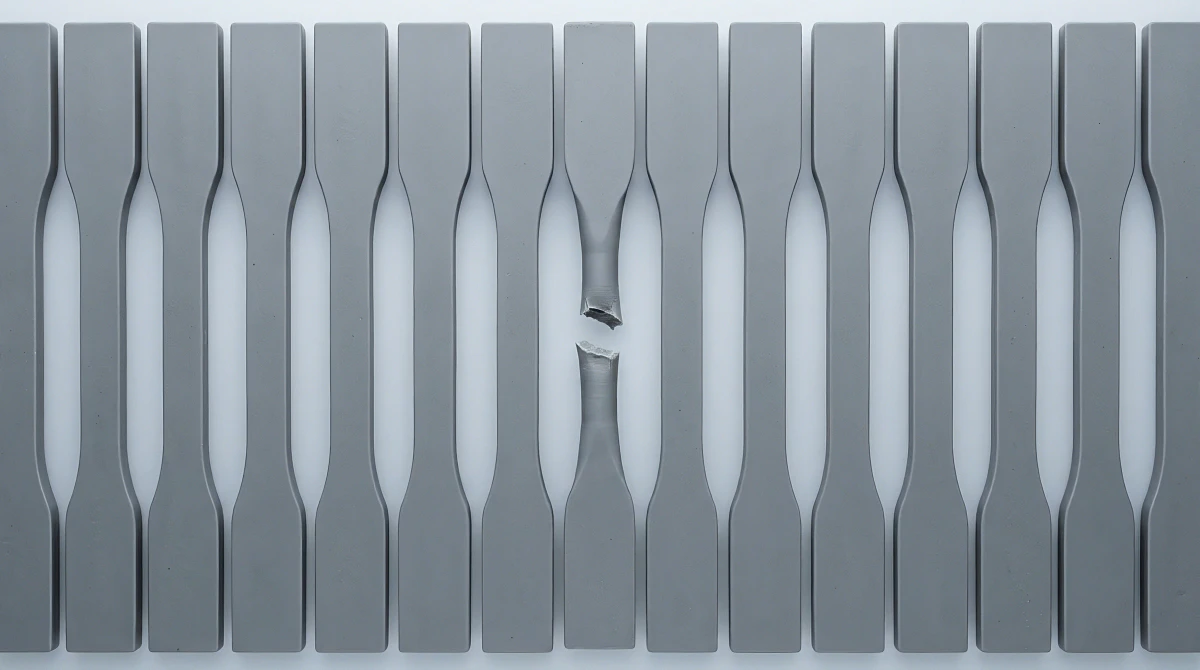
What ISO 527 Covers on a Casting Resin Data SheetISO 527 is the international method for tensile properties of plastics, and casting resins fall inside it. The scope of ISO 527-1, as published by the Estonian standards body, sets out the general principles for determining tensile strength, tensile modulus and other aspects of the stress and strain relationship under defined conditions.

Rubber-Like Polyurethane Resins From Shore 30 A to 90 A

A rubber-like urethane is specified by grade, hardness method and a tested service temperature, because hardness alone leaves strength and heat behavior open.

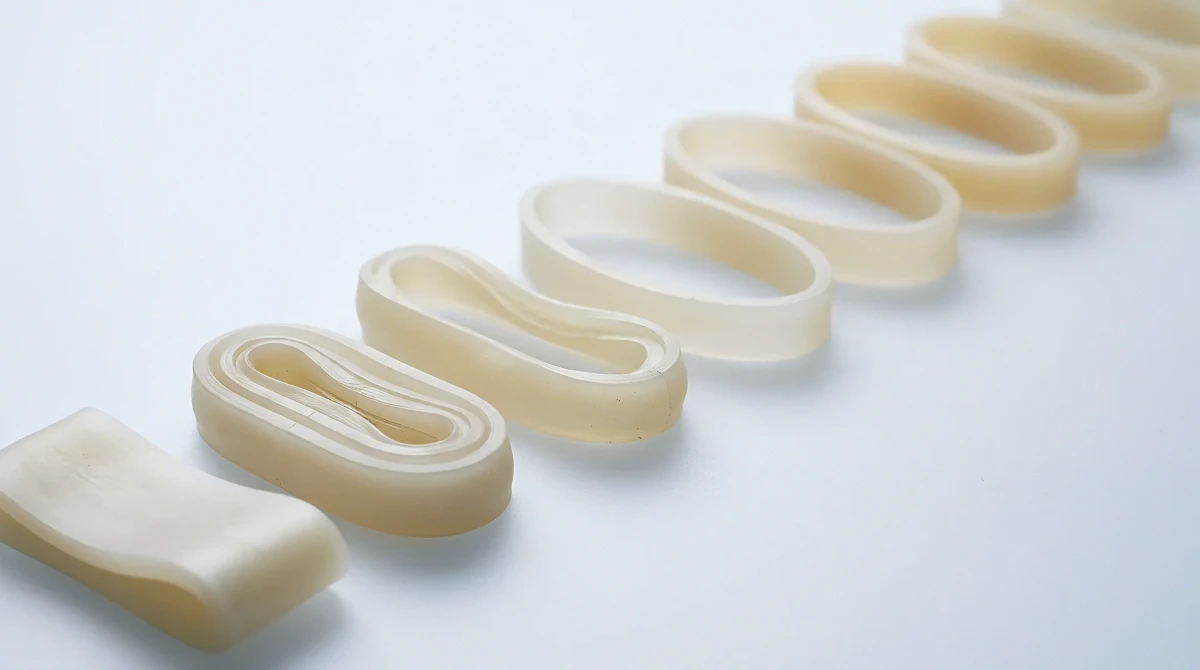
Rubber-Like Vacuum Casting Grades and the Hardness Each CoversRubber-like vacuum casting resins are two- or three-component polyurethanes that cure in a silicone mold to an elastomer, with a Shore A hardness chosen for the part. The variable-hardness systems reach the range by adding a third component to a fixed A:B pair.

PP-Like and PE-Like Polyurethane Casting Resins for Vacuum Casting

PP-like and PE-like urethanes trade stiffness for elongation by grade, and their heat figures depend on cure, so the first cast part is tested in its real duty.

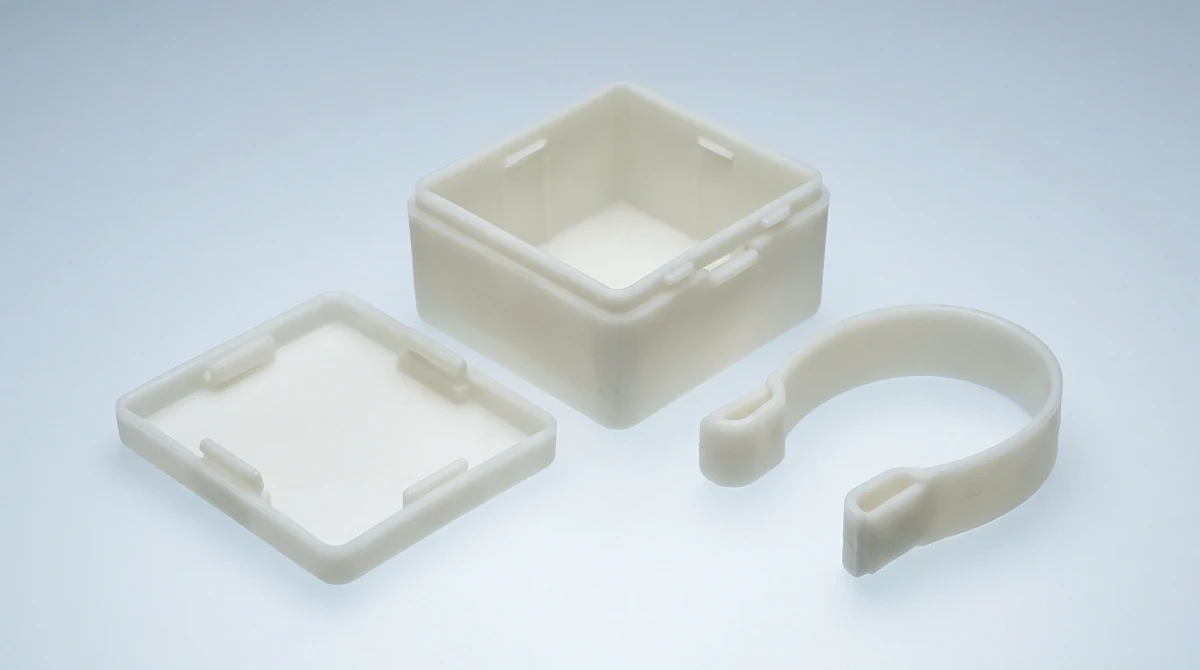
What PP-Like and PE-Like Mean on a Casting Resin Data SheetA PP-like or PE-like grade is a two- or three-component polyurethane formulated so that a part cast in a silicone mold behaves, in hand and in a snap fit, more like polypropylene or polyethylene than like a stiff ABS replica. The makers say so in their own words.

Silicone Molds, Pours and Lead Time for a Vacuum Cast Batch

A batch needs one silicone mold per set of copies, per resin and per color, and pours run one at a time through the chamber.

How Many Silicone Molds a Vacuum Cast Batch NeedsThe tool count is the quantity divided by the copies one tool gives, rounded up. Renishaw states that a mold can produce up to 50 parts before retooling and typically between 30 and 50 colour matched parts.

Degassing Silicone and Resin in Vacuum Casting

Each resin component is evacuated alone for about ten minutes, the silicone twice, and the air returns before the pot life ends.

Why Silicone and Resin Are Degassed Under VacuumMixing puts air into any liquid. Stirring two viscous components together folds the surface into the bulk, and a general guide from the mold supplier ArtMolds puts the air picked up by mixing at 5 % to 20 % of the volume, calling it the primary cause of bubbles in cast parts.

Linear Shrinkage of Cast Polyurethane Resins Per 100 mm

Printed shrinkage belongs to one bar and one cure, so the master is scaled from it as a starting point and the first article confirms each critical dimension.

Linear Shrinkage Read as Millimeters Per MeterLinear shrinkage is the fractional loss in length between the mold cavity and the cured part. A resin that fills a cavity 100 mm long and cures into a part that measures 99.3 mm has shrunk by 0.7 percent, which is the same as 7 mm per meter.

Dimensional Accuracy of Vacuum Cast Parts From SLA, FDM and MJF Masters

A cast copy follows its master within a small fraction of a millimeter, and the printed master is the larger source of error against the drawing.

How Accurate Vacuum Cast Parts Are in a Published StudyThe authors cast a battery cover for an enclosure, a thin-walled part 1.5 mm (0.059 in) thick with two measured dimensions: section A at 26.84 mm (1.057 in) and section B at 49.84 mm (1.962 in), both from the CAD model. They made three masters of it by three additive processes: fused deposition modeling (FDM) in ABS, stereolithography (SLA) in a detailed white resin, and multi-jet fusion (MJF) in polyamide.

Send the Drawing of Your Cast Part

Send the 2D drawing and the 3D file, with the quantity and the stage of the project. An engineer replies within 1 working day.

The quote form, the mutual NDA and the private folder for your files are on Protolis Atelier, with Vacuum Casting chosen.

Request a Quote