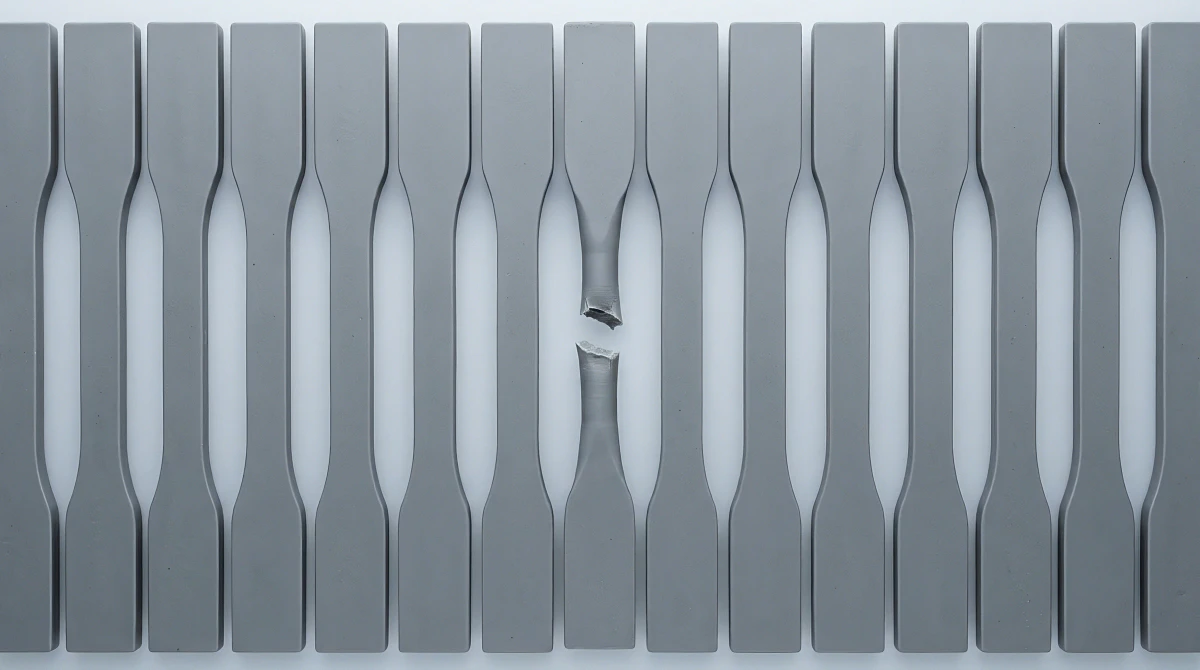
Conditioning

Conditioning is holding a specimen or a part at a set temperature and humidity for a set time before it is tested or measured.

Every Conditioning article of the Vacuum Casting Resources, newest first, each written from published standards, research and makers’ data.

Meaning

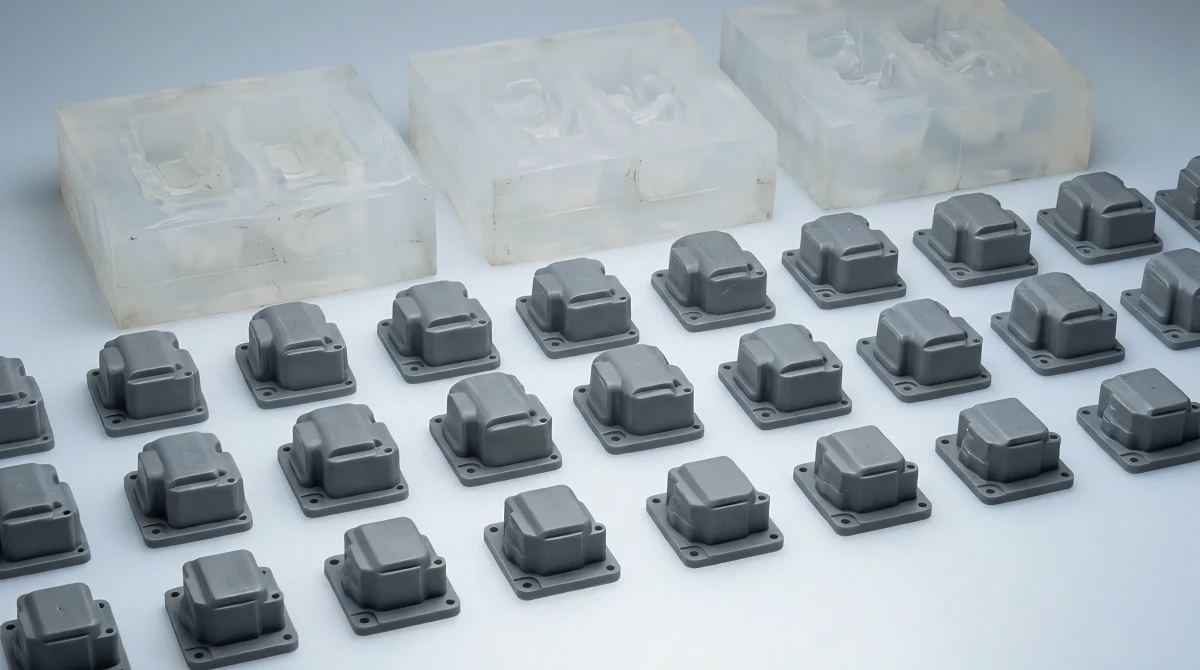
Conditioning is holding a specimen or a part at a set temperature and humidity for a set time before it is tested or measured. It brings the material to a known state, so 2 readings taken on different days can agree. In vacuum casting it matters because parts leave a hot oven and keep changing as they cool and settle. A tolerance or a property quoted without its conditioning is hard to compare.

Part Measurement

Parts still warm from a 100 °C (212 °F) post-cure have not reached their resting state. The order can set atmosphere and rest time as conditions on any tolerance check. Readings from different tools and deliveries then line up. When a part moves to an injection mold, the same rule applies to the first molded parts.
Read More

Fire Test Conditioning

UL 94 conditions its vertical test bars for 2 days at 23 °C (73 °F) and 50 % relative humidity. A second set of conditions keeps them 7 days at 70 °C (158 °F) in an oven. That second step works as an aging step. How the rated bars were conditioned, compared with delivered parts, is not on the sheets.

Shrinkage Readings

A shrinkage figure compares only between parts measured at the same temperature. Cooling from the mold to the inspection room is a drop of about 50 °C (90 °F). That alone moves a part by a few tenths of a percent. That is the same order as the 0.3 % shrinkage some sheets print. A quality plan that names the conditioning keeps the 2 effects apart.

Hardness Readings

A hardness check reads the part at the stated temperature. The part is first conditioned in the room long enough to match it. Renishaw’s 8263 shows why, at Shore D 83 at 23 °C (73 °F) and 80 at 60 °C (140 °F).

Order Specification

The buyer makes 3 choices here. They are the stage at which the part is measured, the time and atmosphere for cooling and conditioning, and the support state. Writing them into the order costs one line and removes a common dispute between 2 labs.

ISO 527 Tensile Values on Polyurethane Casting Resin Data Sheets

A tensile value on a casting resin sheet belongs to standard bars after one stated cure, so a requirement on parts is set on bars cast and cured with the batch.

What ISO 527 Covers on a Casting Resin Data SheetISO 527 is the international method for tensile properties of plastics, and casting resins fall inside it. The scope of ISO 527-1, as published by the Estonian standards body, sets out the general principles for determining tensile strength, tensile modulus and other aspects of the stress and strain relationship under defined conditions.
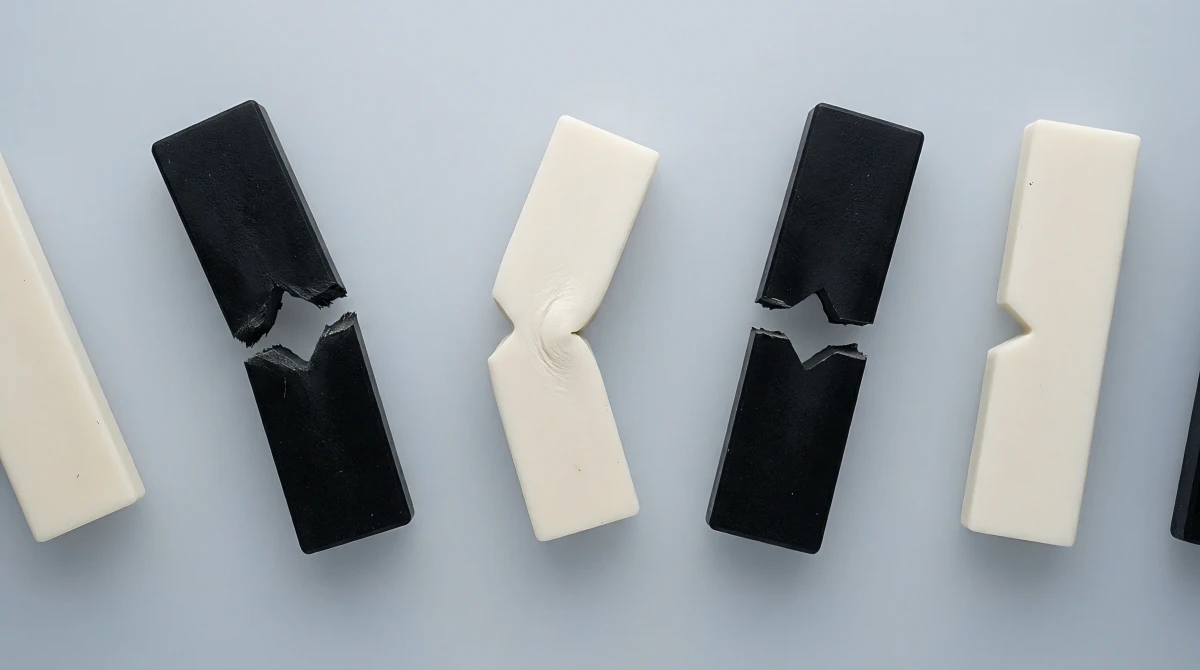
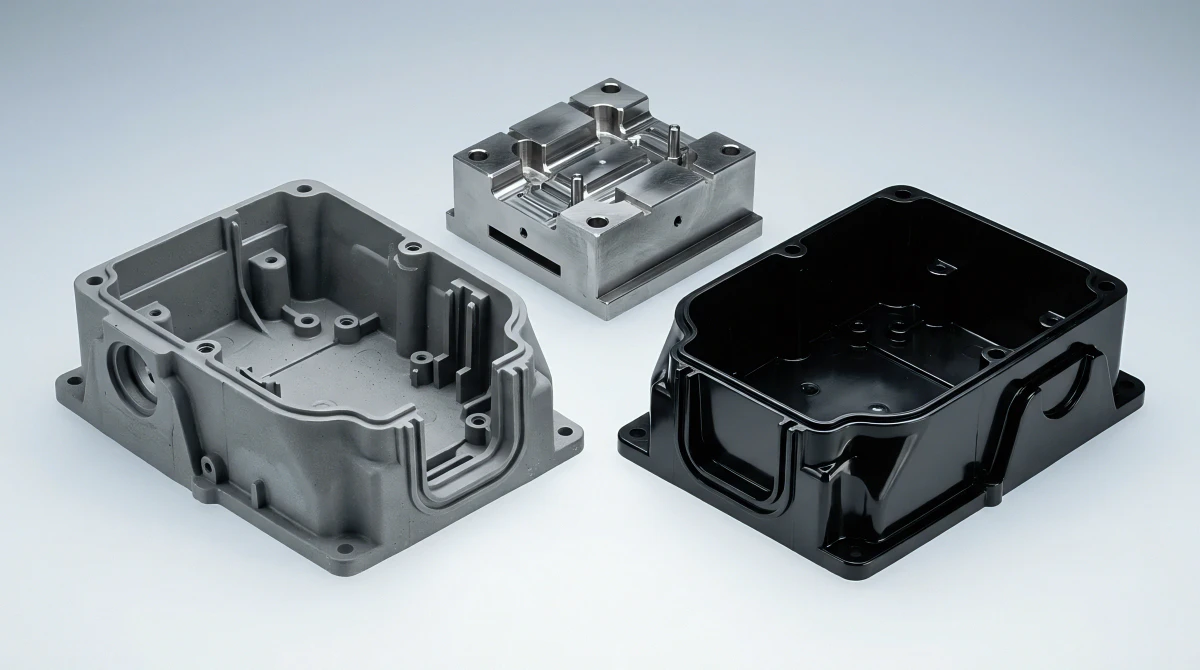
ISO 179 and ISO 180 Impact Strength on Cast Resin Data Sheets

Impact values on cast resin sheets are comparisons tied to method, notch, specimen and cure, so a part's toughness is set by tests on batch bars or the part.

What ISO 179 and ISO 180 Measure on a Cast ResinBoth standards measure how much energy a pendulum hammer loses breaking a small bar of plastic at a high strain rate. ZwickRoell, a maker of the testing machines, describes the principle in its pages on both methods: a hammer of specified energy and drop height strikes the specimen, does not swing back to its starting height, and the height difference is taken as the energy absorbed.

When a Vacuum Cast Run Should Move to an Injection Mold

Silicone molds carry a pilot, and a hard tool follows once the quantity, colors and repeat orders outgrow a handful of tools.

Where Silicone Tools Stop and the First Injection Mold StartsInjection molds are rated in classes by the construction they are built to and the cycles they are expected to give. The classification belongs to the plastics industry's trade body, PLASTICS, formerly the Society of the Plastics Industry, and its own text was not opened for this piece.

Silicone Molds, Pours and Lead Time for a Vacuum Cast Batch

A batch needs one silicone mold per set of copies, per resin and per color, and pours run one at a time through the chamber.

How Many Silicone Molds a Vacuum Cast Batch NeedsThe tool count is the quantity divided by the copies one tool gives, rounded up. Renishaw states that a mold can produce up to 50 parts before retooling and typically between 30 and 50 colour matched parts.

Demolding and Post-Curing Vacuum Cast Parts

Each grade prints its own demold time and its own post-cure, and thin or long parts are supported in the oven while it runs.

Demolding Vacuum Cast Parts at 70 °CDemolding means opening the silicone tool and taking the copy out once the resin has gelled and hardened far enough to hold its form. In every sheet on file the tool stays at 70 °C (158 °F) in the oven for that time.

Linear Shrinkage of Cast Polyurethane Resins Per 100 mm

Printed shrinkage belongs to one bar and one cure, so the master is scaled from it as a starting point and the first article confirms each critical dimension.

Linear Shrinkage Read as Millimeters Per MeterLinear shrinkage is the fractional loss in length between the mold cavity and the cured part. A resin that fills a cavity 100 mm long and cures into a part that measures 99.3 mm has shrunk by 0.7 percent, which is the same as 7 mm per meter.

Send the Drawing of Your Cast Part

Send the 2D drawing and the 3D file, with the quantity and the stage of the project. An engineer replies within 1 working day.

The quote form, the mutual NDA and the private folder for your files are on Protolis Atelier, with Vacuum Casting chosen.

Request a Quote