Cast Thermoset

A cast thermoset is a part made from a resin that cures by chemical reaction in its mold, such as the polyurethanes of vacuum casting.

Every Cast Thermoset article of the Vacuum Casting Resources, newest first, each written from published standards, research and makers’ data.

Meaning

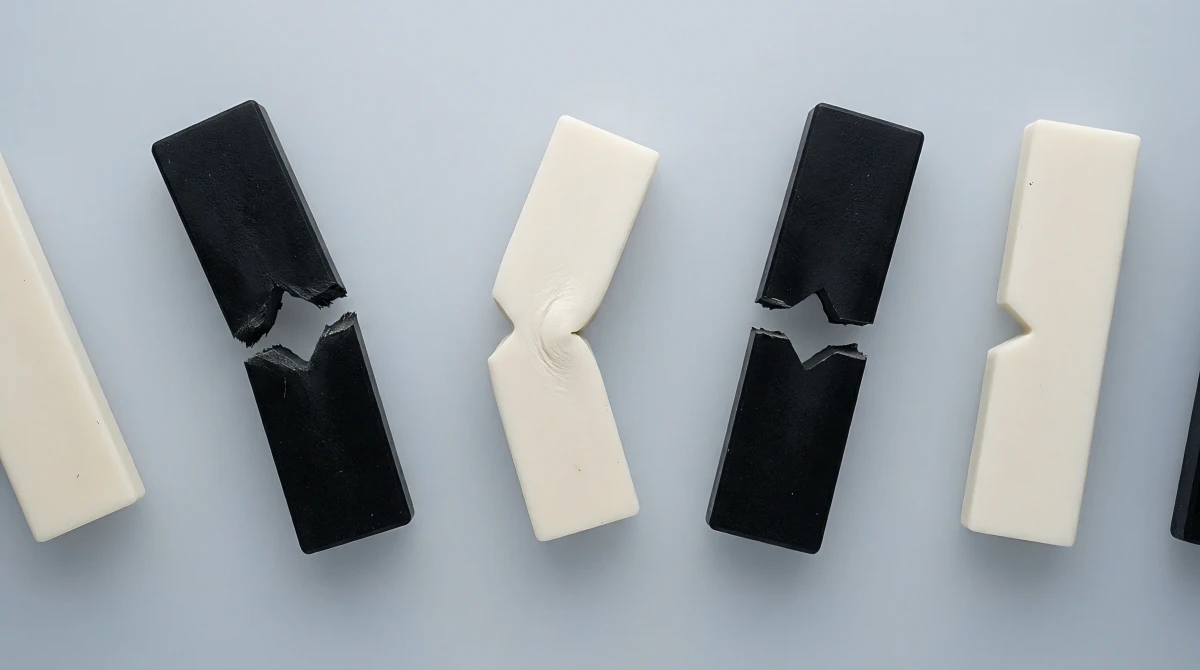
A cast thermoset is a part made from a resin that cures by chemical reaction in its mold, such as the polyurethanes of vacuum casting. It reaches its printed properties through the cure and the post-cure. A buyer asking for an ABS-like part is asking for a thermoset that comes close to a thermoplastic on its datasheet. Several test standards treat it with care for that reason.

Annealing Effect

ISO 75-2 notes that some materials need annealing of their test specimens, which generally raises the heat deflection result. A post-cured casting acts like such an annealed specimen. PX331’s printed figures assume 17 oven hours between 70 °C and 80 °C (158 °F and 176 °F). A copy shipped at demold has skipped that step.
Read More

Shrinkage Test Gap

ISO 291 sets the atmosphere for conditioning plastics before a test. No standard read for these resources prescribes how to test their shrinkage. Each resin maker uses its own procedure and its own bar. A printed shrinkage is therefore a starting point for the master’s scale.

Marginal Flame Results

Burning tests fix their specimen size, flame, time and end points on purpose. Some materials react strongly to those fixed settings, as ASTM D635 observes. For a cast thermoset, a result near a pass limit calls for a second look. A set totaling 48 seconds of burning against a 50-second limit is an example. The lot and the cure are checked before anyone calls the material compliant.

Molded Part Comparison

The molded part will be made from a different, thermoplastic resin. The cast grade’s datasheet values come from cast specimens, and the molded thermoplastic has values of its own. Those 2 datasheets are compared first.

Overmolding and Inserts in Vacuum Casting Step by Step

Inserts in a cast part are held by knurls and undercuts, located on pins in the silicone, and surrounded by resin mixed and poured under vacuum.

The Vacuum Casting Steps for a Part With InsertsA vacuum cast part with molded-in inserts is made in eight steps: the insert is chosen and shaped for mechanical retention, the master is prepared so the mold can locate it, the insert's surface is prepared, it is placed in the opened silicone mold, the mold is closed and preheated, the resin is degassed and mixed under vacuum, the mold is filled and vented, and the part is cured and demolded around the insert. An overmolded part adds a second mold and a second pour.
ISO 527 Tensile Values on Polyurethane Casting Resin Data Sheets

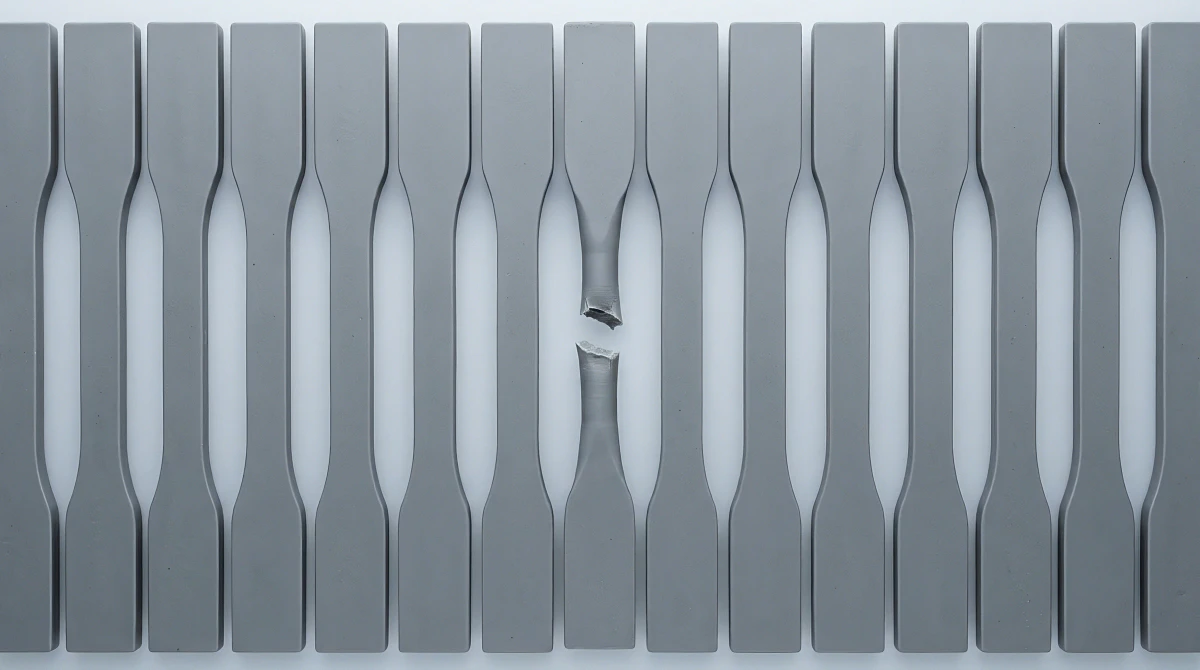
A tensile value on a casting resin sheet belongs to standard bars after one stated cure, so a requirement on parts is set on bars cast and cured with the batch.

What ISO 527 Covers on a Casting Resin Data SheetISO 527 is the international method for tensile properties of plastics, and casting resins fall inside it. The scope of ISO 527-1, as published by the Estonian standards body, sets out the general principles for determining tensile strength, tensile modulus and other aspects of the stress and strain relationship under defined conditions.

ISO 179 and ISO 180 Impact Strength on Cast Resin Data Sheets

Impact values on cast resin sheets are comparisons tied to method, notch, specimen and cure, so a part's toughness is set by tests on batch bars or the part.

What ISO 179 and ISO 180 Measure on a Cast ResinBoth standards measure how much energy a pendulum hammer loses breaking a small bar of plastic at a high strain rate. ZwickRoell, a maker of the testing machines, describes the principle in its pages on both methods: a hammer of specified energy and drop height strikes the specimen, does not swing back to its starting height, and the height difference is taken as the energy absorbed.

Linear Shrinkage of Cast Polyurethane Resins Per 100 mm

Printed shrinkage belongs to one bar and one cure, so the master is scaled from it as a starting point and the first article confirms each critical dimension.

Linear Shrinkage Read as Millimeters Per MeterLinear shrinkage is the fractional loss in length between the mold cavity and the cured part. A resin that fills a cavity 100 mm long and cures into a part that measures 99.3 mm has shrunk by 0.7 percent, which is the same as 7 mm per meter.

Heat Deflection Temperature of Cast Polyurethane Under ISO 75 and ASTM D648

Heat deflection temperature ranks materials under one loaded test and does not set a service ceiling, so it is read together with post-cure and part geometry.

Heat Deflection as One Loaded Bar TestThe test bends a bar under a fixed load while the temperature climbs, and it records the temperature at which the bar has deflected by a set amount. ISO 75-1 describes the general method for determining the temperature of deflection under load, with flexural stress applied in three-point loading.

Send the Drawing of Your Cast Part

Send the 2D drawing and the 3D file, with the quantity and the stage of the project. An engineer replies within 1 working day.

The quote form, the mutual NDA and the private folder for your files are on Protolis Atelier, with Vacuum Casting chosen.

Request a Quote