Demold Time

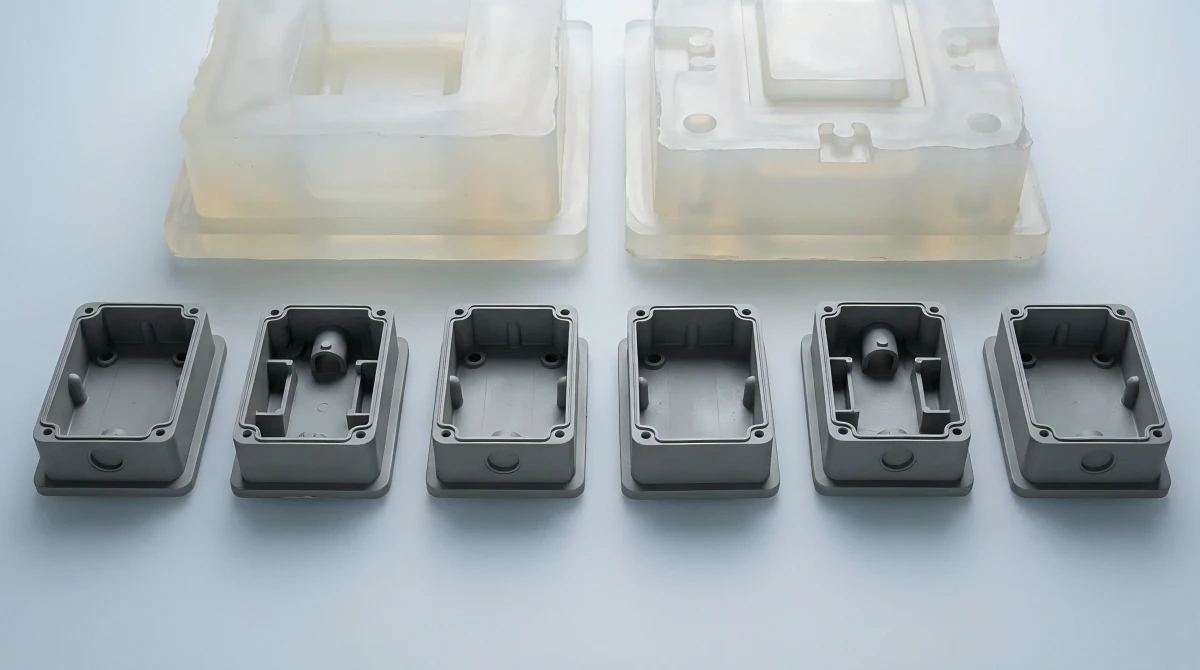
Demold time is the time a filled silicone tool stays in the 70 °C (158 °F) oven before the cast part can be taken out.

Every Demold Time article of the Vacuum Casting Resources, newest first, each written from published standards, research and makers’ data.

Meaning

Demold time is the time a filled silicone tool stays in the 70 °C (158 °F) oven before the cast part can be taken out. Each resin maker prints it per grade, sometimes split by wall thickness. It marks the earliest safe opening, with the resin gelled and hard enough to hold its form. Opening sooner risks the part, and waiting longer costs the tool.

Printed Range

The grades on file run from 25 minutes to 3 hours. Renishaw 6230 gives 25 to 60 minutes, and 8263 gives 60 minutes in the mold. Renishaw 8020-2, the rubber-like grade, needs 90 minutes. Sika’s PX205 and PX522 give 60 minutes, and PX 223 HT gives 45 to 70 minutes. A 2004 dissertation lists 9 grades of another maker at 30 minutes to 2 hours. Their molds ran at 40 °C to 70 °C (104 °F to 158 °F).
Read More

Thin Section Delay

On 2 Sika sheets the time is tied to wall thickness. PX331 demolds after 45 minutes above 3 mm (0.12 in) and after 75 minutes below it. PX523 demolds a 100 mm (3.94 in) block in 45 minutes and a wall under 5 mm (0.20 in) in 3 hours. The thin section is the slow one, since it has only the oven for heat. The time on the sheet is therefore read against the thinnest wall of the part.

Thickness Precedence

A demold time belongs with the maximum casting thickness on the same sheet. A part with a 12 mm (0.47 in) boss in PX331 is outside its 5 mm (0.20 in) limit before any demold time applies. No sheet says which section sets the time on a part that mixes a thin rib with a thick wall. That case goes to the maker or to a trial casting.

Early Opening Faults

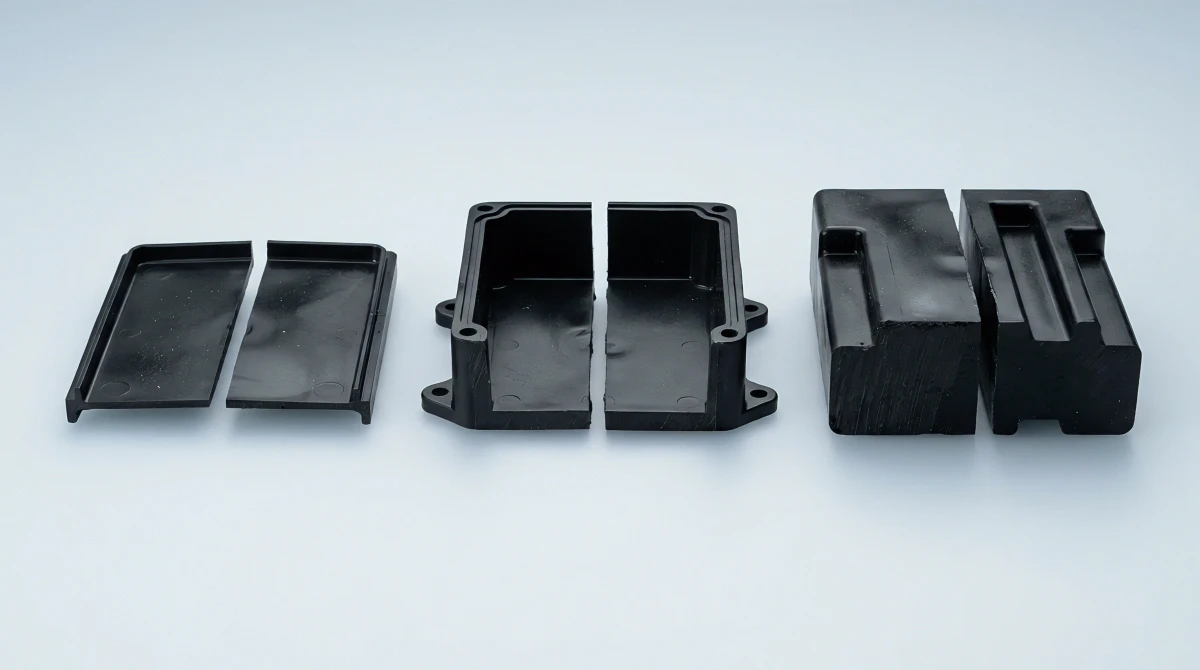
A part taken out before its time is soft to the nail. Its parting line can distort and a thin rib can bend or tear. Even on time, the part comes out warm and less stiff than at room temperature. Long or thin shapes can bend under their own weight on the bench.

Tool Cost

Every minute in the oven is also a minute of the silicone at 70 °C (158 °F). Renishaw’s sheets tie a longer mold life to demolding the casting immediately after curing. Over 50 copies, a 45-minute grade gives the tool 37.5 hours at temperature. A 3-hour grade gives it 150 hours over the same run. Demolding also frees the tool for its next pour, so it sets the turnaround of each mold.

Silicone Cure Times

The silicone tool has a cure time of its own before its first use. Vacusil 2000 cures in 24 hours at 23 °C (73 °F). The dissertation’s 2 silicones demold after 15 and 12 hours at 23 °C (73 °F). That day of cure is the price of every extra tool in a batch.
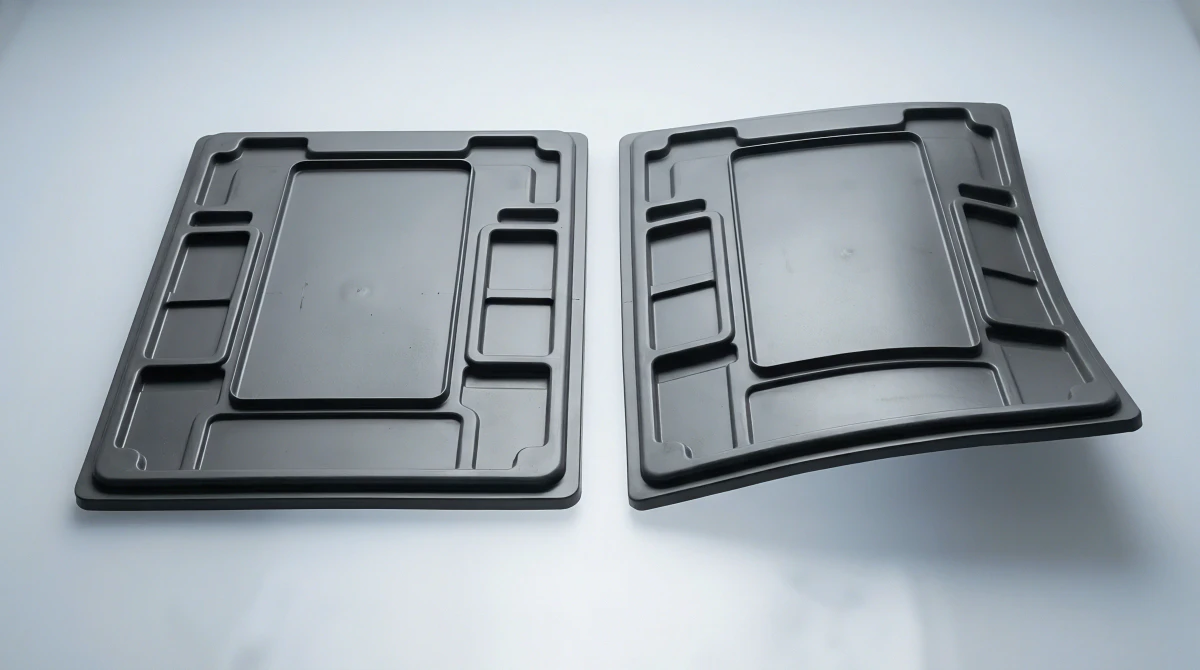
Flatness and Warp of Large Vacuum Cast Parts

Large vacuum cast panels stay flat through a uniform thin wall, a slow cure, a conformer in post-cure and a temperature kept well below heat deflection.

What Sets Flatness and Warp on a Large Vacuum Cast PartFlatness on a large vacuum cast part is set by five conditions: the heat the resin releases as it cures, the wall thickness against the grade's maximum, how evenly and how long the part cures before demold, whether it is supported during post-cure, and the temperature it later works at. No resin maker, guide or study opened for this piece prints a flatness or warp tolerance for vacuum cast parts.

ISO 527 Tensile Values on Polyurethane Casting Resin Data Sheets

A tensile value on a casting resin sheet belongs to standard bars after one stated cure, so a requirement on parts is set on bars cast and cured with the batch.

What ISO 527 Covers on a Casting Resin Data SheetISO 527 is the international method for tensile properties of plastics, and casting resins fall inside it. The scope of ISO 527-1, as published by the Estonian standards body, sets out the general principles for determining tensile strength, tensile modulus and other aspects of the stress and strain relationship under defined conditions.

Rubber-Like Polyurethane Resins From Shore 30 A to 90 A

A rubber-like urethane is specified by grade, hardness method and a tested service temperature, because hardness alone leaves strength and heat behavior open.

Rubber-Like Vacuum Casting Grades and the Hardness Each CoversRubber-like vacuum casting resins are two- or three-component polyurethanes that cure in a silicone mold to an elastomer, with a Shore A hardness chosen for the part. The variable-hardness systems reach the range by adding a third component to a fixed A:B pair.

Demolding and Post-Curing Vacuum Cast Parts

Each grade prints its own demold time and its own post-cure, and thin or long parts are supported in the oven while it runs.

Demolding Vacuum Cast Parts at 70 °CDemolding means opening the silicone tool and taking the copy out once the resin has gelled and hardened far enough to hold its form. In every sheet on file the tool stays at 70 °C (158 °F) in the oven for that time.

Wall Thickness Limits for Vacuum Cast Polyurethane Parts

Each casting resin carries a maximum thickness printed by its maker, and every property on its sheet describes a specimen of one stated thickness, not the whole part.

Maximum Casting Thickness as the Maker Prints ItSeveral Sika sheets print a line titled maximum casting thickness, and Sika's text for PX522 and PX523 words the same idea as parts until 10 mm or until 100 mm thickness by vacuum casting in silicone molds. Renishaw's resin sheets for 6230 and 8263 print no such line.

Linear Shrinkage of Cast Polyurethane Resins Per 100 mm

Printed shrinkage belongs to one bar and one cure, so the master is scaled from it as a starting point and the first article confirms each critical dimension.

Linear Shrinkage Read as Millimeters Per MeterLinear shrinkage is the fractional loss in length between the mold cavity and the cured part. A resin that fills a cavity 100 mm long and cures into a part that measures 99.3 mm has shrunk by 0.7 percent, which is the same as 7 mm per meter.

Silicone Rubber for Vacuum Casting Molds

Mold silicone is an addition-cure rubber chosen for hardness and resin resistance, checked against every material it touches, and treated as a consumable.

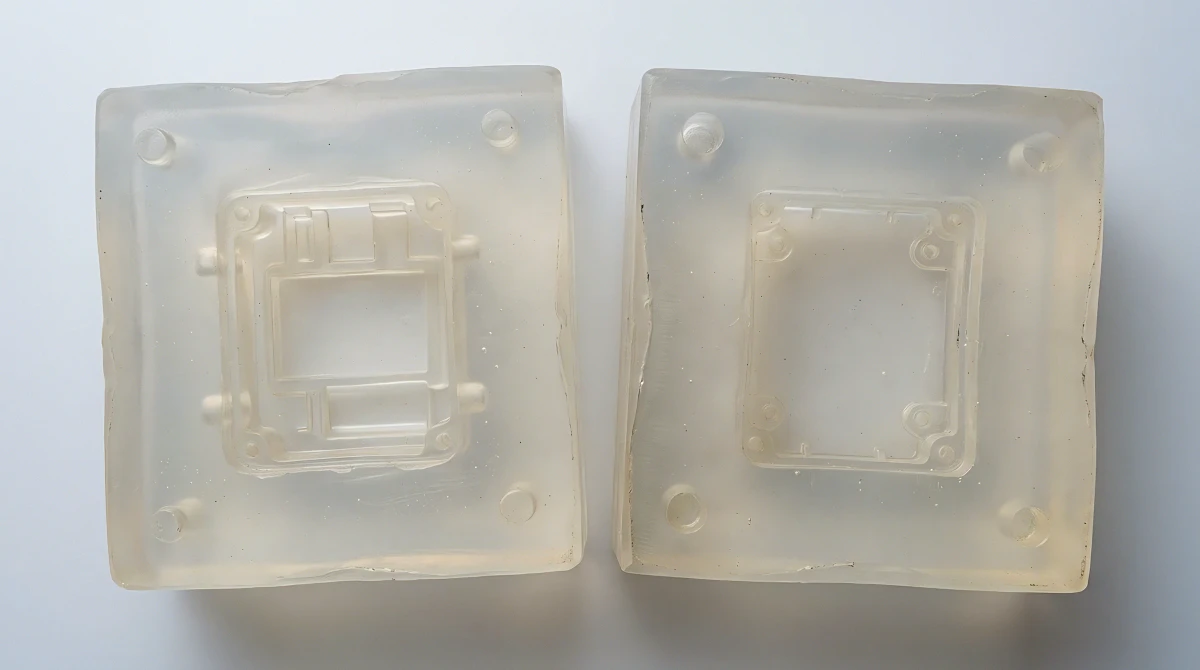
Silicone Rubber as the Mold Material in Vacuum CastingA mold silicone is a two-component liquid rubber that is poured round a master, cured at room temperature or a little above, and cut open to release the master. Renishaw describes Vacusil 2000 as a two-component addition-cure liquid silicone rubber designed for mold making, curing at room temperature to a translucent, high-strength elastic rubber, and names vacuum casting of polyurethane resins among its uses.

Clear Polyurethane Casting Resin for Vacuum Casting

A clear polyurethane grade is chosen by section thickness first, and its post-cure has a printed ceiling that protects the color of the part.

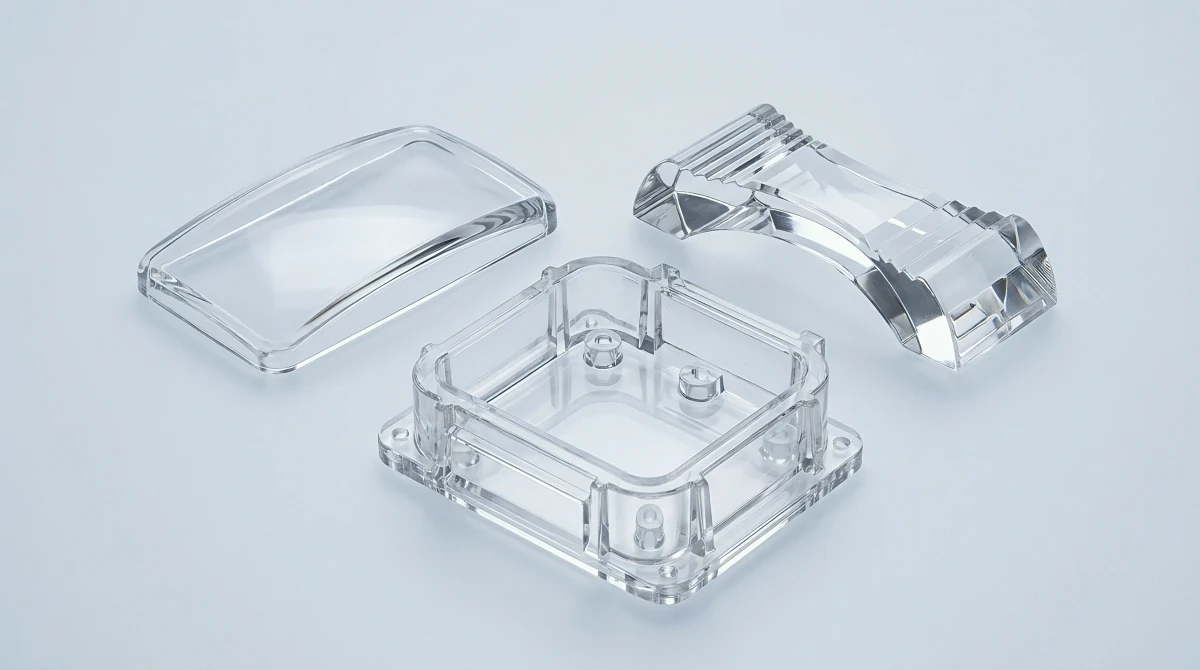
How Clear a Casting Resin Is in Datasheet NumbersOn a datasheet, clear is a claim with two numbers behind it at most. PX522 is described as water clear, with a coefficient of light transmission of 89 percent measured by the laboratory LNE, and PX523 prints a refractive index of 1.511.

ABS-Like Polyurethane Casting Resins for Vacuum Casting

An ABS-like polyurethane resin is a stiff thermoset named for its use, and its datasheet numbers depend on post-cure, thickness and test method.

Why a Polyurethane Resin Is Called ABS-LikeThe phrase is a maker's shorthand, not a standard. Sika describes its SikaBiresin PX331 as having mechanical properties similar to thermoplastics like filled ABS, and Renishaw lists its 6230 as having properties similar to ABS.

Send the Drawing of Your Cast Part

Send the 2D drawing and the 3D file, with the quantity and the stage of the project. An engineer replies within 1 working day.

The quote form, the mutual NDA and the private folder for your files are on Protolis Atelier, with Vacuum Casting chosen.

Request a Quote