Tolerance

Every Tolerance article of the Vacuum Casting Resources, newest first, each written from published standards, research and makers’ data.

Masters, Shrinkage and Shape

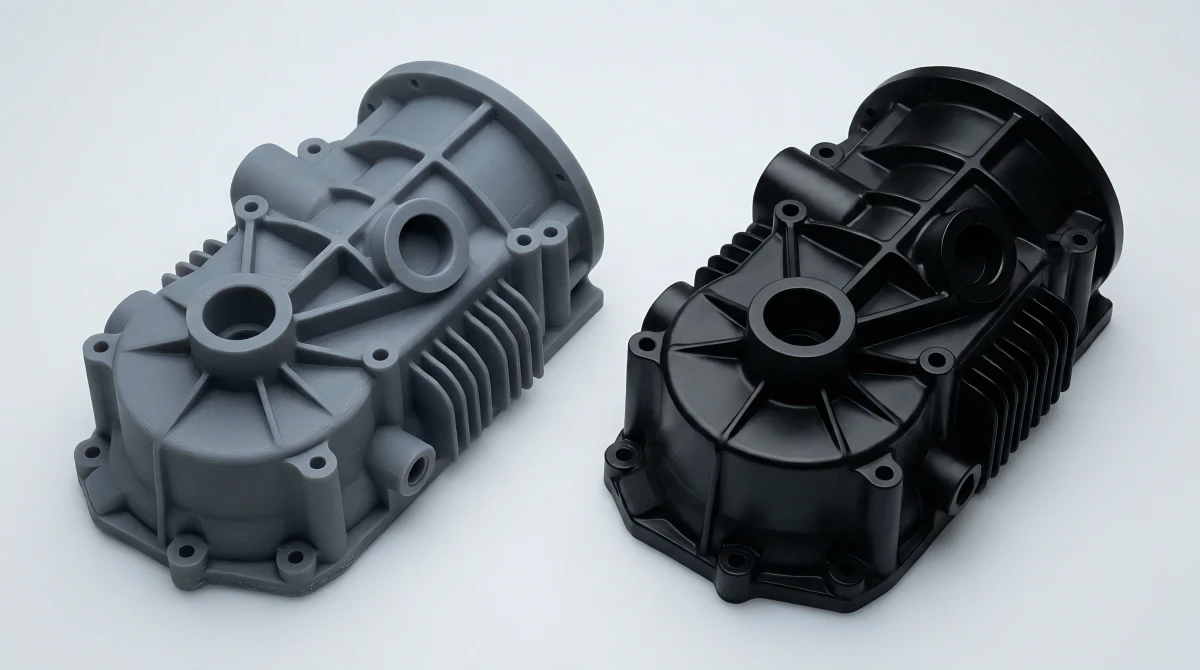
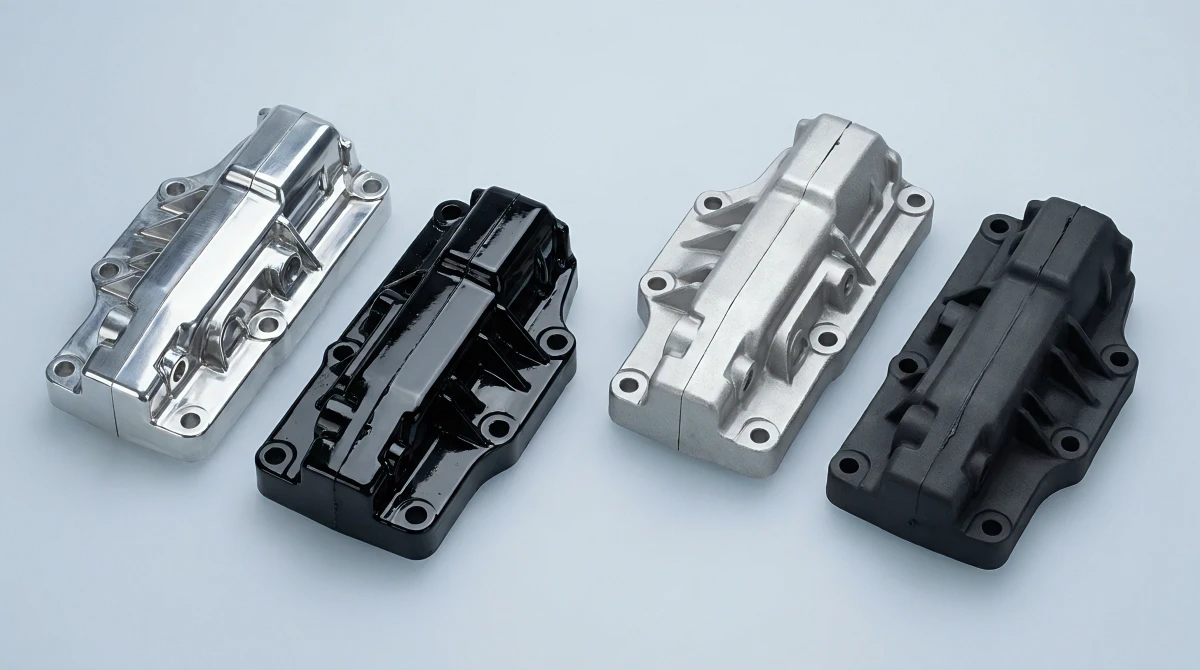
How a cast copy differs from its master. SLA, FDM and MJF masters each carry their own accuracy and surface into the mold, each resin shrinks by its own amount per 100 mm, a large part can warp out of flat, and past a wall thickness limit a polyurethane part sinks or fails to fill.

Surface Finish of Vacuum Cast Parts and How the Master Sets It

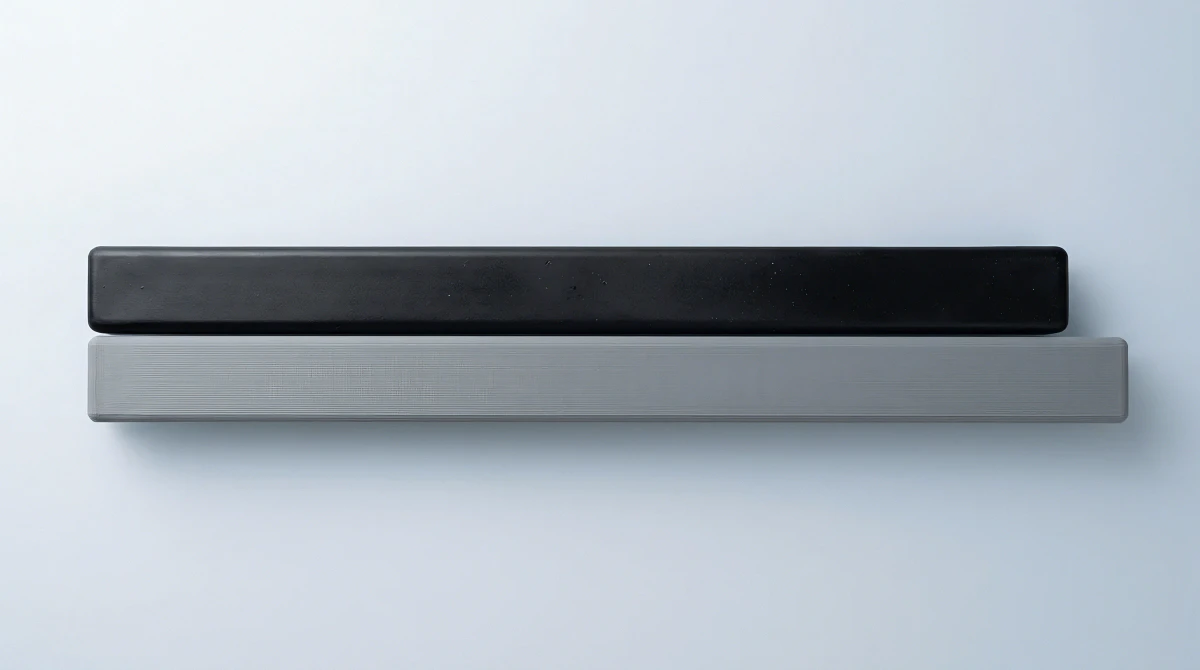
A vacuum cast part copies its master's roughness and comes out slightly smoother, so the finish is specified and measured on the master before the mold is poured.

How Closely a Vacuum Cast Surface Follows Its MasterA vacuum cast part's surface roughness is set by its master within about a tenth of the master's value, in the two studies on file. In the 2020 study by Mustafa and co-authors, parts cast from FDM, SLA and multi jet fusion (MJF) masters all came out smoother than the master, by 1.84 %, 9.62 % and 6.09 % respectively.
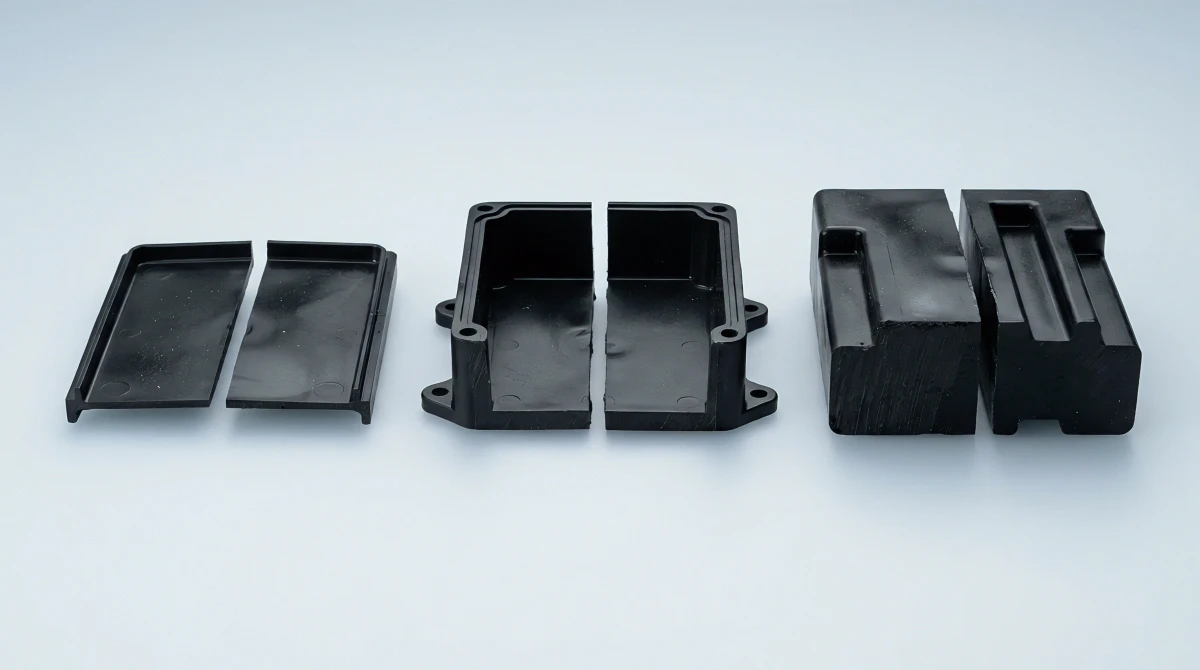
Flatness and Warp of Large Vacuum Cast Parts

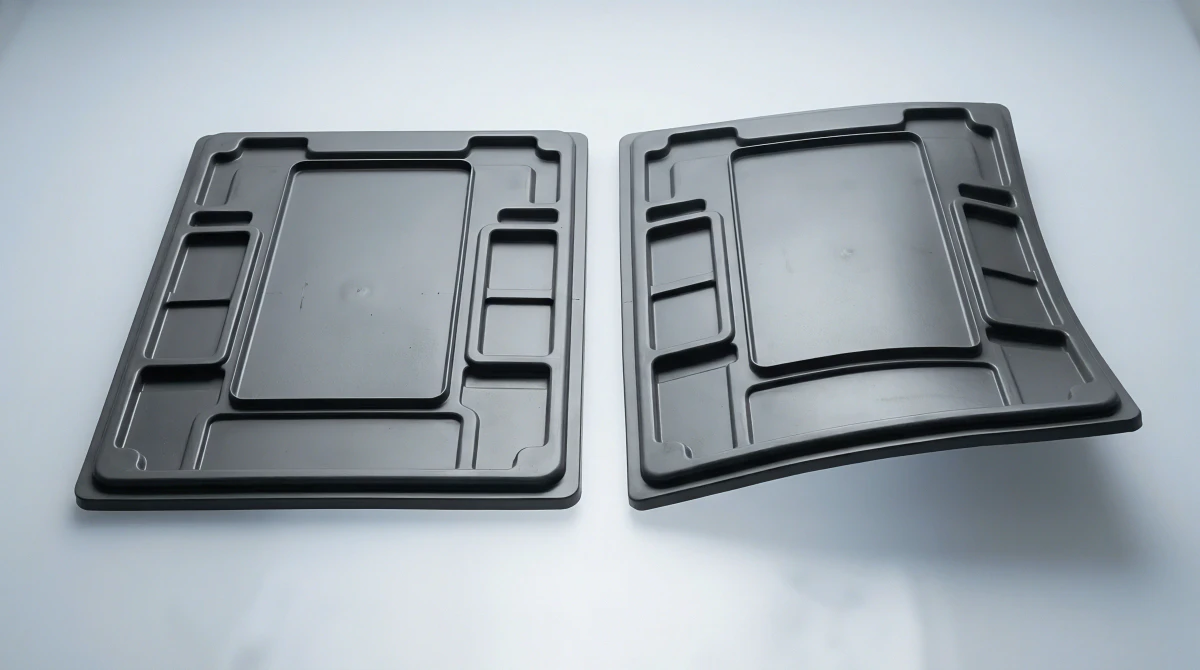
Large vacuum cast panels stay flat through a uniform thin wall, a slow cure, a conformer in post-cure and a temperature kept well below heat deflection.

What Sets Flatness and Warp on a Large Vacuum Cast PartFlatness on a large vacuum cast part is set by five conditions: the heat the resin releases as it cures, the wall thickness against the grade's maximum, how evenly and how long the part cures before demold, whether it is supported during post-cure, and the temperature it later works at. No resin maker, guide or study opened for this piece prints a flatness or warp tolerance for vacuum cast parts.

Wall Thickness Limits for Vacuum Cast Polyurethane Parts

Each casting resin carries a maximum thickness printed by its maker, and every property on its sheet describes a specimen of one stated thickness, not the whole part.

Maximum Casting Thickness as the Maker Prints ItSeveral Sika sheets print a line titled maximum casting thickness, and Sika's text for PX522 and PX523 words the same idea as parts until 10 mm or until 100 mm thickness by vacuum casting in silicone molds. Renishaw's resin sheets for 6230 and 8263 print no such line.

Linear Shrinkage of Cast Polyurethane Resins Per 100 mm

Printed shrinkage belongs to one bar and one cure, so the master is scaled from it as a starting point and the first article confirms each critical dimension.

Linear Shrinkage Read as Millimeters Per MeterLinear shrinkage is the fractional loss in length between the mold cavity and the cured part. A resin that fills a cavity 100 mm long and cures into a part that measures 99.3 mm has shrunk by 0.7 percent, which is the same as 7 mm per meter.

Dimensional Accuracy of Vacuum Cast Parts From SLA, FDM and MJF Masters

A cast copy follows its master within a small fraction of a millimeter, and the printed master is the larger source of error against the drawing.

How Accurate Vacuum Cast Parts Are in a Published StudyThe authors cast a battery cover for an enclosure, a thin-walled part 1.5 mm (0.059 in) thick with two measured dimensions: section A at 26.84 mm (1.057 in) and section B at 49.84 mm (1.962 in), both from the CAD model. They made three masters of it by three additive processes: fused deposition modeling (FDM) in ABS, stereolithography (SLA) in a detailed white resin, and multi-jet fusion (MJF) in polyamide.

Send the Drawing of Your Cast Part

Send the 2D drawing and the 3D file, with the quantity and the stage of the project. An engineer replies within 1 working day.

The quote form, the mutual NDA and the private folder for your files are on Protolis Atelier, with Vacuum Casting chosen.

Request a Quote