Weighing

Weighing is the step where the two components of a casting resin, and any color paste, are put on the scale for one pour before they are mixed.

Every Weighing article of the Vacuum Casting Resources, newest first, each written from published standards, research and makers’ data.

Meaning

Weighing is the step where the two components of a casting resin, and any color paste, are put on the scale for one pour before they are mixed. Vacuum casting mixes every pour on its own, so every pour is weighed on its own, and the ratio set on the resin maker’s sheet holds only as well as that weighing does.

Cup Loss

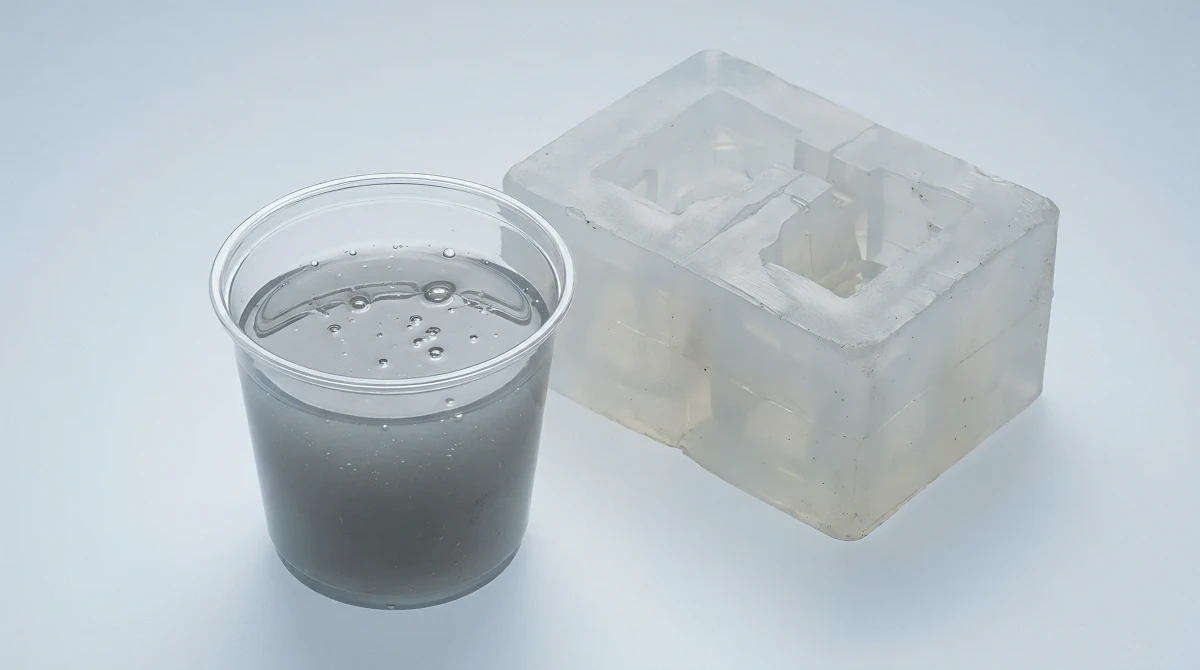
Some resin always stays behind in the cup that is tipped into the other. Renishaw defines cup loss as the resin left in cup A after tipping and asks for it to be allowed for when weighing, and Sika gives the same instruction. A 2004 vacuum casting dissertation puts the residue at about 5 g (0.18 oz) and has that much extra weighed in to compensate. Which component sits in the upper cup changes from grade to grade: the Sika sheets place the polyol there for PX523 and the isocyanate there for PX205 and PX331, so the allowance goes on whichever component is tipped.
Read More

Small Pours

The same dissertation notes that below about 50 g (1.8 oz) of resin the cup loss upsets the ratio between the components enough to change the material’s properties. That sets a practical floor for a small part, beside the 150 g minimum shot weight Renishaw prints for its 8020-2.

Color Paste

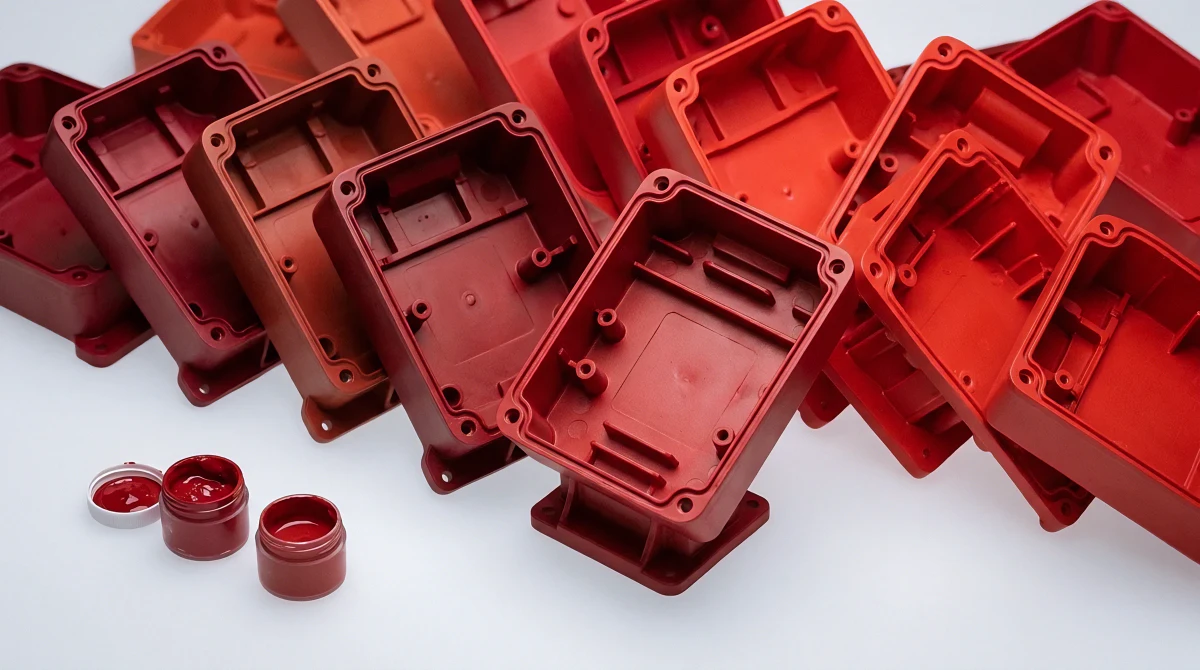
Renishaw caps colorant at 2 % of the total weight for 6230 and 8263. On a 100 g (3.5 oz) pour that is 2 g (0.07 oz) of paste, so a weighing slip of a tenth of a gram changes the dose by 5 %. A single off-color pour in a batch is therefore read first as a weighing or mixing fault in that pour.

Before the Scale

Component B is shaken before weighing, and a polyol that has crystallized in cold storage is warmed as its maker describes before it goes on the scale.

Faults It Explains

Soft or uncured areas in a cast part trace to a mix ratio upset by weighing or by crystallization. A recipe approved for color or hardness is therefore written by weight for one pour size, paste, A and B together, so each later pour repeats it.
Vacuum Casting Defects in a Batch Traced to Their Cause

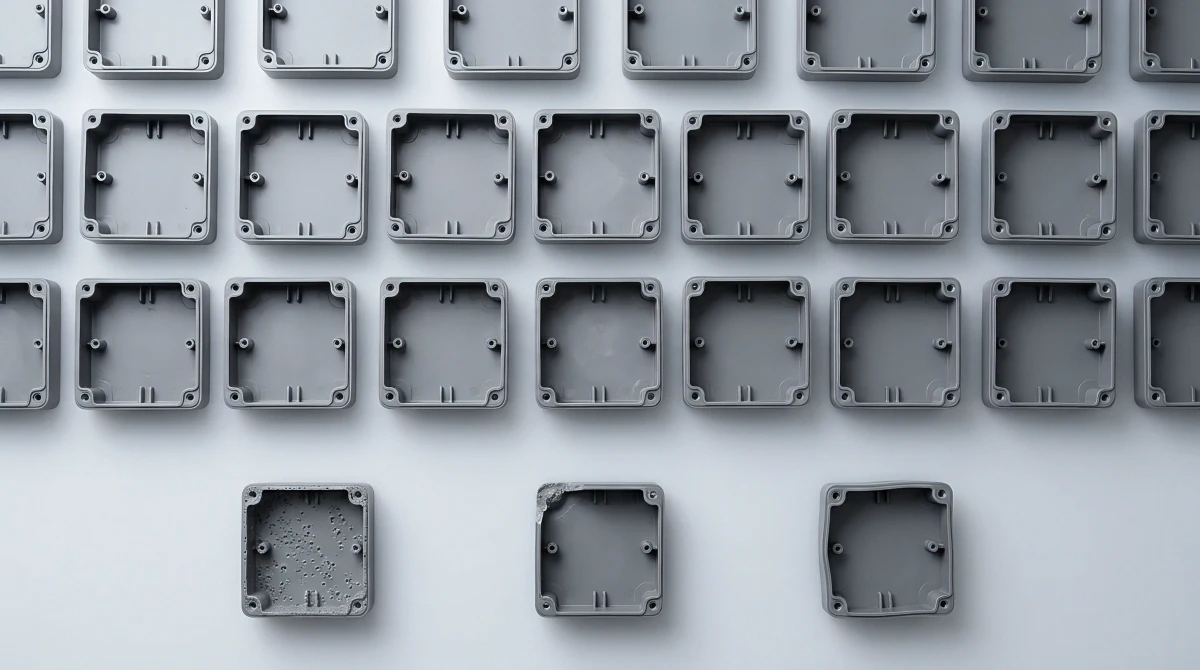
A vacuum casting defect points to its cause by where it sits on the part and which castings of the batch show it, from one wet pour to a mold near its end.

The List of Casting Defects and the Cause Behind EachVacuum casting defects trace to six causes: moisture in the components, air folded in during mixing and pouring, a mixing ratio upset by weighing or crystallization, a mold or master fault copied into every part, a cure or demold cut short, and a silicone mold wearing out over the run. The table pairs the defects named in the opened documents with those causes and with what a buyer or inspector sees.

Color Matching a Vacuum Cast Batch to a RAL or Pantone Reference

A vacuum cast color is fixed as a weighed recipe on an approved first article, measured with an agreed formula and tolerance, and repeated for every pour.

How a Vacuum Cast Batch Is Matched to a RAL or Pantone ColorA vacuum cast batch is matched to a reference by pigmenting each pour with a paste dosed within the resin maker's limit, casting a first part, measuring it against the reference under agreed conditions, adjusting the recipe, and then holding that recipe for every pour, with parts checked against the approved first article. Renishaw describes the casting system as producing typically 30 to 50 color-matched parts from a single mold, which is the batch size the recipe has to stay steady over.

Degassing Silicone and Resin in Vacuum Casting

Each resin component is evacuated alone for about ten minutes, the silicone twice, and the air returns before the pot life ends.

Why Silicone and Resin Are Degassed Under VacuumMixing puts air into any liquid. Stirring two viscous components together folds the surface into the bulk, and a general guide from the mold supplier ArtMolds puts the air picked up by mixing at 5 % to 20 % of the volume, calling it the primary cause of bubbles in cast parts.

Wall Thickness Limits for Vacuum Cast Polyurethane Parts

Each casting resin carries a maximum thickness printed by its maker, and every property on its sheet describes a specimen of one stated thickness, not the whole part.

Maximum Casting Thickness as the Maker Prints ItSeveral Sika sheets print a line titled maximum casting thickness, and Sika's text for PX522 and PX523 words the same idea as parts until 10 mm or until 100 mm thickness by vacuum casting in silicone molds. Renishaw's resin sheets for 6230 and 8263 print no such line.

Send the Drawing of Your Cast Part

Send the 2D drawing and the 3D file, with the quantity and the stage of the project. An engineer replies within 1 working day.

The quote form, the mutual NDA and the private folder for your files are on Protolis Atelier, with Vacuum Casting chosen.

Request a Quote