Meaning
Shrinkage is the loss in length between the mold cavity and the cured cast part, given as a percentage or in millimeters per meter. A part from a 100 mm (3.94 in) cavity that measures 99.3 mm (3.909 in) has shrunk by 0.7 %. The same loss reads 7 mm per meter (0.007 in/in) on another sheet. In vacuum casting almost all of it belongs to the resin.Silicone Share
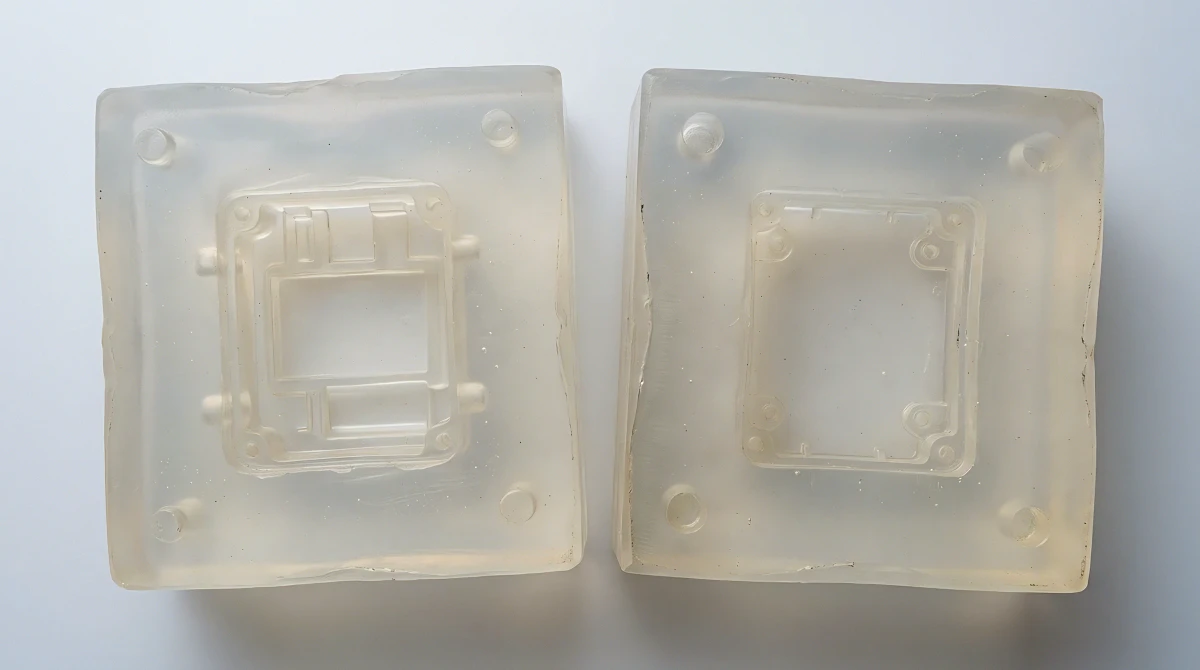
The silicone tool moves very little. Wacker describes ELASTOSIL M 4601 as non-shrinking. A 2004 dissertation lists its 2 mold silicones at under 0.1 % after 7 days. A 2020 study picked an addition-cure rubber for its near-zero size change. The makers therefore state shrinkage per resin grade.Read More
Printed Figures
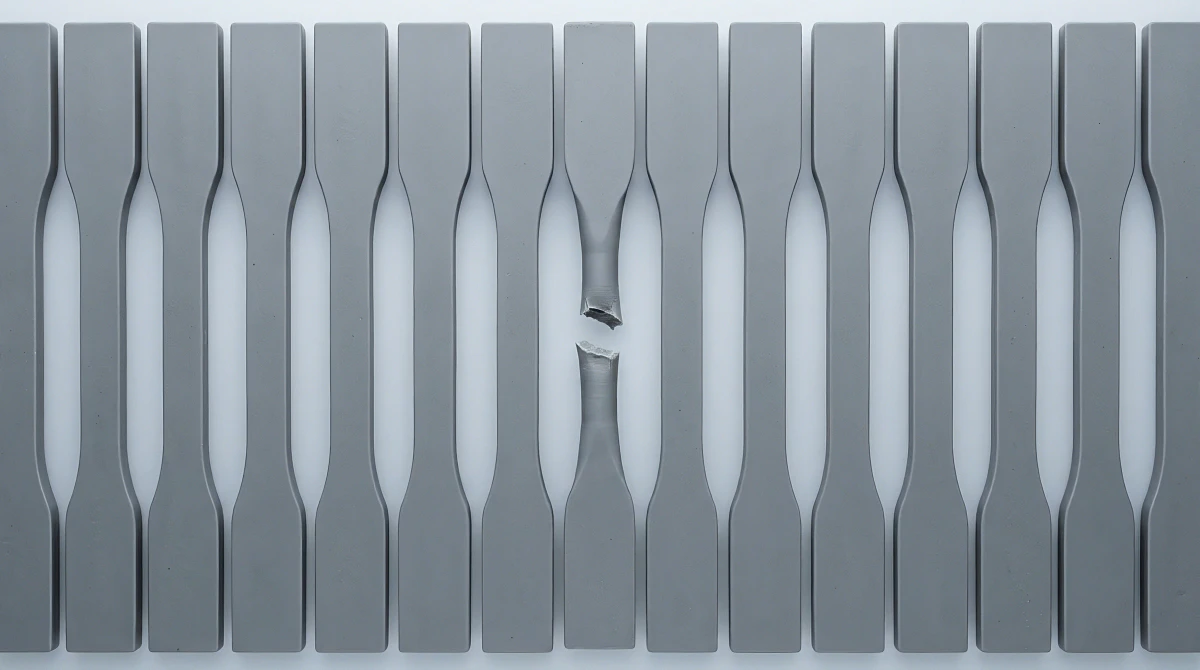
Sika prints 7 mm per meter (0.007 in/in) for PX205 on a 3 mm (0.12 in) bar after 16 hours at 80 °C (176 °F). PX522 prints the same figure on a 5 mm (0.20 in) bar and does not state the cure on that line. PX 223 HT prints 0 % after its full post-cure. Renishaw gives a typical 0.3 % for 6230 and 8263 and 0.2 % for 8020-2, with no bar named. PX331 and PX523 print no figure. With no standard shrinkage test for cast thermosets among the documents read, each maker measures its own way.Geometry Effects
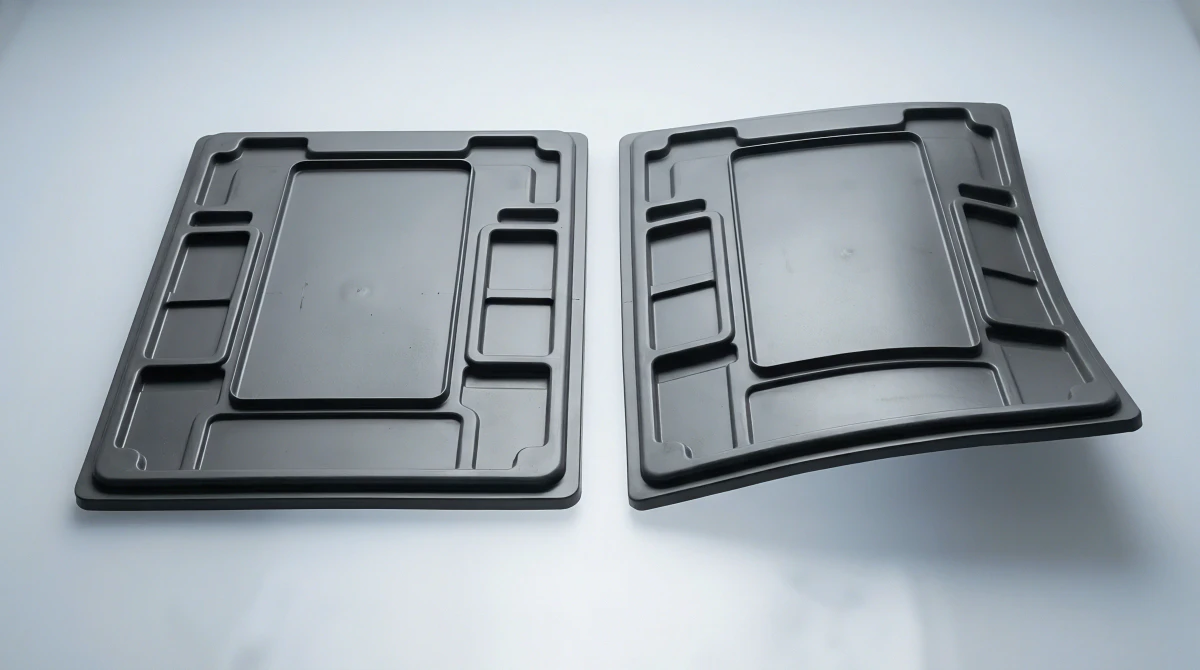
A test bar is long, flat and thin, and a real part rarely is. A hole formed around a silicone core is restrained, while an outer dimension contracts freely. Thick sections run hotter and cure for longer. Lengths along the flow from the gate behave differently from diameters across it. A figure from a 3 mm (0.12 in) bar therefore does not carry to a 100 mm (3.94 in) block.Measured Series
The 2004 dissertation cast specimens from a machined steel original in 3 silicone molds. The overall length shrank 0.84 %, a long thin section 0.29 % and a small diameter 1.55 %. That is a factor of 5 inside one part. The 3 casts also differed by 0.78 mm (0.031 in) on a 172 mm (6.77 in) length. Raising the cure from 30 °C to 70 °C (86 °F to 158 °F) cut the length loss from 0.8 % to 0.4 %. The author reports that about 0.1 % was reachable by trial of the casting conditions.Direction Effect
The 2020 study measured a thin cover cast from 3 masters. Its longer dimension shrank in all 9 trial runs, while the shorter one grew in 7. On the longer dimension, copies from the 3 masters moved by −0.10 %, +0.07 % and −0.39 % against their own master. The authors suggest the fill direction as a possible reason, which one part cannot confirm.Feature Loss
A percentage turns into a length by one multiplication. At 0.2 % a 25 mm (0.98 in) feature loses 0.05 mm (0.002 in). At 0.7 % a 250 mm (9.84 in) feature loses 1.75 mm (0.069 in). A flat ±0.1 mm (0.004 in) on 250 mm (9.84 in) is 0.04 %, well under the scatter between casts.First Article Check
The critical features are measured on the master at the inspection temperature. The first article is cast in the intended grade, post-cured as the sheet says and cooled to the same temperature. The loss is computed for each feature separately. The master is corrected only where a feature drifted. The measured record then replaces the printed figure for the next batch of the same grade, cure and mold.Process Change Effect
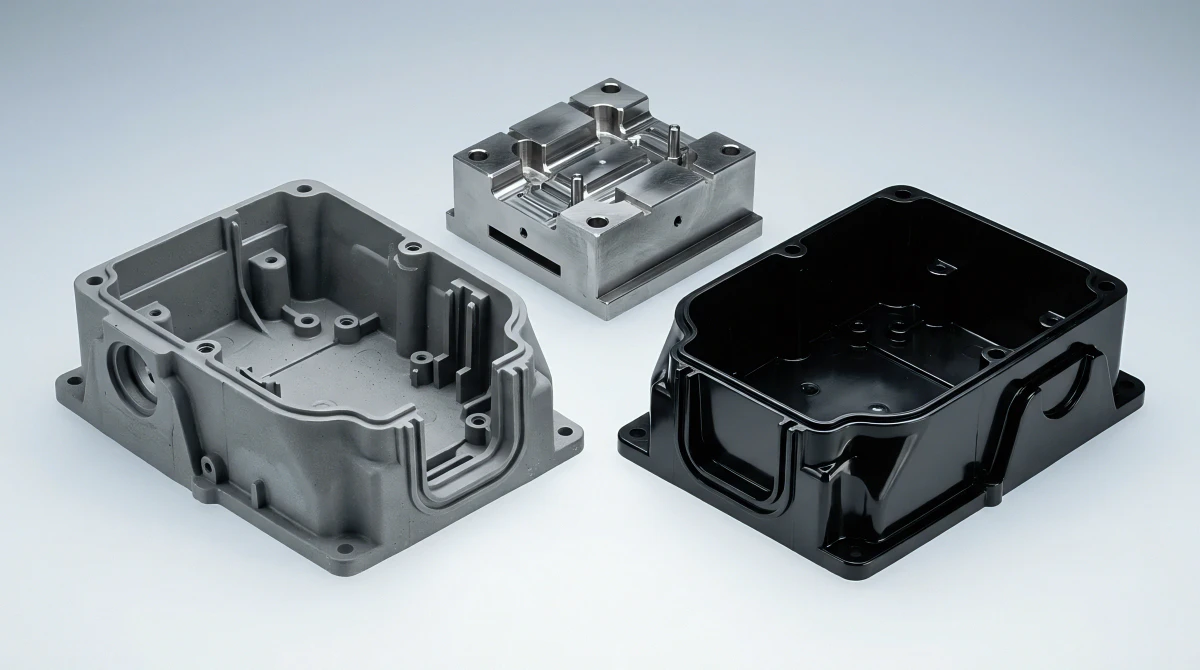
Cast shrinkage figures describe the resin in a silicone tool at 70 °C (158 °F). Molded resin shrinks by amounts that depend on that resin, its mold and its process. The first hard mold therefore takes an allowance that cannot come from the cast part. Dimensions approved on cast parts are confirmed again on molded first articles.Unresolved Question
No maker states whether a resin keeps its printed shrinkage from the first copy of a tool to the fiftieth. The answer comes from reading one critical dimension early, midway and late in the run.