Large Mold

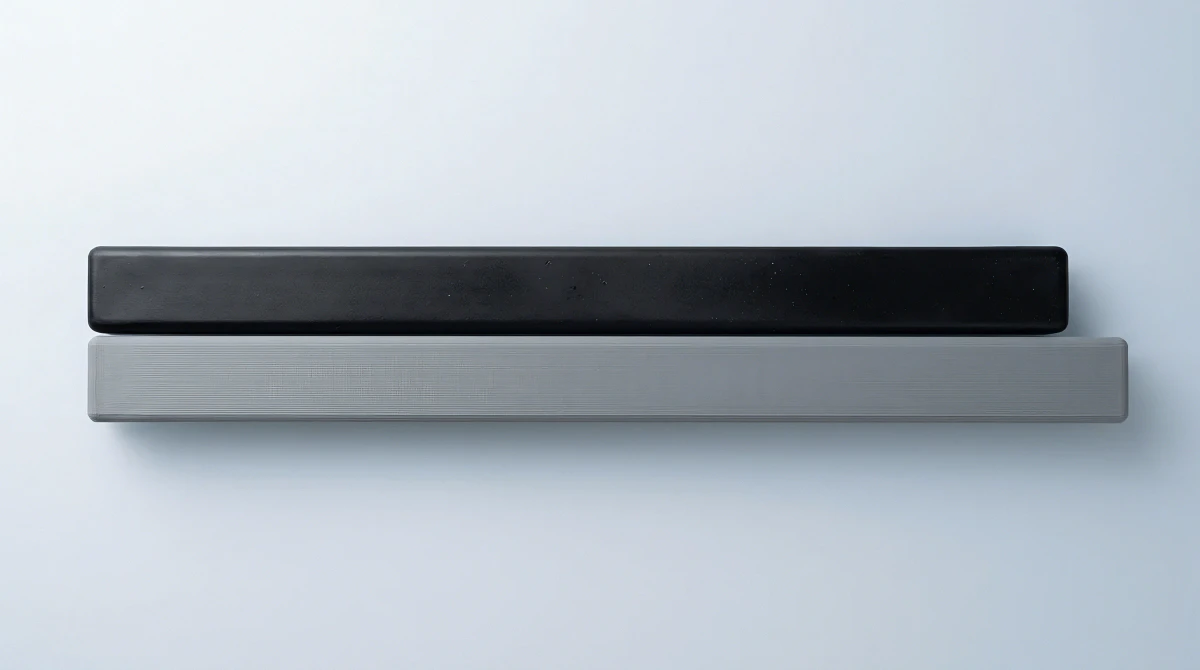
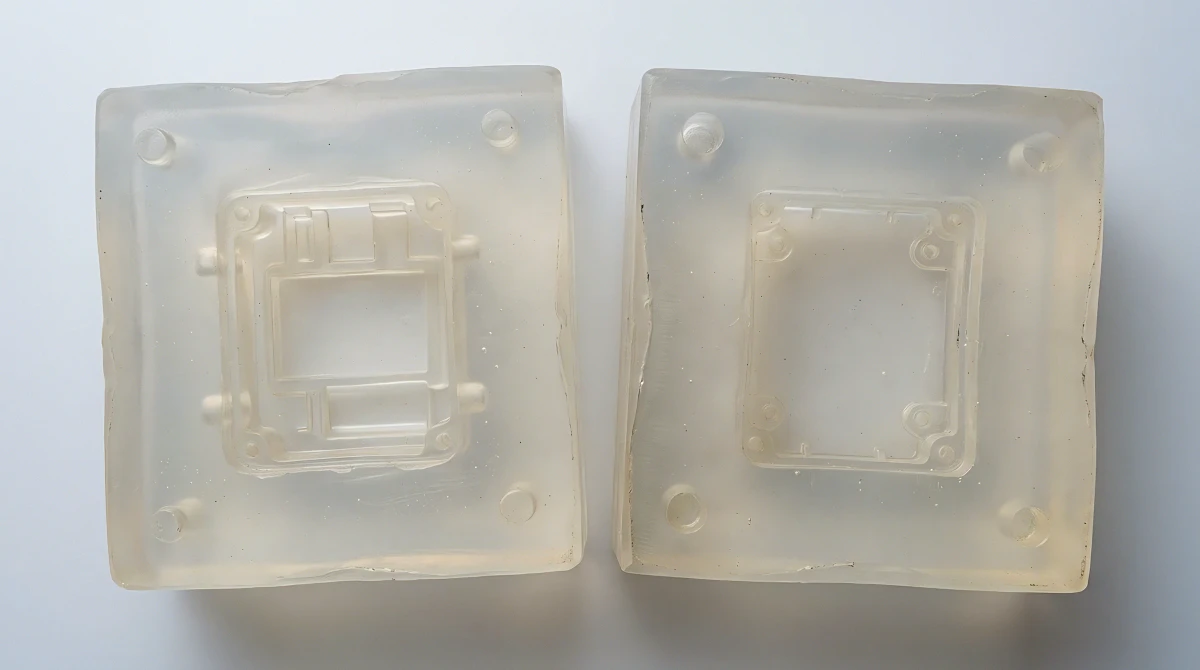
A large mold is a silicone tool big enough that its own weight can distort it, as for a thick block or a long part.

Every Large Mold article of the Vacuum Casting Resources, newest first, each written from published standards, research and makers’ data.

Meaning

A large mold is a silicone tool big enough that its own weight can distort it, as for a thick block or a long part. A 2004 dissertation notes that such molds may need supports to prevent that distortion. The issue belongs to the tool’s handling. It is separate from any shrinkage of the rubber itself.

Distortion Under Weight

The rubber barely shrinks. Wacker describes its mold silicone as non-shrinking, and the dissertation’s silicones list under 0.1 % after 7 days. A large tool can still sag or twist under its own mass. Any such movement is a matter of support, separate from the rubber’s own size change. Supporting the tool keeps the cavity in its cast shape.
Read More

Half Closure

A 2004 dissertation closes mold halves with tape or staples that hold them firmly together. On a large tool, the closure has to resist the weight of the resin as well.

Thick Part Demand

A 100 mm (3.94 in) section of PX523 holds more resin and calls for a bigger tool. A block of 100 × 50 × 50 mm (3.94 × 1.97 × 1.97 in) holds about 265 g (9.3 oz) of cured resin. Its pour is far above the 162 g (5.7 oz) for which the pot life is printed.

Silicone Quantity

A tool takes as much silicone as the frame holds once the master’s volume is subtracted. An allowance is added for what stays in the mixing bowl. A large tool also needs a larger cup. Vacusil 2000 asks for 4 to 5 times the silicone’s volume, since the rubber can rise up to 7 times while degassing.

Overmolding and Inserts in Vacuum Casting Step by Step

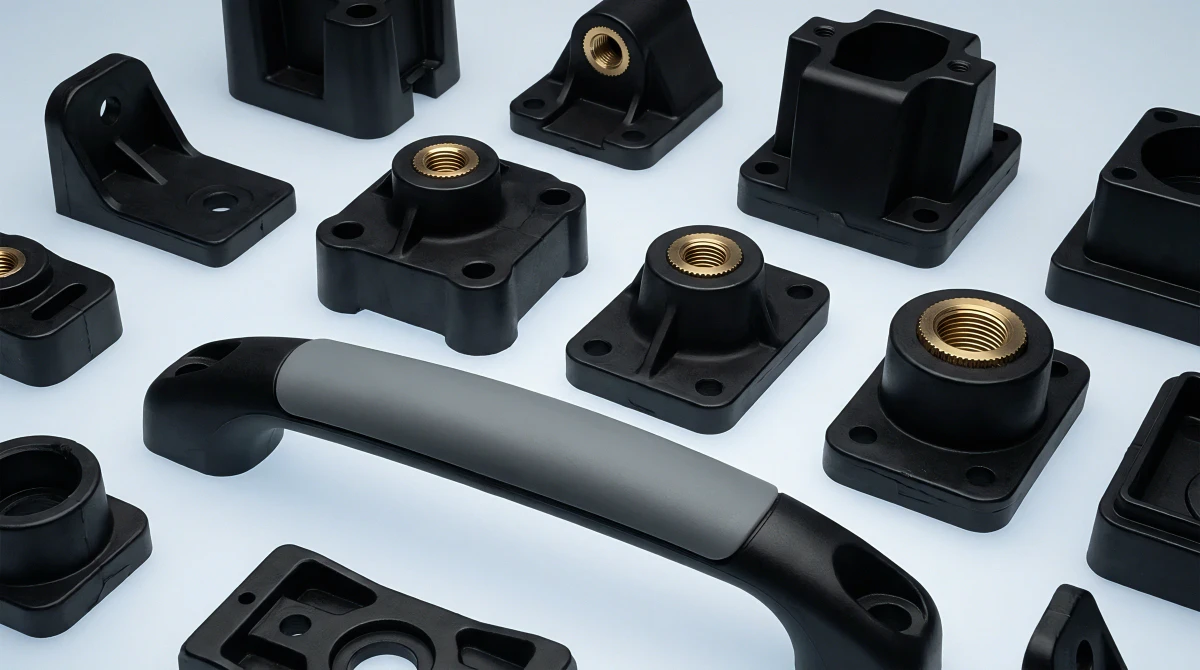
Inserts in a cast part are held by knurls and undercuts, located on pins in the silicone, and surrounded by resin mixed and poured under vacuum.

The Vacuum Casting Steps for a Part With InsertsA vacuum cast part with molded-in inserts is made in eight steps: the insert is chosen and shaped for mechanical retention, the master is prepared so the mold can locate it, the insert's surface is prepared, it is placed in the opened silicone mold, the mold is closed and preheated, the resin is degassed and mixed under vacuum, the mold is filled and vented, and the part is cured and demolded around the insert. An overmolded part adds a second mold and a second pour.
Flatness and Warp of Large Vacuum Cast Parts

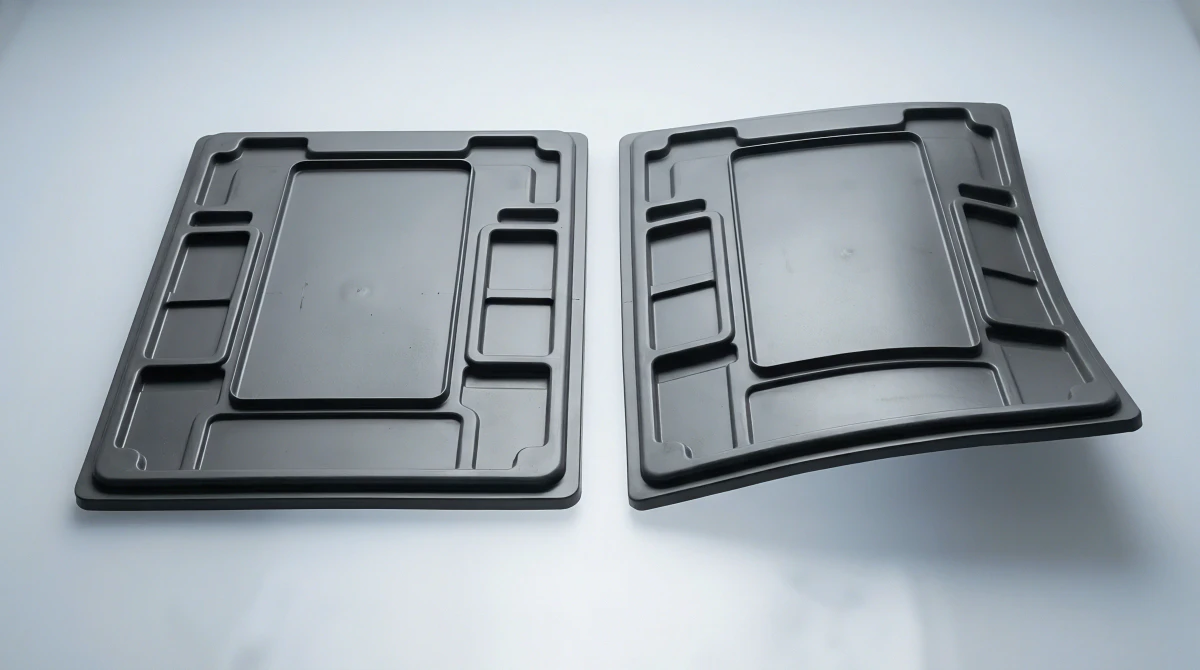
Large vacuum cast panels stay flat through a uniform thin wall, a slow cure, a conformer in post-cure and a temperature kept well below heat deflection.

What Sets Flatness and Warp on a Large Vacuum Cast PartFlatness on a large vacuum cast part is set by five conditions: the heat the resin releases as it cures, the wall thickness against the grade's maximum, how evenly and how long the part cures before demold, whether it is supported during post-cure, and the temperature it later works at. No resin maker, guide or study opened for this piece prints a flatness or warp tolerance for vacuum cast parts.

Wall Thickness Limits for Vacuum Cast Polyurethane Parts

Each casting resin carries a maximum thickness printed by its maker, and every property on its sheet describes a specimen of one stated thickness, not the whole part.

Maximum Casting Thickness as the Maker Prints ItSeveral Sika sheets print a line titled maximum casting thickness, and Sika's text for PX522 and PX523 words the same idea as parts until 10 mm or until 100 mm thickness by vacuum casting in silicone molds. Renishaw's resin sheets for 6230 and 8263 print no such line.

Linear Shrinkage of Cast Polyurethane Resins Per 100 mm

Printed shrinkage belongs to one bar and one cure, so the master is scaled from it as a starting point and the first article confirms each critical dimension.

Linear Shrinkage Read as Millimeters Per MeterLinear shrinkage is the fractional loss in length between the mold cavity and the cured part. A resin that fills a cavity 100 mm long and cures into a part that measures 99.3 mm has shrunk by 0.7 percent, which is the same as 7 mm per meter.

Silicone Rubber for Vacuum Casting Molds

Mold silicone is an addition-cure rubber chosen for hardness and resin resistance, checked against every material it touches, and treated as a consumable.

Silicone Rubber as the Mold Material in Vacuum CastingA mold silicone is a two-component liquid rubber that is poured round a master, cured at room temperature or a little above, and cut open to release the master. Renishaw describes Vacusil 2000 as a two-component addition-cure liquid silicone rubber designed for mold making, curing at room temperature to a translucent, high-strength elastic rubber, and names vacuum casting of polyurethane resins among its uses.

Send the Drawing of Your Cast Part

Send the 2D drawing and the 3D file, with the quantity and the stage of the project. An engineer replies within 1 working day.

The quote form, the mutual NDA and the private folder for your files are on Protolis Atelier, with Vacuum Casting chosen.

Request a Quote