Meaning
Moisture, for a casting resin, is water taken up from the air by its components or carried in on a pigment. It turns into gas inside the mix. Polyols and isocyanates are both hygroscopic, as ResinLab’s bulletin states. Every maker’s handling notes are written against it.Chemical Effect
Isocyanate and water react to give carbon dioxide gas and amines. Those amines then consume more isocyanate, forming polyurea. The gas shows in the cured part as fine bubbles and, with enough water, as foam. Aliphatic isocyanates, ResinLab notes, are less water-sensitive than aromatic types.Read More
Vacuum Limit
Vacuum can pull out air folded in during mixing. It cannot remove carbon dioxide that the resin keeps making from water. Gas from a damp component keeps forming no matter how long the pump runs. Only a fresh or properly sealed can solves it.Visible Signs
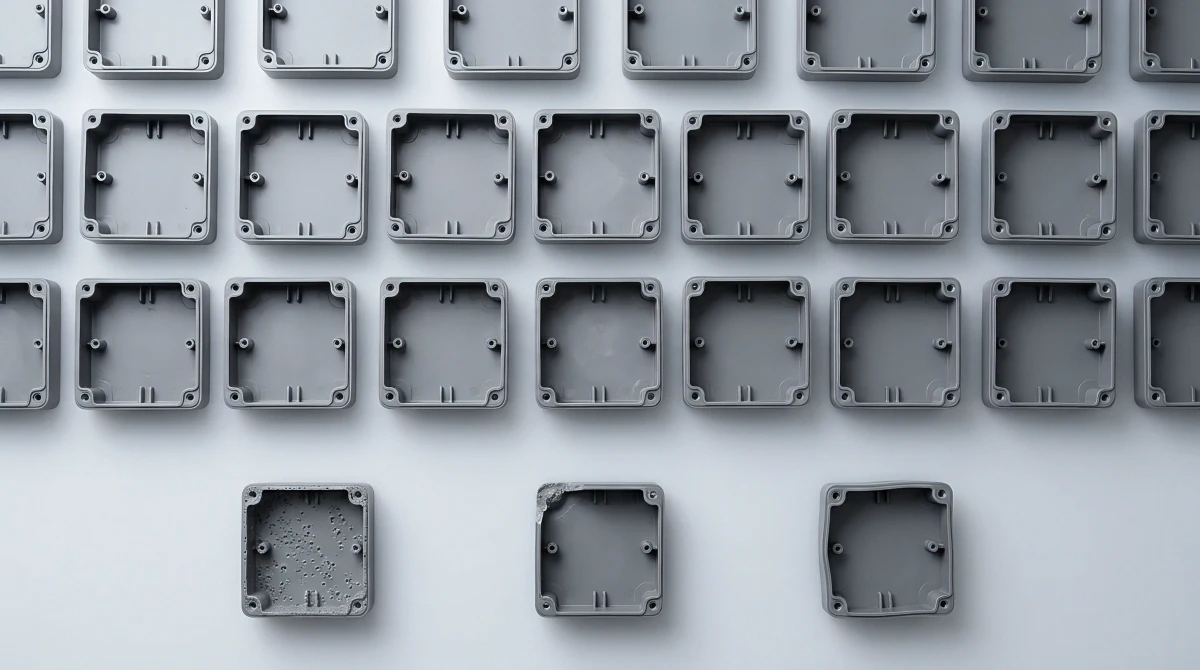
Damp isocyanate can turn hazy, settle solids or grow a crust. Damp polyol, by contrast, usually shows nothing. In the part, the sign is a scatter of fine bubbles through the material, often in the thicker sections. The check runs back to the can history, the caps, the pigment’s dryness and any crystal treatment.Handling Rules
Sika asks that both containers be closed tightly right after use and that an opened pack be used as soon as possible. Renishaw calls all of its components humidity-sensitive. It keeps opened cans in a 40 °C (104 °F) oven with caps on. Sika also asks for pigments free of moisture before they go into the polyol.Room Humidity
Humid days lengthened the cure in a 2004 dissertation’s workshop. There, an opened pair of containers stayed usable for only about 2 weeks. Marking each can with its opening date is the practical answer.