Casting Room

The casting room is the workshop where silicone and resin are weighed, degassed, mixed and poured, and where the room's own conditions enter every pour.

Every Casting Room article of the Vacuum Casting Resources, newest first, each written from published standards, research and makers’ data.

Meaning

The casting room is the workshop where silicone and resin are weighed, degassed, mixed and poured, and where the room’s own conditions enter every pour. Its temperature and humidity act on the resin before the oven does. Its habits decide whether the figures on a sheet are reached on the bench. The articles of these resources treat it as the place where printed instructions meet practice.

Room Conditions

Sika asks for material and processing temperatures between 18 °C and 25 °C (64 °F and 77 °F). In a 2004 dissertation, cures ran slower when the air was humid. Logging humidity on clear-casting days is a habit that follows. A cold room stretches the silicone’s working time, and a warm one shortens the resin’s.
Read More

Bench Habits

Several of the makers’ rules live on the bench. Every opened can is dated and both components are kept sealed between pours. Where 2 clear grades share one machine, the reversed cup order is written on the bench. Dedicated clean tools and a dry cup and paddle for each silicone batch keep inhibitors away from the rubber.

Fixed Settings

Stable sizes call for fixed preheat and cure times. The casting room records them and keeps them the same between batches of one part. A 2020 study found that cure time drove most of the variation in one dimension of its cast covers. Preheat time drove most of the variation in the other.

Open Answers

Some answers are found in the room because no sheet prints them. No sheet gives a flow length for a thin cavity, so the room finds it by trial on the actual mold. No sheet prints a pot life for large masses, so a room pouring 350 g (12.3 oz) measures what remains. A shot weight far above a small part’s need is handled by casting a tool of several parts.

Existing Equipment

A casting room already owns what most direct checks need. A heat soak of a first article runs in the post-cure oven at the service temperature. Gauge readings from the vacuum pump show how far a bubble can expand, by gas law arithmetic. Degassing records need nothing beyond a clock, a thermometer and a notebook.

Silicone Separation

Condensation-cure and addition-cure silicones do not coexist in one room without care. Any trace of condensation-cure silicone, from an old tool, a clay bed or a film, can stop the addition-cure rubber from curing. Each extra parting line on a complex tool also costs the room time to align.
Vacuum Casting Defects in a Batch Traced to Their Cause

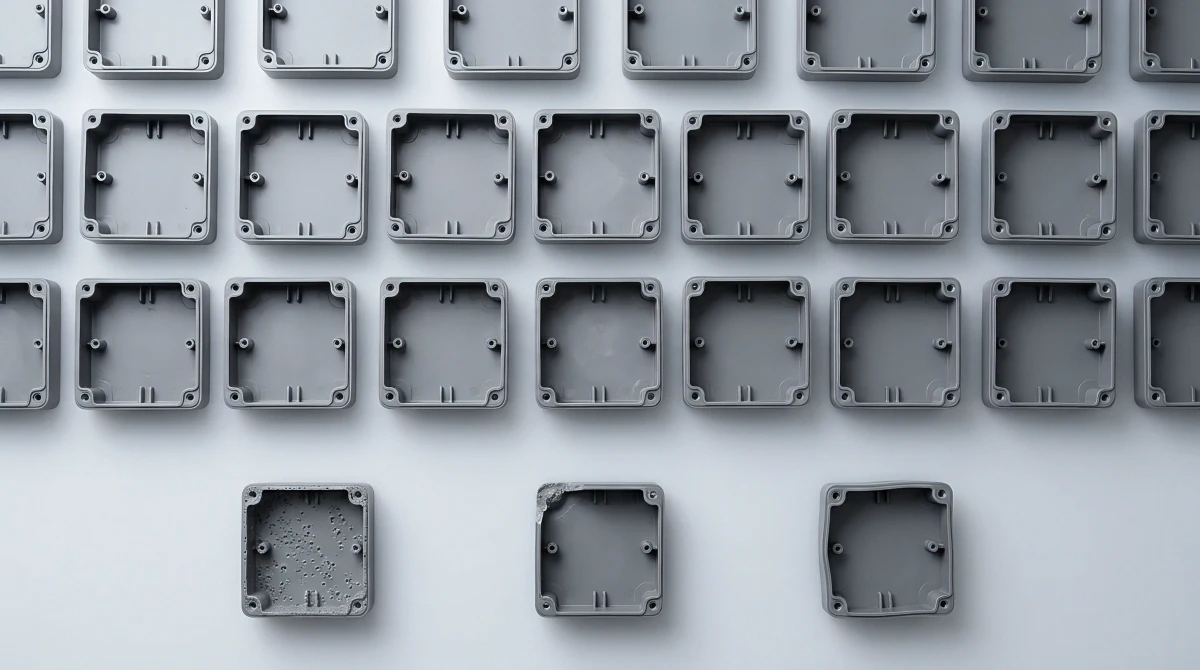
A vacuum casting defect points to its cause by where it sits on the part and which castings of the batch show it, from one wet pour to a mold near its end.

The List of Casting Defects and the Cause Behind EachVacuum casting defects trace to six causes: moisture in the components, air folded in during mixing and pouring, a mixing ratio upset by weighing or crystallization, a mold or master fault copied into every part, a cure or demold cut short, and a silicone mold wearing out over the run. The table pairs the defects named in the opened documents with those causes and with what a buyer or inspector sees.

Making the Master Pattern for Vacuum Casting From SLA or CNC

The master is finished, sealed and fitted with its parting line, gate and risers before the silicone is poured, because the mold copies every mark into the batch.

What the Master Pattern Has to Deliver Before the Silicone Is PouredA master pattern for vacuum casting is the physical original from which the silicone mold is cast, and the mold reproduces it so faithfully that every cast part inherits its shape, its surface and its faults. Loughborough University's vacuum casting guide puts it plainly: the mold replicates the master extremely faithfully, so the master's surface finish and accuracy are what the moldings will have.

Surface Finish of Vacuum Cast Parts and How the Master Sets It

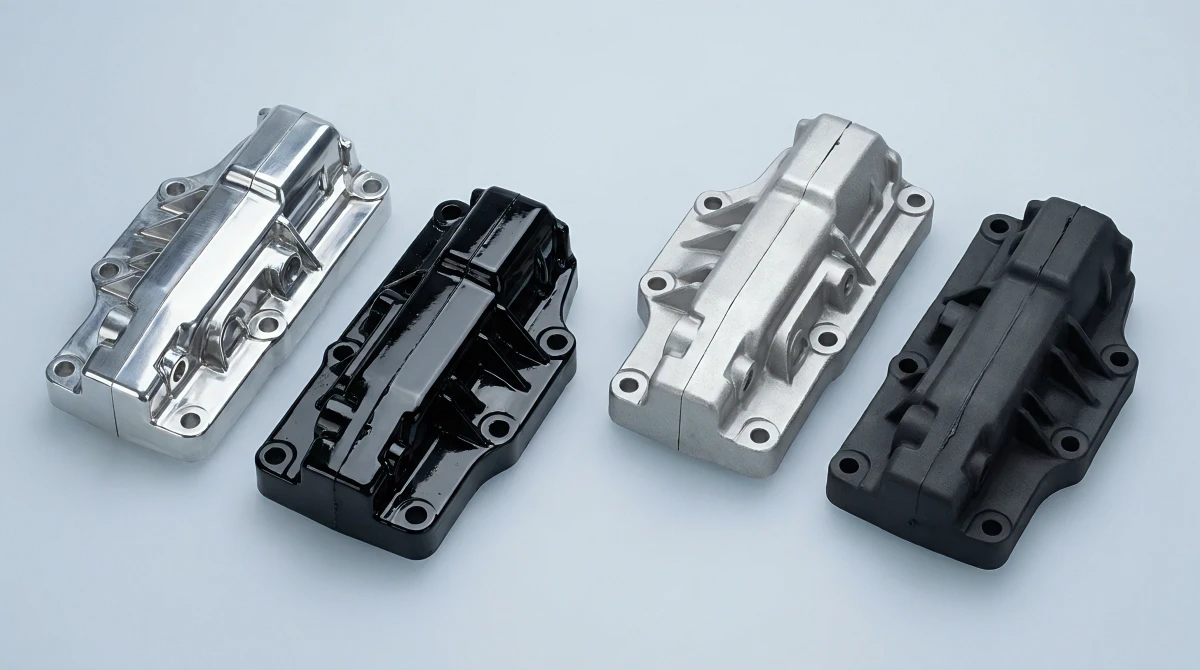
A vacuum cast part copies its master's roughness and comes out slightly smoother, so the finish is specified and measured on the master before the mold is poured.

How Closely a Vacuum Cast Surface Follows Its MasterA vacuum cast part's surface roughness is set by its master within about a tenth of the master's value, in the two studies on file. In the 2020 study by Mustafa and co-authors, parts cast from FDM, SLA and multi jet fusion (MJF) masters all came out smoother than the master, by 1.84 %, 9.62 % and 6.09 % respectively.

Flatness and Warp of Large Vacuum Cast Parts

Large vacuum cast panels stay flat through a uniform thin wall, a slow cure, a conformer in post-cure and a temperature kept well below heat deflection.

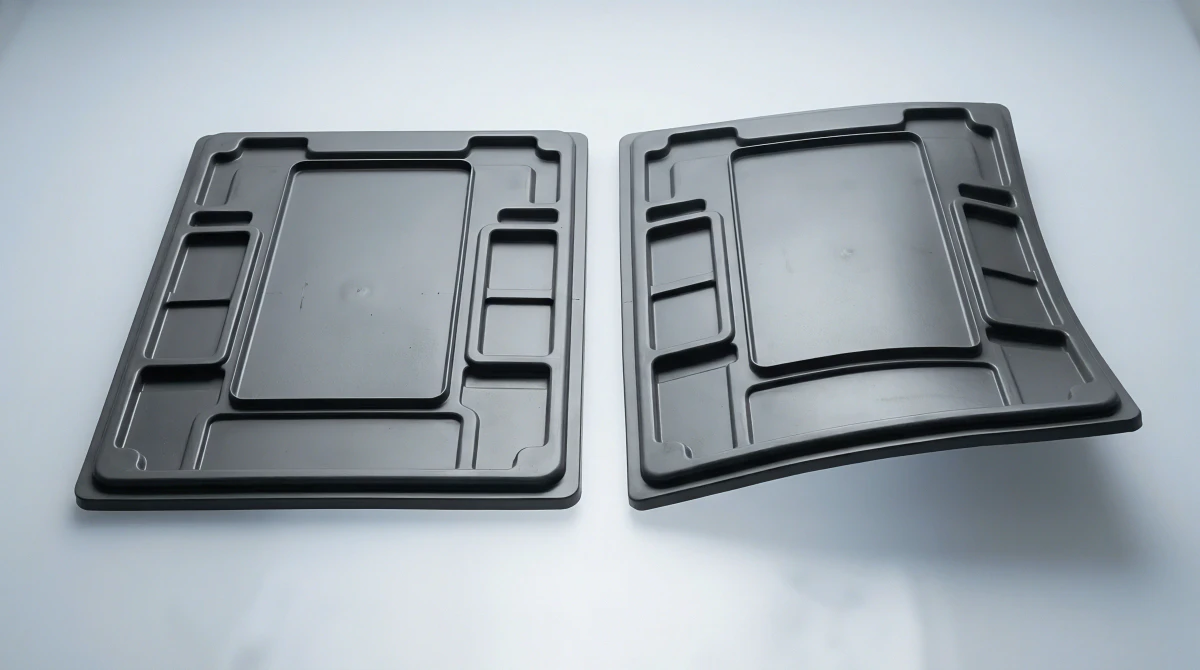
What Sets Flatness and Warp on a Large Vacuum Cast PartFlatness on a large vacuum cast part is set by five conditions: the heat the resin releases as it cures, the wall thickness against the grade's maximum, how evenly and how long the part cures before demold, whether it is supported during post-cure, and the temperature it later works at. No resin maker, guide or study opened for this piece prints a flatness or warp tolerance for vacuum cast parts.

ISO 179 and ISO 180 Impact Strength on Cast Resin Data Sheets

Impact values on cast resin sheets are comparisons tied to method, notch, specimen and cure, so a part's toughness is set by tests on batch bars or the part.

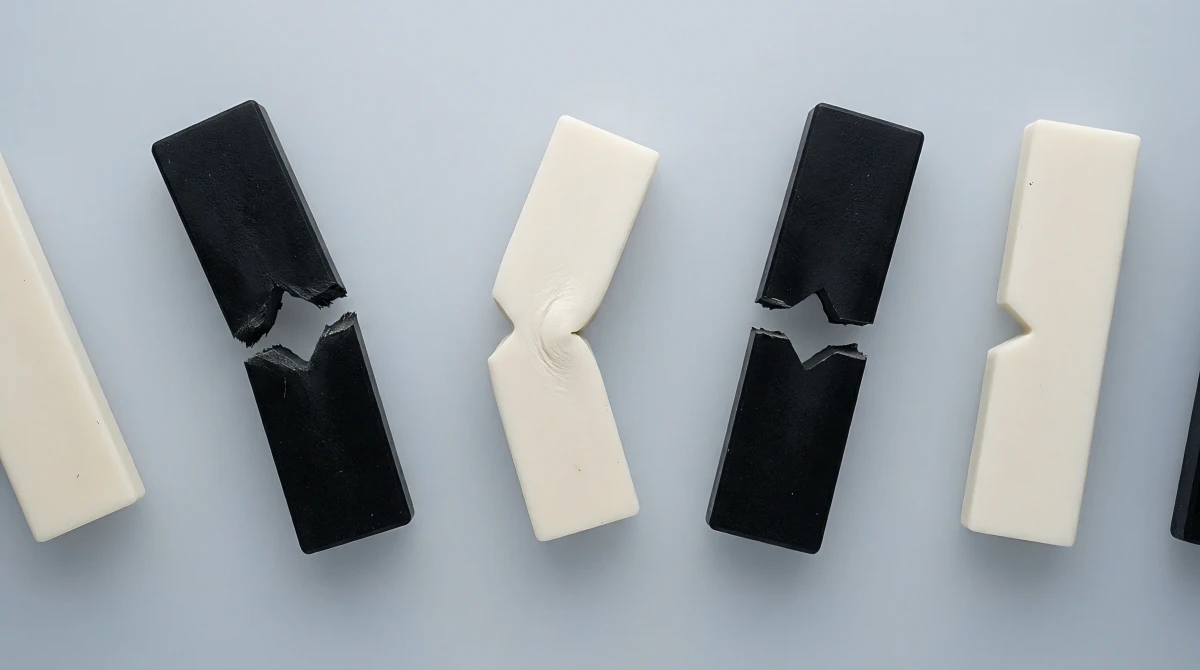
What ISO 179 and ISO 180 Measure on a Cast ResinBoth standards measure how much energy a pendulum hammer loses breaking a small bar of plastic at a high strain rate. ZwickRoell, a maker of the testing machines, describes the principle in its pages on both methods: a hammer of specified energy and drop height strikes the specimen, does not swing back to its starting height, and the height difference is taken as the energy absorbed.

Wall Thickness Limits for Vacuum Cast Polyurethane Parts

Each casting resin carries a maximum thickness printed by its maker, and every property on its sheet describes a specimen of one stated thickness, not the whole part.

Maximum Casting Thickness as the Maker Prints ItSeveral Sika sheets print a line titled maximum casting thickness, and Sika's text for PX522 and PX523 words the same idea as parts until 10 mm or until 100 mm thickness by vacuum casting in silicone molds. Renishaw's resin sheets for 6230 and 8263 print no such line.

Dimensional Accuracy of Vacuum Cast Parts From SLA, FDM and MJF Masters

A cast copy follows its master within a small fraction of a millimeter, and the printed master is the larger source of error against the drawing.

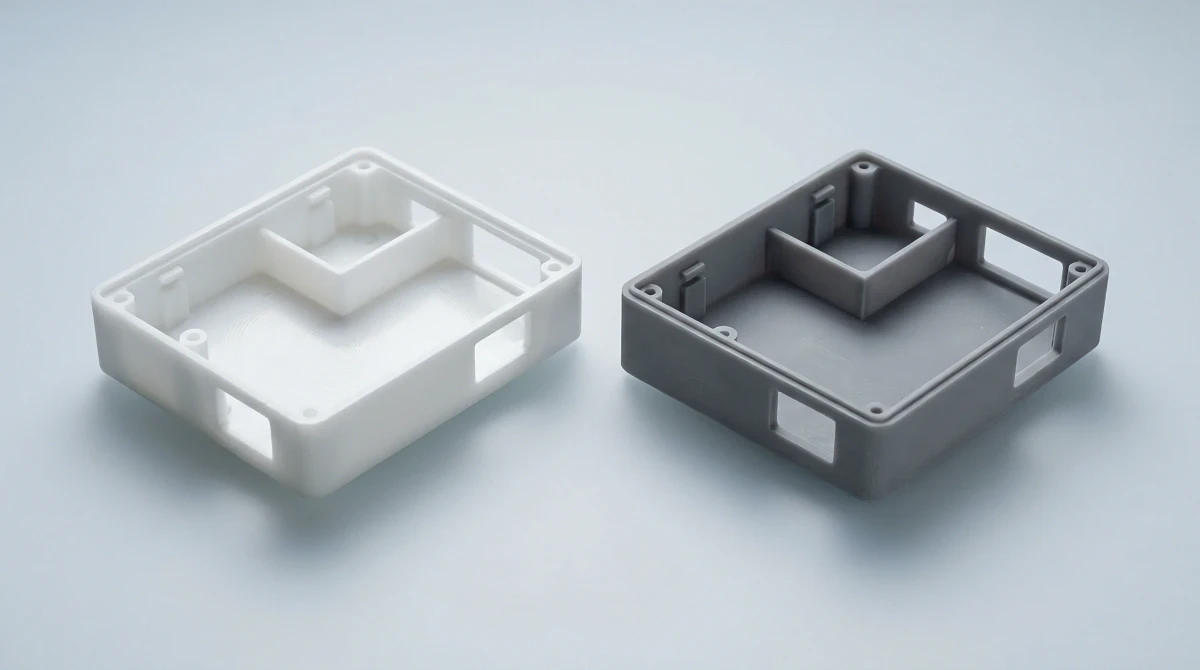
How Accurate Vacuum Cast Parts Are in a Published StudyThe authors cast a battery cover for an enclosure, a thin-walled part 1.5 mm (0.059 in) thick with two measured dimensions: section A at 26.84 mm (1.057 in) and section B at 49.84 mm (1.962 in), both from the CAD model. They made three masters of it by three additive processes: fused deposition modeling (FDM) in ABS, stereolithography (SLA) in a detailed white resin, and multi-jet fusion (MJF) in polyamide.

Silicone Rubber for Vacuum Casting Molds

Mold silicone is an addition-cure rubber chosen for hardness and resin resistance, checked against every material it touches, and treated as a consumable.

Silicone Rubber as the Mold Material in Vacuum CastingA mold silicone is a two-component liquid rubber that is poured round a master, cured at room temperature or a little above, and cut open to release the master. Renishaw describes Vacusil 2000 as a two-component addition-cure liquid silicone rubber designed for mold making, curing at room temperature to a translucent, high-strength elastic rubber, and names vacuum casting of polyurethane resins among its uses.

Send the Drawing of Your Cast Part

Send the 2D drawing and the 3D file, with the quantity and the stage of the project. An engineer replies within 1 working day.

The quote form, the mutual NDA and the private folder for your files are on Protolis Atelier, with Vacuum Casting chosen.

Request a Quote