Mold Silicone

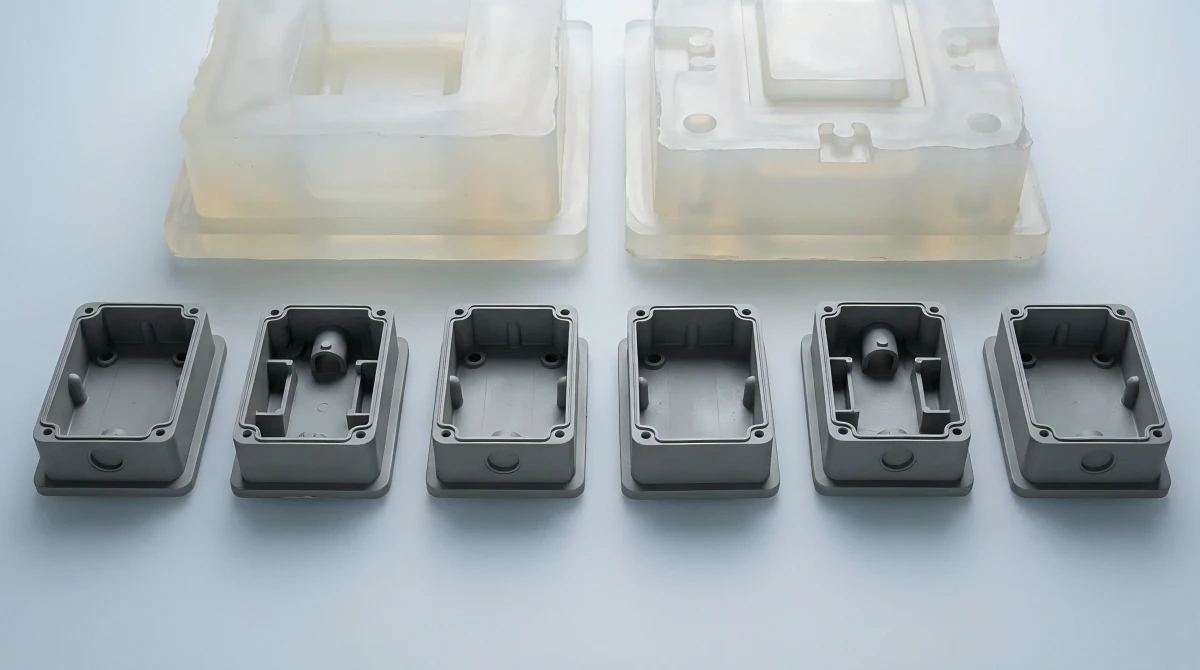
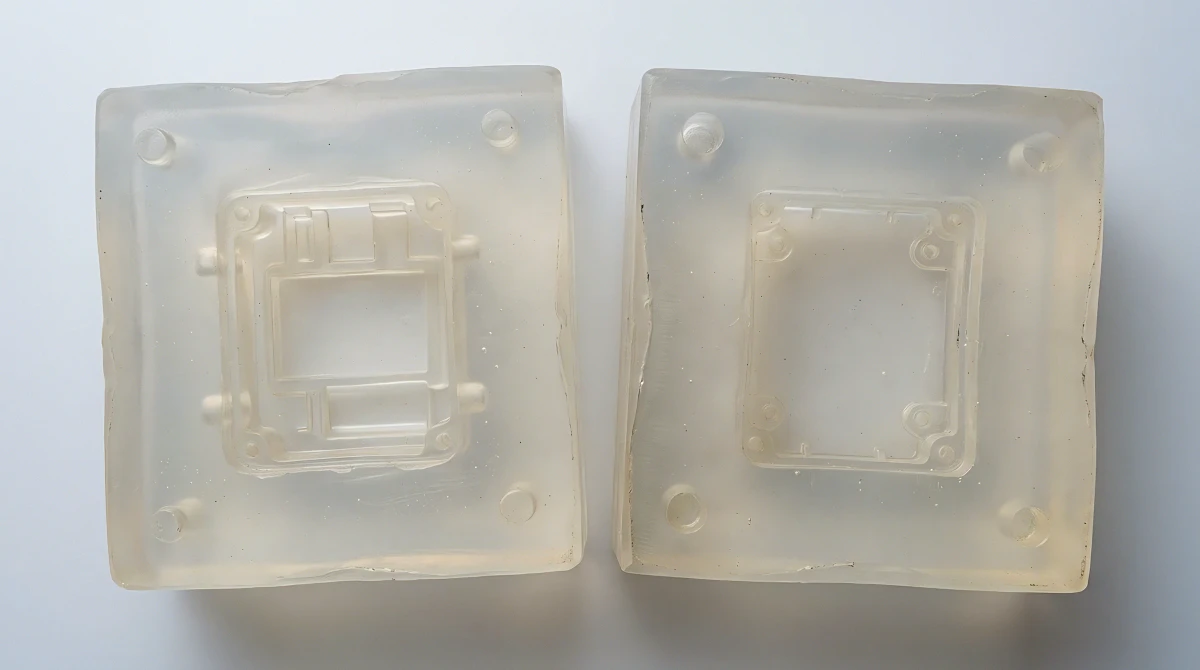
Mold silicone is the two-component liquid rubber poured around a master to make a vacuum casting tool.

Every Mold Silicone article of the Vacuum Casting Resources, newest first, each written from published standards, research and makers’ data.

Meaning

Mold silicone is the two-component liquid rubber poured around a master to make a vacuum casting tool. Flow, chemistry, hardness and resin resistance guide the choice. Together they set how many sound copies a tool yields. A single silicone usually serves several resins, so its sheet lists one hardness and one cure time.

Grades on File

Vacusil 2000 from Renishaw sets at room temperature into a strong, translucent rubber. It gives 37 Shore A, a tensile strength of 4.5 MPa (653 psi) and an elongation at break of 380 %. Its crescent tear strength is 32 N/mm (183 lbf/in) and its specific gravity 1.08 g/cm³ (67 lb/ft³). Wacker’s ELASTOSIL M 4601 gives about 28 Shore A and resists casting resins, polyurethane in particular. Renishaw also sells Rensil, VTV750, VTX950 and VTN6000, the last meant for nylon casting.
Read More

Hardness Choice

The mold silicones sit between about 28 and 37 on the A scale. Formlabs suggests a harder 40 to 50 Shore A. A softer rubber gives way more readily around an undercut, and Wacker names deep undercuts as a use of its grade. Soft rubber left visible seams on castings in a 2004 dissertation. No sheet ties hardness to a size change, so the choice rests on experience with the geometry.

Transparency

See-through rubber lets the operator check the master, vents and air pockets from outside. Vacusil 2000 is translucent. Several of Renishaw’s other silicones are sold as transparent.

Sheet Gaps

Hardness describes the cured rubber, and no sheet links it to tool life on a given shape. The inhibitor list names families of materials and no paint or tape brand. Aging of the tool at 70 °C (158 °F) is not described.
Making the Master Pattern for Vacuum Casting From SLA or CNC

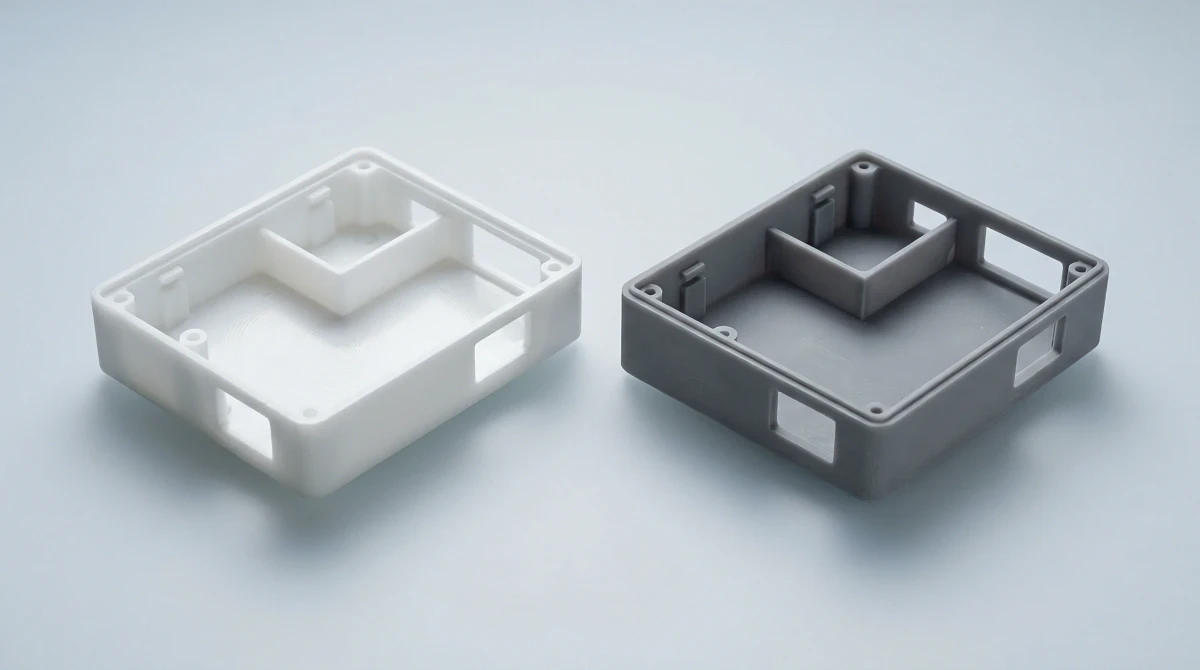
The master is finished, sealed and fitted with its parting line, gate and risers before the silicone is poured, because the mold copies every mark into the batch.

What the Master Pattern Has to Deliver Before the Silicone Is PouredA master pattern for vacuum casting is the physical original from which the silicone mold is cast, and the mold reproduces it so faithfully that every cast part inherits its shape, its surface and its faults. Loughborough University's vacuum casting guide puts it plainly: the mold replicates the master extremely faithfully, so the master's surface finish and accuracy are what the moldings will have.

Shore Hardness Standards for Cast Polyurethane Parts

Shore hardness is a control number tied to a scale, a temperature, a cure state and a reading time, and a drawing callout needs all four.

Hardness Standards Behind a Cast Polyurethane Shore ValueThree documents appear most often around cast polyurethane. ISO 868 is the plastics method named on the resin sheets, ASTM D2240 is the American test method that reaches rubber and some plastics, and ISO 48-4 is the rubber method that covers softer grades.

Silicone Rubber for Vacuum Casting Molds

Mold silicone is an addition-cure rubber chosen for hardness and resin resistance, checked against every material it touches, and treated as a consumable.

Silicone Rubber as the Mold Material in Vacuum CastingA mold silicone is a two-component liquid rubber that is poured round a master, cured at room temperature or a little above, and cut open to release the master. Renishaw describes Vacusil 2000 as a two-component addition-cure liquid silicone rubber designed for mold making, curing at room temperature to a translucent, high-strength elastic rubber, and names vacuum casting of polyurethane resins among its uses.

Send the Drawing of Your Cast Part

Send the 2D drawing and the 3D file, with the quantity and the stage of the project. An engineer replies within 1 working day.

The quote form, the mutual NDA and the private folder for your files are on Protolis Atelier, with Vacuum Casting chosen.

Request a Quote