Addition-Cure Silicone

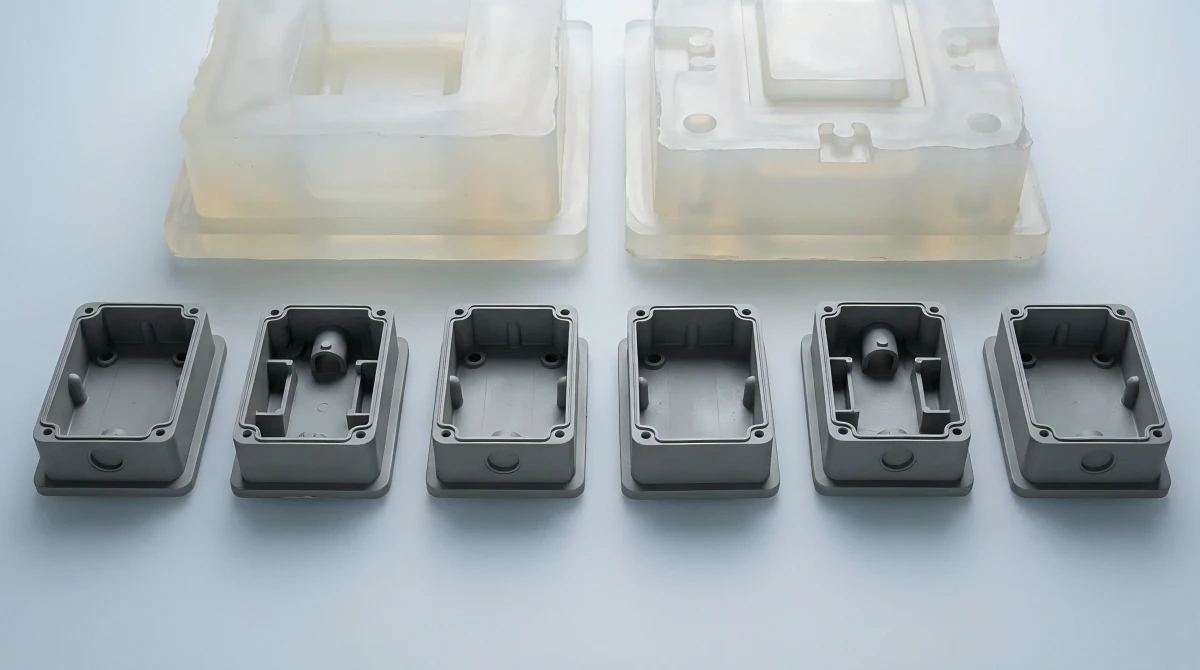
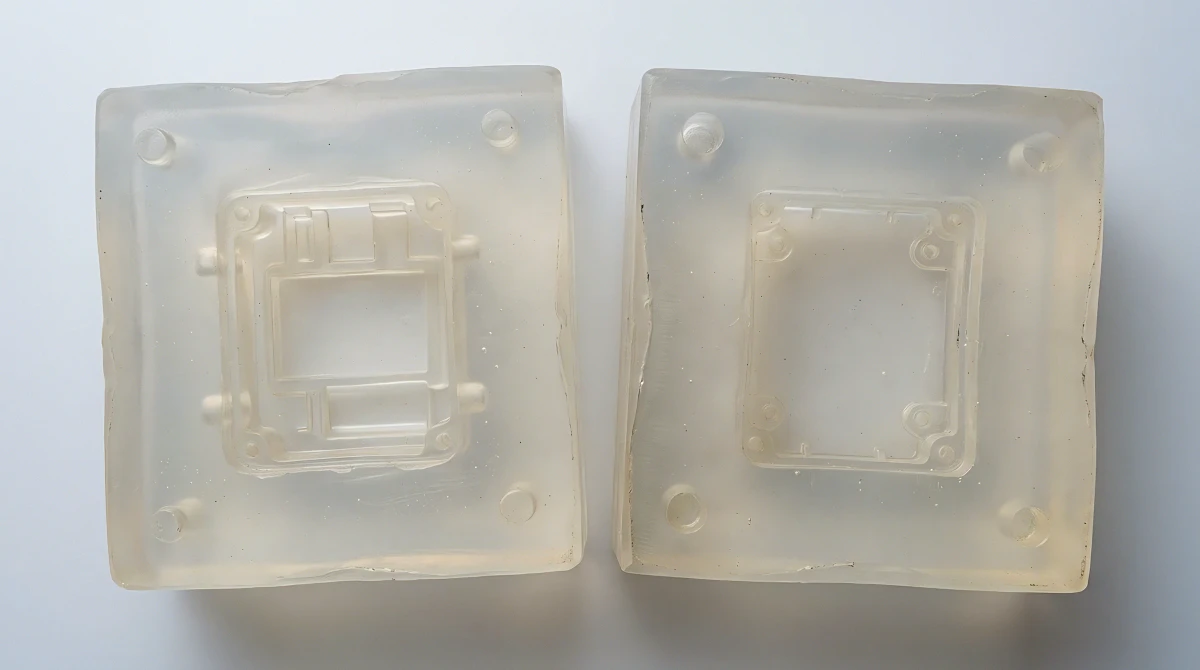
An addition-cure silicone is a two-component silicone rubber that cures by addition reaction, the chemistry used for most vacuum casting molds.

Every Addition-Cure Silicone article of the Vacuum Casting Resources, newest first, each written from published standards, research and makers’ data.

Meaning

An addition-cure silicone is a two-component silicone rubber that cures by addition reaction, the chemistry used for most vacuum casting molds. Renishaw’s Vacusil 2000 and Wacker’s ELASTOSIL M 4601 are both addition-cure grades. Both cure at room temperature, and heat can speed the cure. Both resist polyurethane casting resins, the job they are sold for.

Reason for Use

The main reason is size. A 2020 study chose this chemistry for its near absence of shrinkage, which condensation-cure rubber lacks. Wacker describes its grade as non-shrinking. The cast part’s loss in size then comes almost entirely from the resin.
Read More

Cure Inhibition

The chemistry has a known weakness. Water and compounds of sulfur, amines, organometallics and phosphorus can all stop a Vacusil 2000 cure, its sheet warns. Such compounds turn up in other silicone types, modeling clays, wood, rubbers, tapes, waxes and paints. Partial inhibition leaves a tool below its printed strength from the first pour. The symptom is a tacky or hazy surface on the rubber.

Chemistry Separation

Addition-cure and condensation-cure silicones do not coexist in a casting room without care. Old tools, clay beds and residue of the other chemistry all count as inhibitors. Separate utensils, a dry cup and paddle per mix and a trial pour keep the two apart.

Patch Test Guard

Renishaw’s own guard for Vacusil 2000 is a patch test before the pour. Each coating, tape or wax that will touch the rubber is applied to a scrap or a corner of the master. Mixed rubber is poured over it, and the full cure time shows whether it sets completely.
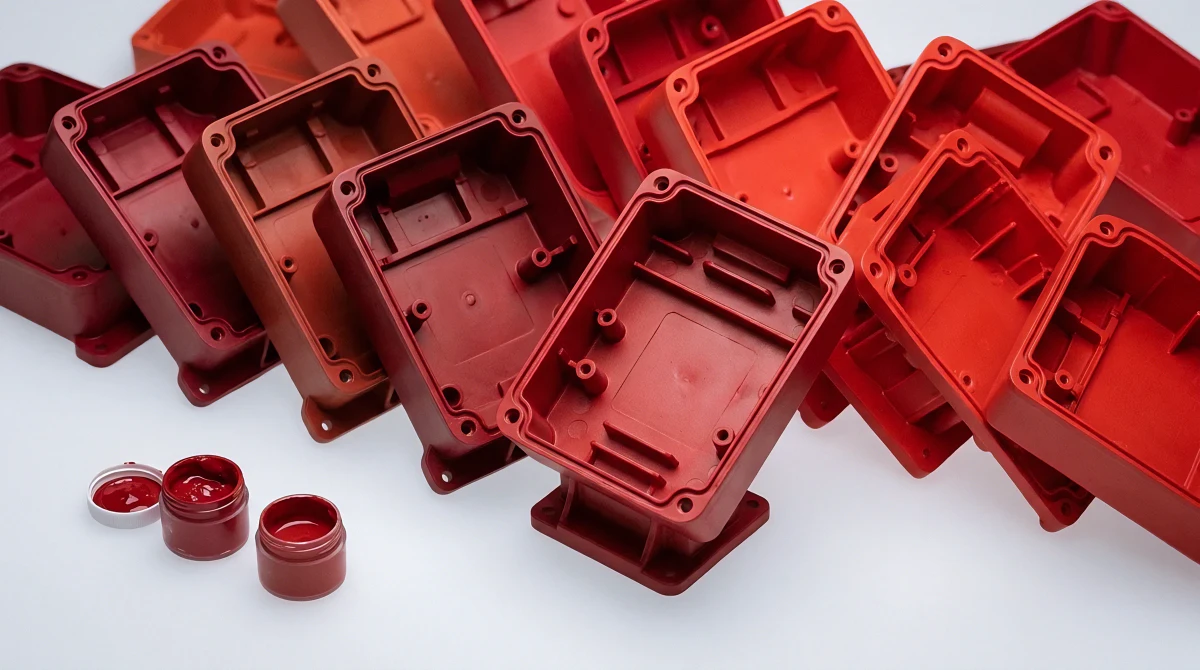
Color Matching a Vacuum Cast Batch to a RAL or Pantone Reference

A vacuum cast color is fixed as a weighed recipe on an approved first article, measured with an agreed formula and tolerance, and repeated for every pour.

How a Vacuum Cast Batch Is Matched to a RAL or Pantone ColorA vacuum cast batch is matched to a reference by pigmenting each pour with a paste dosed within the resin maker's limit, casting a first part, measuring it against the reference under agreed conditions, adjusting the recipe, and then holding that recipe for every pour, with parts checked against the approved first article. Renishaw describes the casting system as producing typically 30 to 50 color-matched parts from a single mold, which is the batch size the recipe has to stay steady over.

Surface Finish of Vacuum Cast Parts and How the Master Sets It

A vacuum cast part copies its master's roughness and comes out slightly smoother, so the finish is specified and measured on the master before the mold is poured.

How Closely a Vacuum Cast Surface Follows Its MasterA vacuum cast part's surface roughness is set by its master within about a tenth of the master's value, in the two studies on file. In the 2020 study by Mustafa and co-authors, parts cast from FDM, SLA and multi jet fusion (MJF) masters all came out smoother than the master, by 1.84 %, 9.62 % and 6.09 % respectively.

Dimensional Accuracy of Vacuum Cast Parts From SLA, FDM and MJF Masters

A cast copy follows its master within a small fraction of a millimeter, and the printed master is the larger source of error against the drawing.

How Accurate Vacuum Cast Parts Are in a Published StudyThe authors cast a battery cover for an enclosure, a thin-walled part 1.5 mm (0.059 in) thick with two measured dimensions: section A at 26.84 mm (1.057 in) and section B at 49.84 mm (1.962 in), both from the CAD model. They made three masters of it by three additive processes: fused deposition modeling (FDM) in ABS, stereolithography (SLA) in a detailed white resin, and multi-jet fusion (MJF) in polyamide.

Silicone Rubber for Vacuum Casting Molds

Mold silicone is an addition-cure rubber chosen for hardness and resin resistance, checked against every material it touches, and treated as a consumable.

Silicone Rubber as the Mold Material in Vacuum CastingA mold silicone is a two-component liquid rubber that is poured round a master, cured at room temperature or a little above, and cut open to release the master. Renishaw describes Vacusil 2000 as a two-component addition-cure liquid silicone rubber designed for mold making, curing at room temperature to a translucent, high-strength elastic rubber, and names vacuum casting of polyurethane resins among its uses.

Send the Drawing of Your Cast Part

Send the 2D drawing and the 3D file, with the quantity and the stage of the project. An engineer replies within 1 working day.

The quote form, the mutual NDA and the private folder for your files are on Protolis Atelier, with Vacuum Casting chosen.

Request a Quote