Primer

A primer is the first coat applied to a cast part, or sprayed into its mold, to give paint something it can hold onto.

Every Primer article of the Vacuum Casting Resources, newest first, each written from published standards, research and makers’ data.

Meaning

A primer is the first coat applied to a cast part, or sprayed into its mold, to give paint something it can hold onto. Cast urethane is hard to paint: Smooth-On tested more than 30 aerosol primers on its castings and found that most did not work, beading up on the surface, while two gave excellent adhesion.

Primer in the Mold

Smooth-On and Polytek both describe spraying a primer into the silicone mold after the release agent and letting it dry before casting. The primer bonds to the casting and the part comes out pre-primed, ready for paint, without the release agent having to be washed off its face. The primer layer copies the mold, so any run or dry patch in the cavity appears on every casting.
Read More

Primer After Demold

On a washed casting, Polytek advises an auto body primer cured for at least 24 hours before paint. Car refinish systems add an adhesion promoter before the primer on bare plastic, either as its own layer or mixed into an acrylic or epoxy primer, and PPG uses a primer surfacer over scratches.

Masters and Metal Inserts

Primers appear on masters too: the Free State dissertation shows an SLA master coated with primer before molding, sealing its surface. For inserts, Smooth-On recommends spray shellac as a bonding primer for urethane on sanded, acetone-cleaned steel, or a dedicated adhesive primer.

Flexible Parts

A rigid primer cracks on a part that flexes. Refinish systems add a flexible additive to the primer and clear coat on flexible plastics, and Smooth-On’s adhesion promoter is not used on flexible surfaces at all.
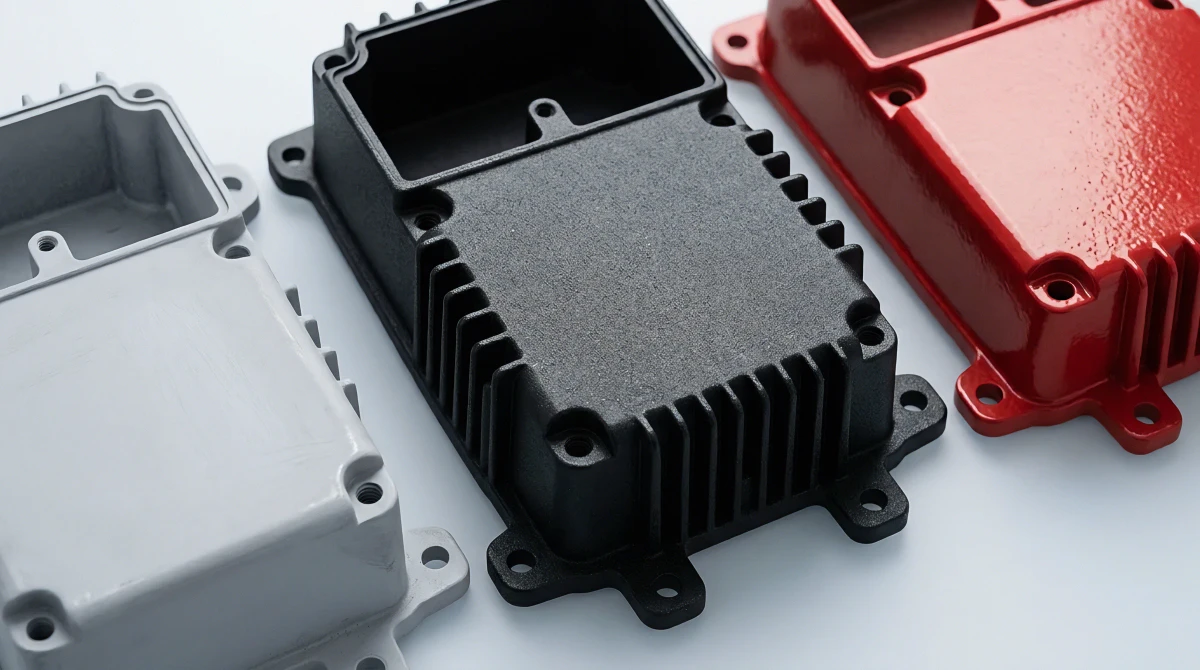
Painting and Texturing Vacuum Cast Parts After Demold

A cast urethane part is painted only after its release agent is washed off and its surface keyed, with flexible coatings on parts that bend.

Painting Vacuum Cast Parts Step by StepA vacuum cast part is painted by removing the release agent, keying and degreasing the surface, applying an adhesion promoter where the substrate calls for one, priming, and then applying the color and clear coats, with flexible additives in every layer when the part bends. The car refinish makers write the sequence most completely, because they paint new plastic parts every day.

Overmolding and Inserts in Vacuum Casting Step by Step

Inserts in a cast part are held by knurls and undercuts, located on pins in the silicone, and surrounded by resin mixed and poured under vacuum.

The Vacuum Casting Steps for a Part With InsertsA vacuum cast part with molded-in inserts is made in eight steps: the insert is chosen and shaped for mechanical retention, the master is prepared so the mold can locate it, the insert's surface is prepared, it is placed in the opened silicone mold, the mold is closed and preheated, the resin is degassed and mixed under vacuum, the mold is filled and vented, and the part is cured and demolded around the insert. An overmolded part adds a second mold and a second pour.

Making the Master Pattern for Vacuum Casting From SLA or CNC

The master is finished, sealed and fitted with its parting line, gate and risers before the silicone is poured, because the mold copies every mark into the batch.

What the Master Pattern Has to Deliver Before the Silicone Is PouredA master pattern for vacuum casting is the physical original from which the silicone mold is cast, and the mold reproduces it so faithfully that every cast part inherits its shape, its surface and its faults. Loughborough University's vacuum casting guide puts it plainly: the mold replicates the master extremely faithfully, so the master's surface finish and accuracy are what the moldings will have.

Surface Finish of Vacuum Cast Parts and How the Master Sets It

A vacuum cast part copies its master's roughness and comes out slightly smoother, so the finish is specified and measured on the master before the mold is poured.

How Closely a Vacuum Cast Surface Follows Its MasterA vacuum cast part's surface roughness is set by its master within about a tenth of the master's value, in the two studies on file. In the 2020 study by Mustafa and co-authors, parts cast from FDM, SLA and multi jet fusion (MJF) masters all came out smoother than the master, by 1.84 %, 9.62 % and 6.09 % respectively.

Send the Drawing of Your Cast Part

Send the 2D drawing and the 3D file, with the quantity and the stage of the project. An engineer replies within 1 working day.

The quote form, the mutual NDA and the private folder for your files are on Protolis Atelier, with Vacuum Casting chosen.

Request a Quote