Casting Resin

A casting resin is a liquid two-component material sold to be mixed, poured into a mold and cured into a solid part.

Every Casting Resin article of the Vacuum Casting Resources, newest first, each written from published standards, research and makers’ data.

Meaning

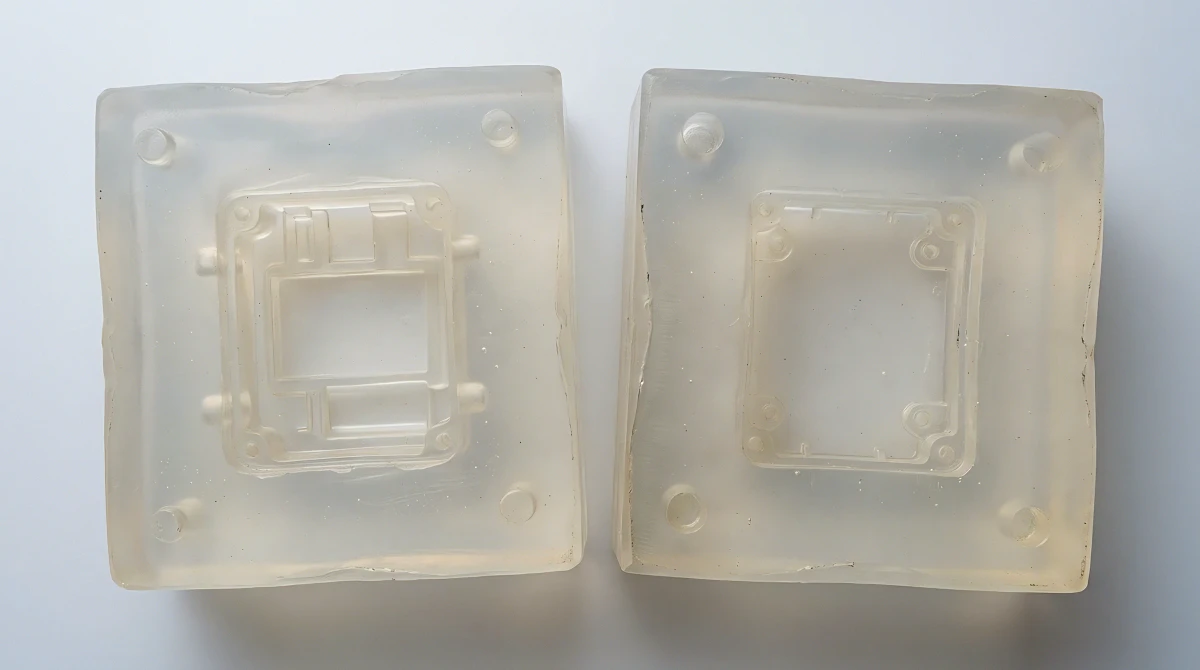
A casting resin is a liquid two-component material sold to be mixed, poured into a mold and cured into a solid part. In vacuum casting the resins read in these resources are polyurethanes poured into silicone tools at 70 °C (158 °F). Wacker names polyurethanes and epoxies as the casting resins its mold silicones are built to resist. Each grade comes with its own sheet, and the choice among grades follows the part.

Selection Order

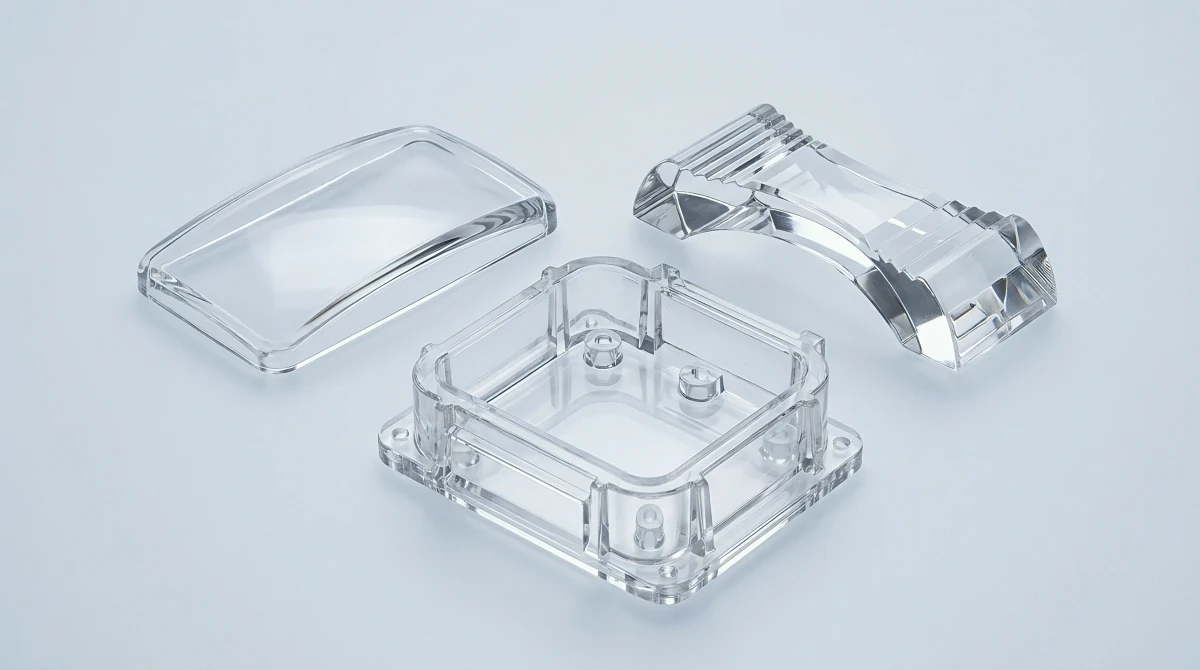
Section thickness narrows the choice before strength is even read. Each sheet prints a maximum casting thickness, and a part outside it is outside the grade. Stiffness and heat come next, then flame, then clarity where the part passes light. A clear part, for example, is settled by section thickness first, since that alone decides between PX522 and PX523.
Read More

Wall Band

Walls under 5 mm (0.20 in) sit inside the limit of every Sika grade on file. Sections of 6 to 10 mm (0.24 to 0.39 in) narrow it to PX522 or the top of PX 223 HT’s range. Anything thicker than 10 mm (0.39 in) leaves PX523, rated to 100 mm (3.94 in). A part spanning 2 mm to 20 mm (0.08 in to 0.79 in) in one cavity goes to the maker as a written question.

Heat and Flame Figures

The heat figures on casting resin sheets rank grades and do not set service limits. ISO 75 compares heat deflection fairly only between materials of similar room-temperature stiffness. The moduli on file run from 500 MPa (73 ksi) to 3,700 MPa (537 ksi), so that caveat applies directly. Among the sheets opened, only 2 resins carry a flame statement, PX331 and Renishaw 8263. Printed heat figures assume the full post-cure has been given.

Tool Wear

The resin sits against the silicone through the pot life and the cure, and grades differ in how hard they are on the tool. Sika markets PX 223 HT as gentle on silicone tools. Wacker markets resin resistance as the reason its silicone lasts longer. Sika’s clear PX522 asks for a new mold that has never held casting resin.

Resin and Tool Planning

Resin choice follows the part’s job, while the silicone follows the master, the undercuts and the resin. A single mold silicone usually serves several resins, which is why its sheet lists a single hardness and cure. In a batch, though, no mold serves 2 resins. Each grade in an order therefore adds its own tools, as each color does.

Compatibility Check

Sika wants compatibility proven by trials that use the real process and release agents. Resin, rubber and release agent are trialed together as one system. A 2004 dissertation describes the bench version. A small amount of resin is cast over a piece of cured silicone to see whether it lets go.

Handling

Casting resins are sensitive to humidity, and both makers ask that containers stay closed between uses. Sika prints a shelf life of 12 months for its clear systems in unopened containers. A workshop in a 2004 dissertation got only about 2 weeks from an opened pair of cans. Writing the opening date on each can follows from that.

Shrinkage per Resin

Because the resin causes nearly all of the loss, shrinkage is given grade by grade. Some print a figure on a named bar, some print a typical value and some print nothing. None of the standards read sets a shrinkage test for these thermosets. A first article in the chosen resin confirms the figure for the part.

Request Content

A request for cast parts names the resin grade and the maker’s sheet. It states the thickest and thinnest section, any heat or flame figure needed and the cure the parts must receive. It asks under which method and specimen each figure was measured. A first article cast in that resin then settles what the sheets cannot.
Color Matching a Vacuum Cast Batch to a RAL or Pantone Reference

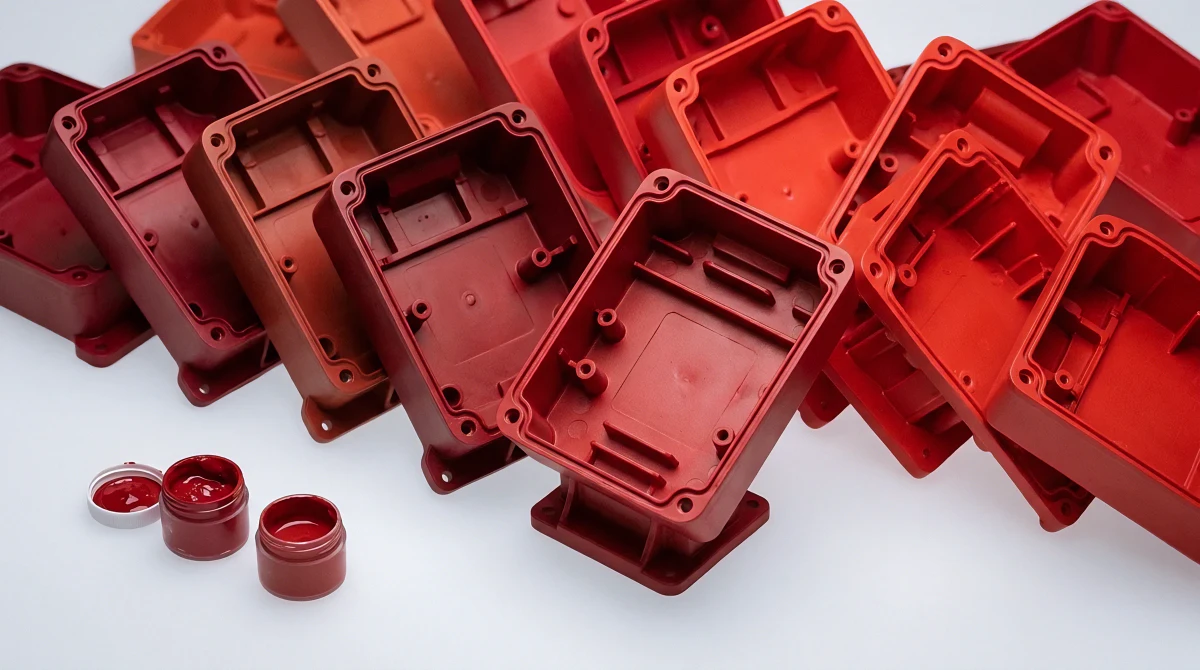
A vacuum cast color is fixed as a weighed recipe on an approved first article, measured with an agreed formula and tolerance, and repeated for every pour.

How a Vacuum Cast Batch Is Matched to a RAL or Pantone ColorA vacuum cast batch is matched to a reference by pigmenting each pour with a paste dosed within the resin maker's limit, casting a first part, measuring it against the reference under agreed conditions, adjusting the recipe, and then holding that recipe for every pour, with parts checked against the approved first article. Renishaw describes the casting system as producing typically 30 to 50 color-matched parts from a single mold, which is the batch size the recipe has to stay steady over.

Making the Master Pattern for Vacuum Casting From SLA or CNC

The master is finished, sealed and fitted with its parting line, gate and risers before the silicone is poured, because the mold copies every mark into the batch.

What the Master Pattern Has to Deliver Before the Silicone Is PouredA master pattern for vacuum casting is the physical original from which the silicone mold is cast, and the mold reproduces it so faithfully that every cast part inherits its shape, its surface and its faults. Loughborough University's vacuum casting guide puts it plainly: the mold replicates the master extremely faithfully, so the master's surface finish and accuracy are what the moldings will have.

Flatness and Warp of Large Vacuum Cast Parts

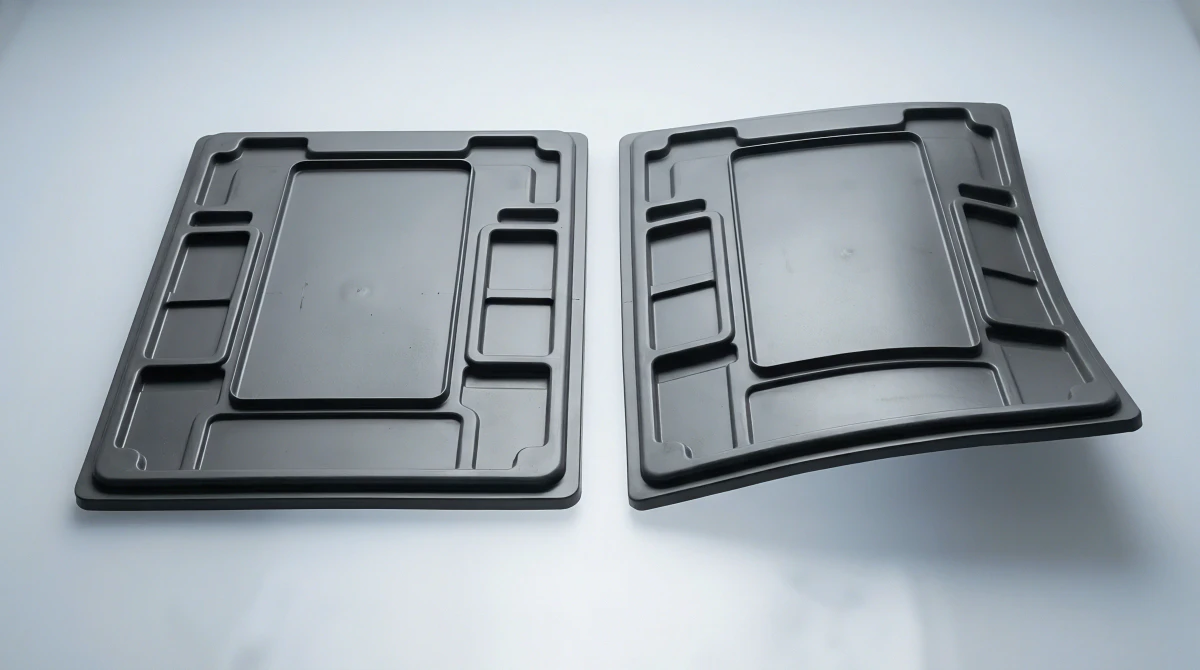
Large vacuum cast panels stay flat through a uniform thin wall, a slow cure, a conformer in post-cure and a temperature kept well below heat deflection.

What Sets Flatness and Warp on a Large Vacuum Cast PartFlatness on a large vacuum cast part is set by five conditions: the heat the resin releases as it cures, the wall thickness against the grade's maximum, how evenly and how long the part cures before demold, whether it is supported during post-cure, and the temperature it later works at. No resin maker, guide or study opened for this piece prints a flatness or warp tolerance for vacuum cast parts.

ISO 527 Tensile Values on Polyurethane Casting Resin Data Sheets

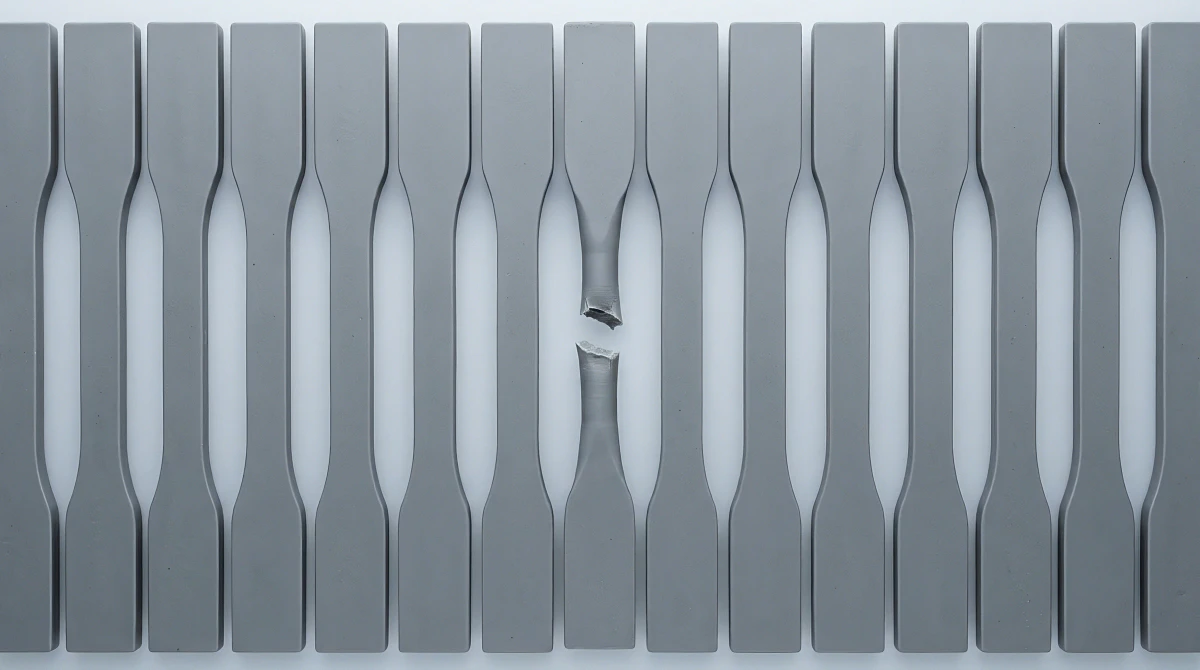
A tensile value on a casting resin sheet belongs to standard bars after one stated cure, so a requirement on parts is set on bars cast and cured with the batch.

What ISO 527 Covers on a Casting Resin Data SheetISO 527 is the international method for tensile properties of plastics, and casting resins fall inside it. The scope of ISO 527-1, as published by the Estonian standards body, sets out the general principles for determining tensile strength, tensile modulus and other aspects of the stress and strain relationship under defined conditions.

Rubber-Like Polyurethane Resins From Shore 30 A to 90 A

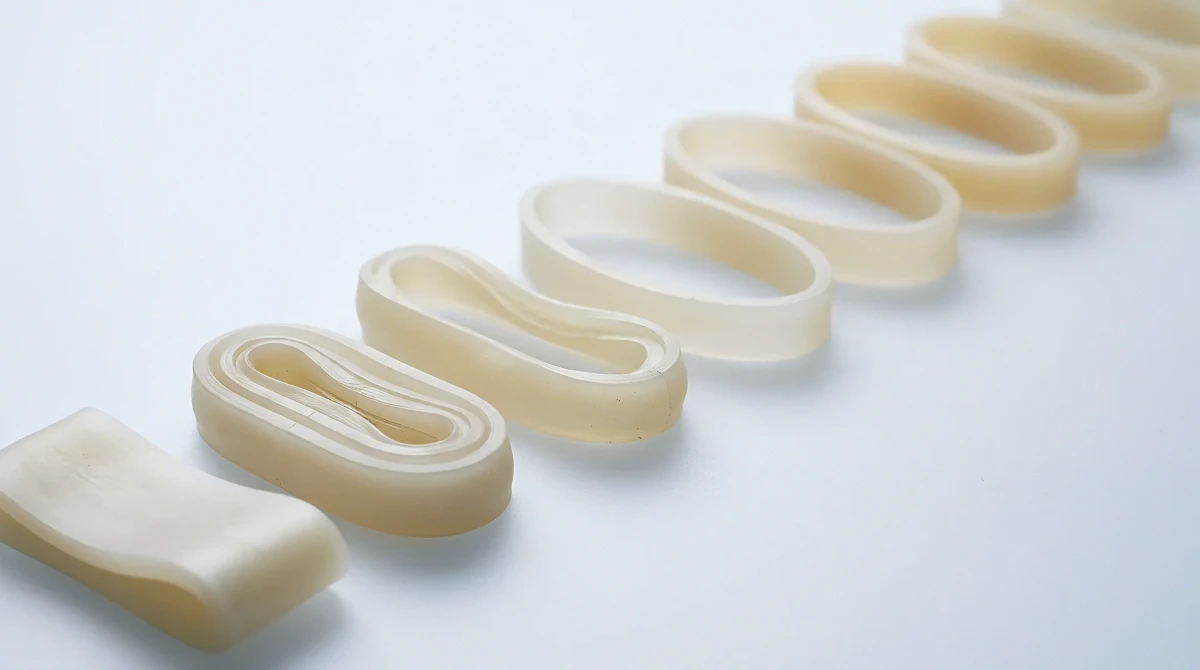
A rubber-like urethane is specified by grade, hardness method and a tested service temperature, because hardness alone leaves strength and heat behavior open.

Rubber-Like Vacuum Casting Grades and the Hardness Each CoversRubber-like vacuum casting resins are two- or three-component polyurethanes that cure in a silicone mold to an elastomer, with a Shore A hardness chosen for the part. The variable-hardness systems reach the range by adding a third component to a fixed A:B pair.

PP-Like and PE-Like Polyurethane Casting Resins for Vacuum Casting

PP-like and PE-like urethanes trade stiffness for elongation by grade, and their heat figures depend on cure, so the first cast part is tested in its real duty.

What PP-Like and PE-Like Mean on a Casting Resin Data SheetA PP-like or PE-like grade is a two- or three-component polyurethane formulated so that a part cast in a silicone mold behaves, in hand and in a snap fit, more like polypropylene or polyethylene than like a stiff ABS replica. The makers say so in their own words.

Degassing Silicone and Resin in Vacuum Casting

Each resin component is evacuated alone for about ten minutes, the silicone twice, and the air returns before the pot life ends.

Why Silicone and Resin Are Degassed Under VacuumMixing puts air into any liquid. Stirring two viscous components together folds the surface into the bulk, and a general guide from the mold supplier ArtMolds puts the air picked up by mixing at 5 % to 20 % of the volume, calling it the primary cause of bubbles in cast parts.

Heat Deflection Temperature of Cast Polyurethane Under ISO 75 and ASTM D648

Heat deflection temperature ranks materials under one loaded test and does not set a service ceiling, so it is read together with post-cure and part geometry.

Heat Deflection as One Loaded Bar TestThe test bends a bar under a fixed load while the temperature climbs, and it records the temperature at which the bar has deflected by a set amount. ISO 75-1 describes the general method for determining the temperature of deflection under load, with flexural stress applied in three-point loading.

Silicone Rubber for Vacuum Casting Molds

Mold silicone is an addition-cure rubber chosen for hardness and resin resistance, checked against every material it touches, and treated as a consumable.

Silicone Rubber as the Mold Material in Vacuum CastingA mold silicone is a two-component liquid rubber that is poured round a master, cured at room temperature or a little above, and cut open to release the master. Renishaw describes Vacusil 2000 as a two-component addition-cure liquid silicone rubber designed for mold making, curing at room temperature to a translucent, high-strength elastic rubber, and names vacuum casting of polyurethane resins among its uses.

Clear Polyurethane Casting Resin for Vacuum Casting

A clear polyurethane grade is chosen by section thickness first, and its post-cure has a printed ceiling that protects the color of the part.

How Clear a Casting Resin Is in Datasheet NumbersOn a datasheet, clear is a claim with two numbers behind it at most. PX522 is described as water clear, with a coefficient of light transmission of 89 percent measured by the laboratory LNE, and PX523 prints a refractive index of 1.511.

Send the Drawing of Your Cast Part

Send the 2D drawing and the 3D file, with the quantity and the stage of the project. An engineer replies within 1 working day.

The quote form, the mutual NDA and the private folder for your files are on Protolis Atelier, with Vacuum Casting chosen.

Request a Quote