Shore A

Shore A is the durometer hardness scale for softer materials, used for rubber-like casting resins and for the silicone of the mold itself.

Every Shore A article of the Vacuum Casting Resources, newest first, each written from published standards, research and makers’ data.

Meaning

Shore A is the durometer hardness scale for softer materials, used for rubber-like casting resins and for the silicone of the mold itself. ISO 868 assigns type A to softer materials and type D to harder ones. A Shore A figure and a Shore D figure cannot be compared directly. A letter printed after a number can be a footnote marker, a different thing from the scale.

Values on File

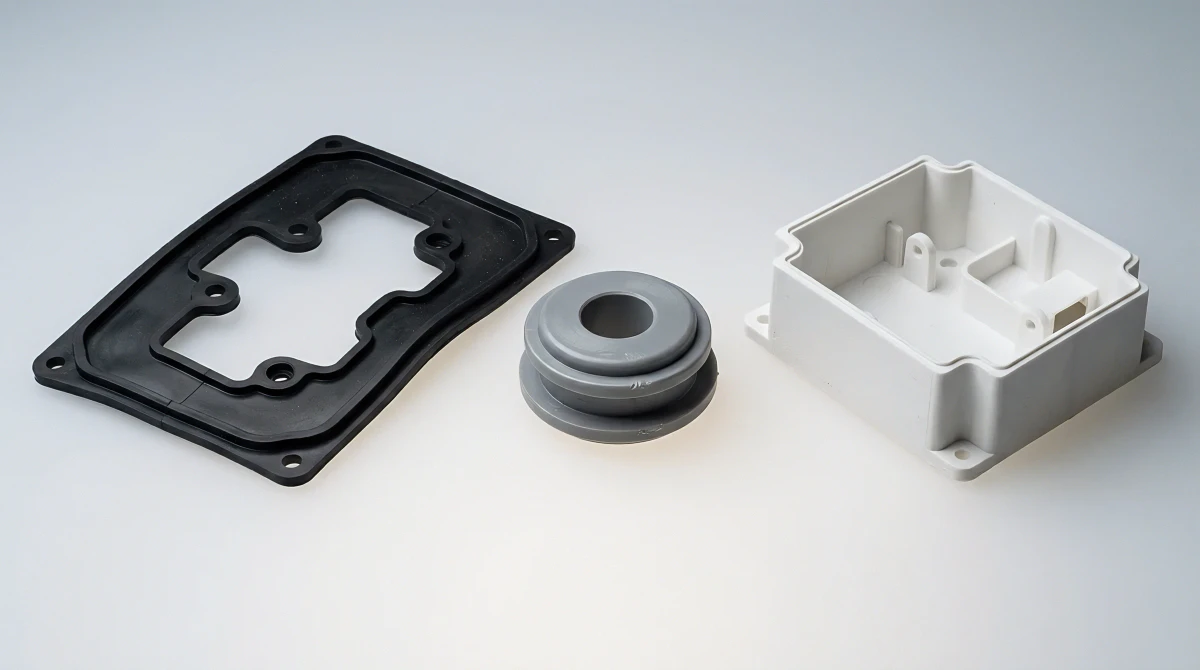
Rubber-like 8020-2 reads 60 on the A scale at 23 °C (73 °F) under ISO 868. Tool silicones are softer again. Vacusil 2000 gives 37 Shore A after 24 hours at 23 °C (73 °F). Wacker’s ELASTOSIL M 4601 reads about 28. A 2004 dissertation describes a rubber-like resin of another maker at Shore A 65.
Read More

Mold and Part Hardness

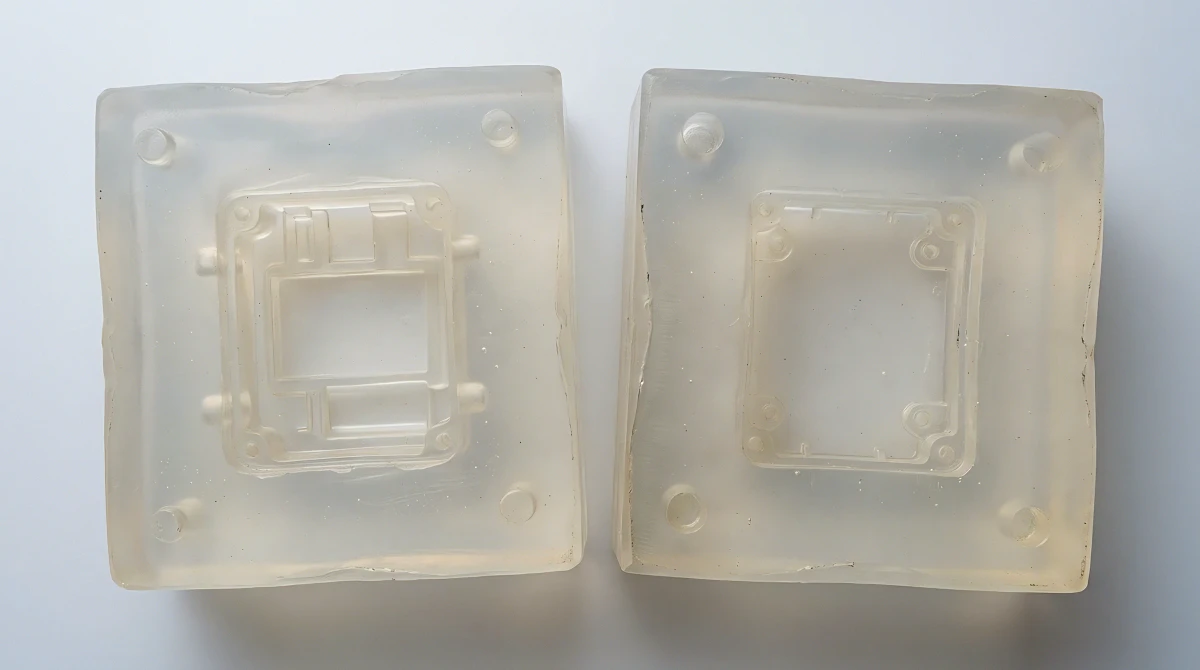
With a part at 60 A and a mold at 37 A, the mold is the softer of the two. That fits the mold’s job of releasing a part with undercuts. A Formlabs guide recommends mold silicone of 40 to 50 Shore A. Wacker describes ELASTOSIL M 4645 at about 40.

Soft-End Standards

ISO 868 points to ISO 48 for softer materials where a specification is written. ISO 48-4 covers rubber with A, D, AO and AM scales, the last for thin test pieces. A soft cast grade may therefore be called out under either standard.

Unmeasured Properties

A seal is judged by compression set and recovery as well as hardness. Neither ISO 868 nor the 8020-2 sheet measures those. The A scale also covers resins that behave very differently from one another at the same number.

Overmolding and Inserts in Vacuum Casting Step by Step

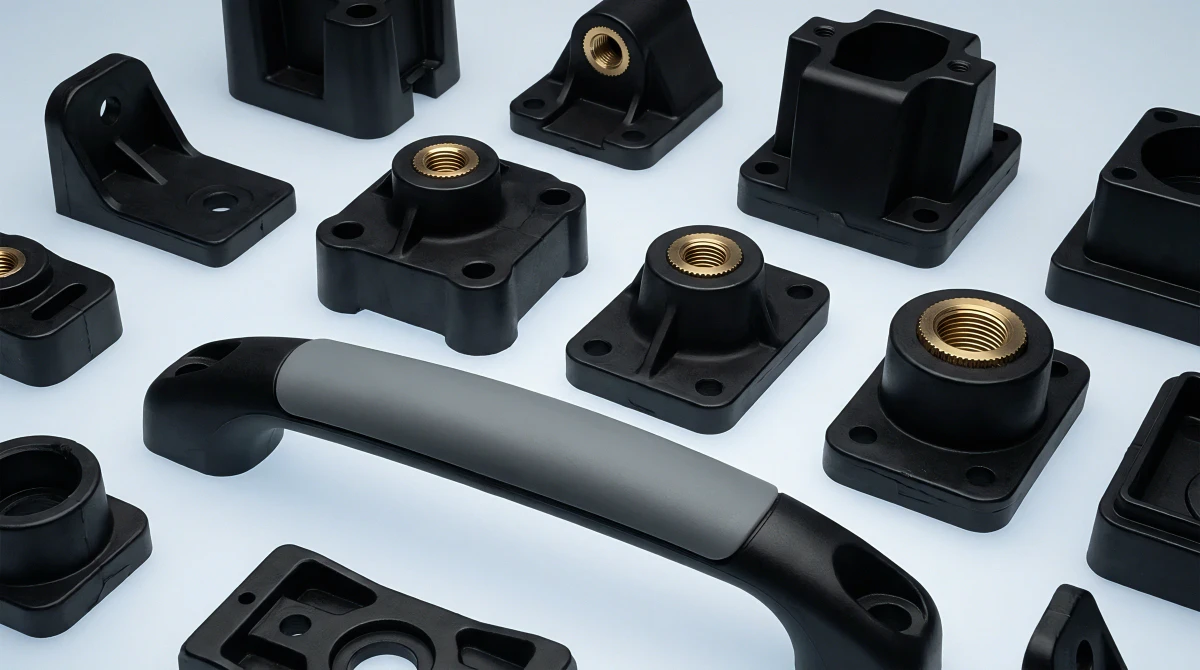
Inserts in a cast part are held by knurls and undercuts, located on pins in the silicone, and surrounded by resin mixed and poured under vacuum.

The Vacuum Casting Steps for a Part With InsertsA vacuum cast part with molded-in inserts is made in eight steps: the insert is chosen and shaped for mechanical retention, the master is prepared so the mold can locate it, the insert's surface is prepared, it is placed in the opened silicone mold, the mold is closed and preheated, the resin is degassed and mixed under vacuum, the mold is filled and vented, and the part is cured and demolded around the insert. An overmolded part adds a second mold and a second pour.
Rubber-Like Polyurethane Resins From Shore 30 A to 90 A

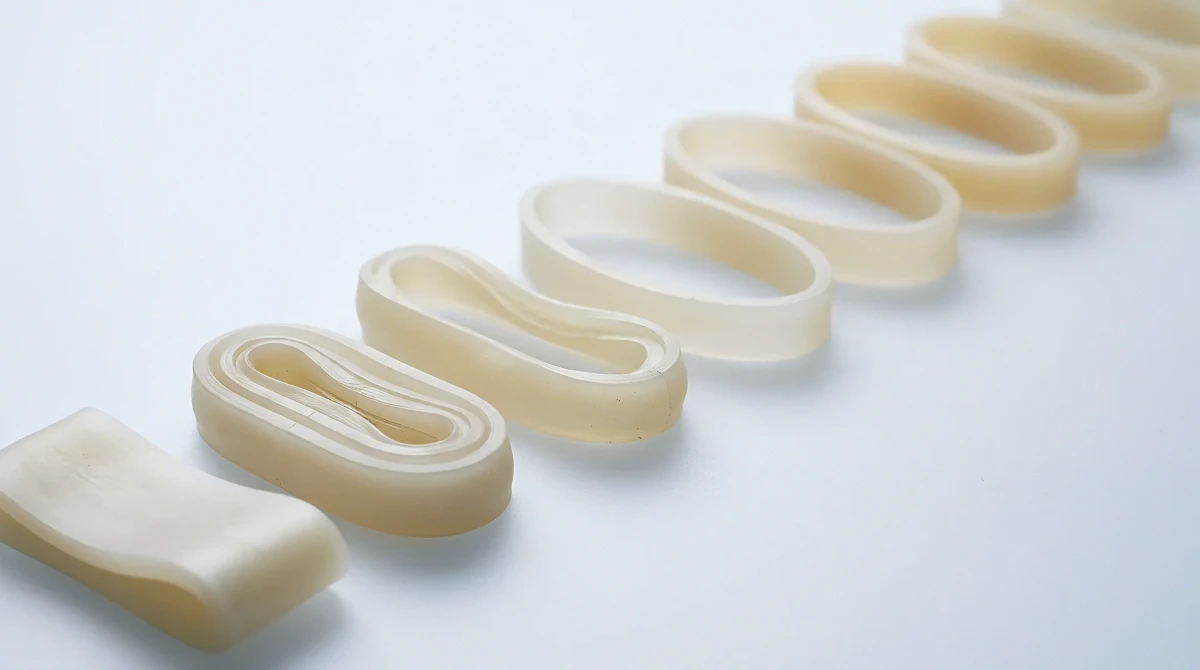
A rubber-like urethane is specified by grade, hardness method and a tested service temperature, because hardness alone leaves strength and heat behavior open.

Rubber-Like Vacuum Casting Grades and the Hardness Each CoversRubber-like vacuum casting resins are two- or three-component polyurethanes that cure in a silicone mold to an elastomer, with a Shore A hardness chosen for the part. The variable-hardness systems reach the range by adding a third component to a fixed A:B pair.

Shore Hardness Standards for Cast Polyurethane Parts

Shore hardness is a control number tied to a scale, a temperature, a cure state and a reading time, and a drawing callout needs all four.

Hardness Standards Behind a Cast Polyurethane Shore ValueThree documents appear most often around cast polyurethane. ISO 868 is the plastics method named on the resin sheets, ASTM D2240 is the American test method that reaches rubber and some plastics, and ISO 48-4 is the rubber method that covers softer grades.

Silicone Rubber for Vacuum Casting Molds

Mold silicone is an addition-cure rubber chosen for hardness and resin resistance, checked against every material it touches, and treated as a consumable.

Silicone Rubber as the Mold Material in Vacuum CastingA mold silicone is a two-component liquid rubber that is poured round a master, cured at room temperature or a little above, and cut open to release the master. Renishaw describes Vacusil 2000 as a two-component addition-cure liquid silicone rubber designed for mold making, curing at room temperature to a translucent, high-strength elastic rubber, and names vacuum casting of polyurethane resins among its uses.

Send the Drawing of Your Cast Part

Send the 2D drawing and the 3D file, with the quantity and the stage of the project. An engineer replies within 1 working day.

The quote form, the mutual NDA and the private folder for your files are on Protolis Atelier, with Vacuum Casting chosen.

Request a Quote