Elongation at Break

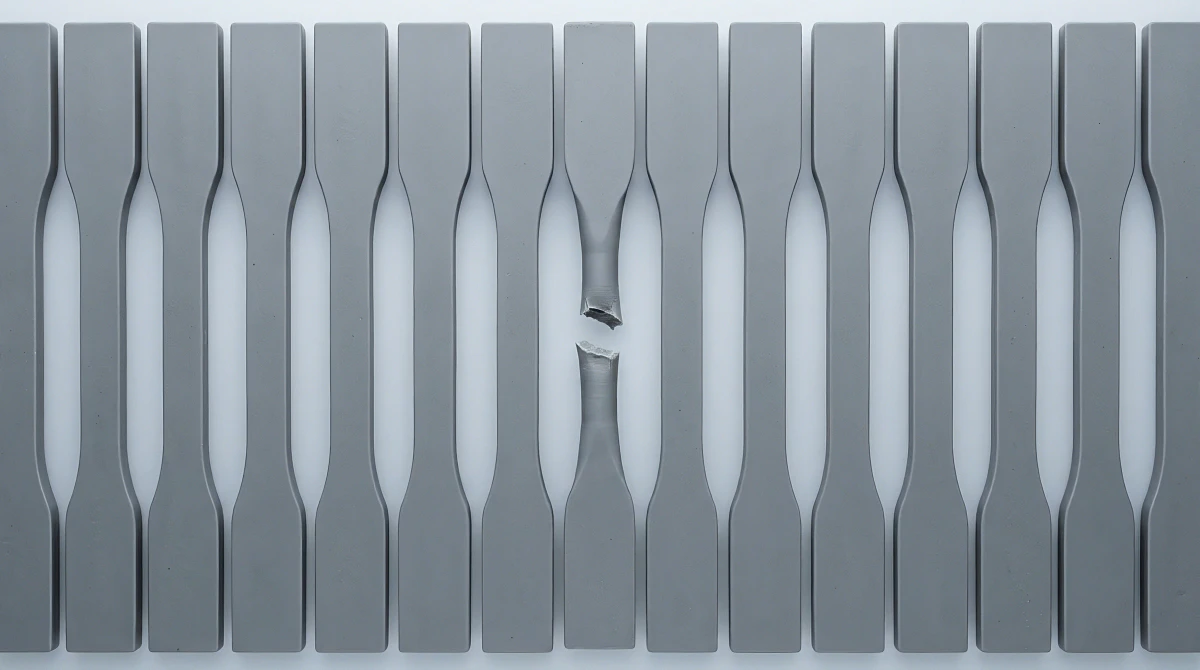
Elongation at break is the stretch a test specimen reaches before it breaks in a tensile test, given as a percentage of its original length.

Every Elongation at Break article of the Vacuum Casting Resources, newest first, each written from published standards, research and makers’ data.

Meaning

Elongation at break is the stretch a test specimen reaches before it breaks in a tensile test, given as a percentage of its original length. On a casting resin sheet it separates the brittle grades from those that flex. For a mold silicone it shows how far the rubber can stretch to release an undercut. It comes from one test bar and describes a part only as a ranking.

Rigid Grade Range

The ABS-like grades on file run from 4 % to 15 %. PX331 reaches 4 %, the stiff and brittle end of the set. PX 223 HT gives 11 %, Renishaw 6230 gives 14 % and Renishaw 8263 gives 15 %. The clear grades sit at 7.5 % for PX522 and 6 % for PX523.
Read More

Snap Fit Use

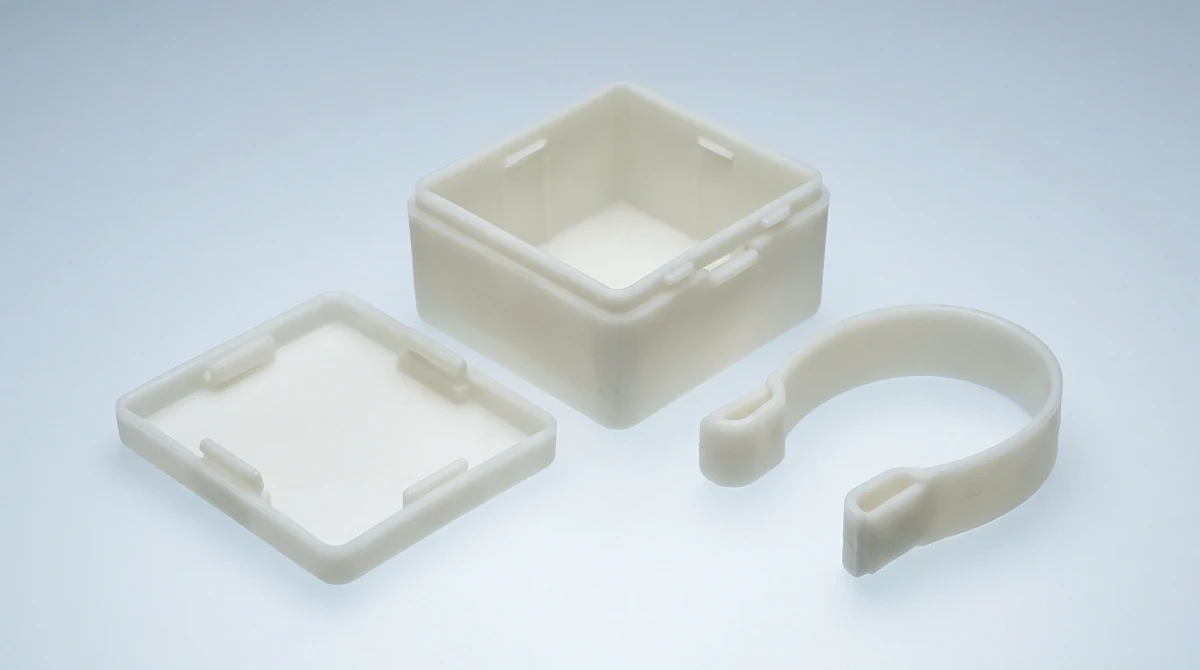
Snap hooks and thin latches are designed around this figure. At 4 %, PX331 allows very little flex. The 14 % and 15 % of the Renishaw grades leave more. A latch geometry still needs a trial part, since the figure comes from one bar.

Rubber-Like Grade Value

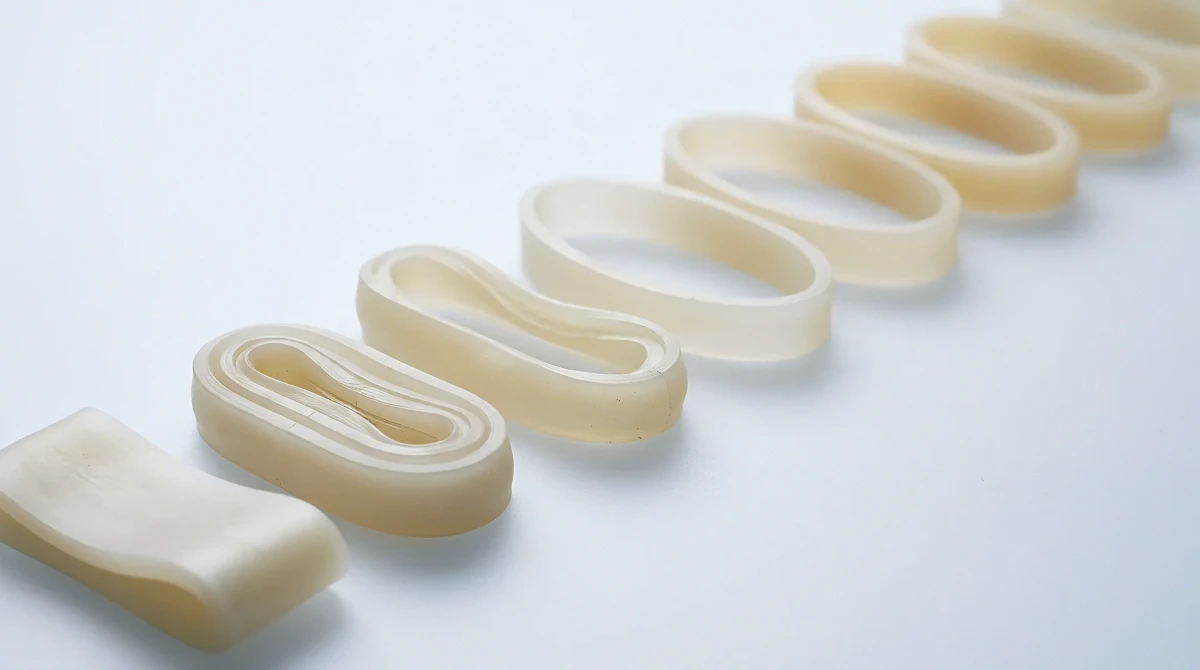
Renishaw’s 8020-2, a rubber-like grade at Shore A 60, gives 200 %. Renishaw aims it at thin gaskets, seals and valves. Seals also depend on compression set and recovery, absent from its sheet.

Silicone Stretch

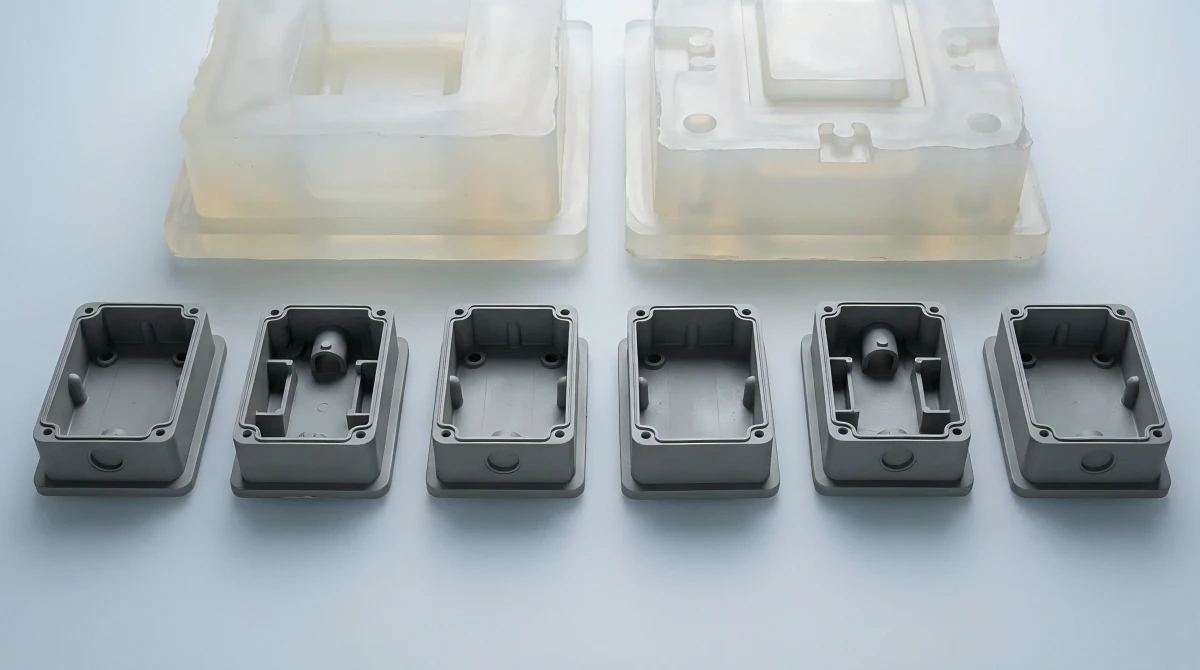
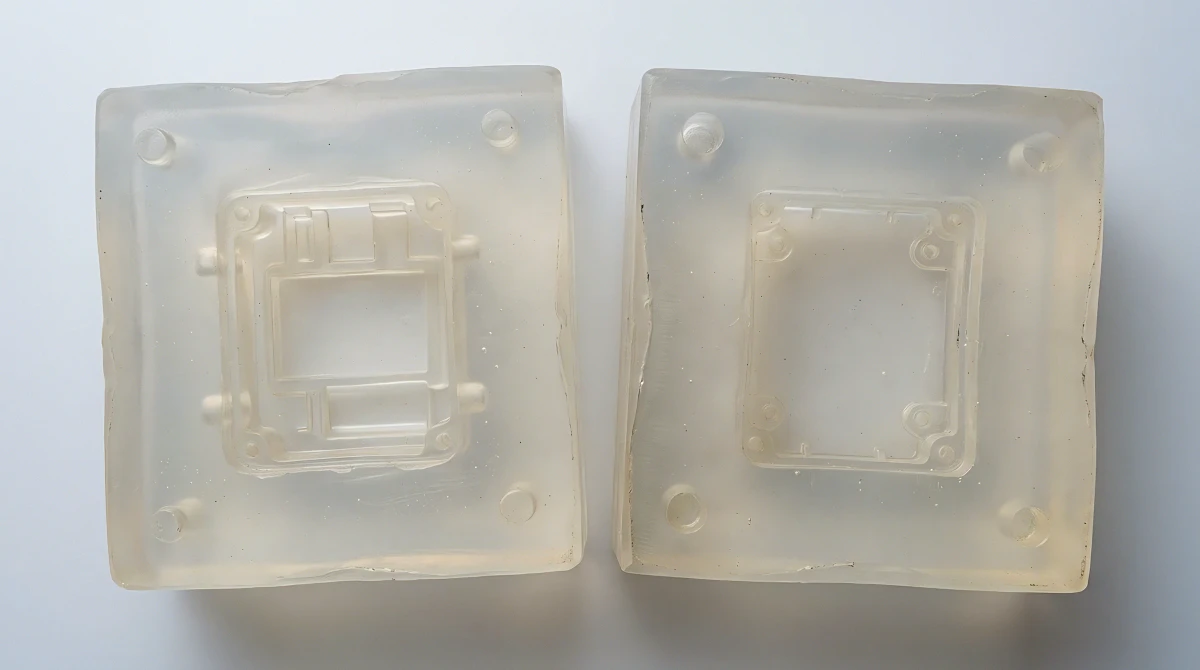
Vacusil 2000 gives 380 % with a tensile strength of 4.5 MPa (653 psi). Opening a tool stretches the rubber through each undercut. A lip that passes a 2 mm (0.08 in) undercut on a 10 mm (0.39 in) bridge strains about 20 %. That rough case sits far below 380 %. The tear limit is therefore not what ends a tool’s life. Wear from repeated stretching is, and no sheet prints a fatigue figure.
Painting and Texturing Vacuum Cast Parts After Demold

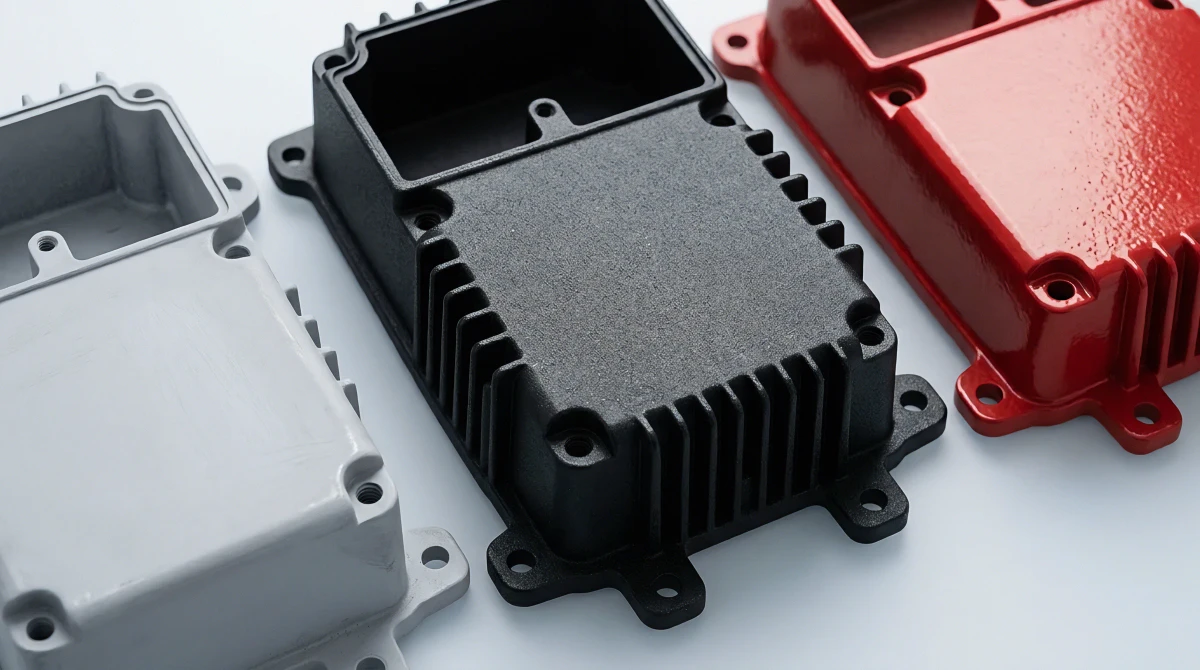
A cast urethane part is painted only after its release agent is washed off and its surface keyed, with flexible coatings on parts that bend.

Painting Vacuum Cast Parts Step by StepA vacuum cast part is painted by removing the release agent, keying and degreasing the surface, applying an adhesion promoter where the substrate calls for one, priming, and then applying the color and clear coats, with flexible additives in every layer when the part bends. The car refinish makers write the sequence most completely, because they paint new plastic parts every day.

ISO 527 Tensile Values on Polyurethane Casting Resin Data Sheets

A tensile value on a casting resin sheet belongs to standard bars after one stated cure, so a requirement on parts is set on bars cast and cured with the batch.

What ISO 527 Covers on a Casting Resin Data SheetISO 527 is the international method for tensile properties of plastics, and casting resins fall inside it. The scope of ISO 527-1, as published by the Estonian standards body, sets out the general principles for determining tensile strength, tensile modulus and other aspects of the stress and strain relationship under defined conditions.

Rubber-Like Polyurethane Resins From Shore 30 A to 90 A

A rubber-like urethane is specified by grade, hardness method and a tested service temperature, because hardness alone leaves strength and heat behavior open.

Rubber-Like Vacuum Casting Grades and the Hardness Each CoversRubber-like vacuum casting resins are two- or three-component polyurethanes that cure in a silicone mold to an elastomer, with a Shore A hardness chosen for the part. The variable-hardness systems reach the range by adding a third component to a fixed A:B pair.

PP-Like and PE-Like Polyurethane Casting Resins for Vacuum Casting

PP-like and PE-like urethanes trade stiffness for elongation by grade, and their heat figures depend on cure, so the first cast part is tested in its real duty.

What PP-Like and PE-Like Mean on a Casting Resin Data SheetA PP-like or PE-like grade is a two- or three-component polyurethane formulated so that a part cast in a silicone mold behaves, in hand and in a snap fit, more like polypropylene or polyethylene than like a stiff ABS replica. The makers say so in their own words.

Shore Hardness Standards for Cast Polyurethane Parts

Shore hardness is a control number tied to a scale, a temperature, a cure state and a reading time, and a drawing callout needs all four.

Hardness Standards Behind a Cast Polyurethane Shore ValueThree documents appear most often around cast polyurethane. ISO 868 is the plastics method named on the resin sheets, ASTM D2240 is the American test method that reaches rubber and some plastics, and ISO 48-4 is the rubber method that covers softer grades.

Silicone Rubber for Vacuum Casting Molds

Mold silicone is an addition-cure rubber chosen for hardness and resin resistance, checked against every material it touches, and treated as a consumable.

Silicone Rubber as the Mold Material in Vacuum CastingA mold silicone is a two-component liquid rubber that is poured round a master, cured at room temperature or a little above, and cut open to release the master. Renishaw describes Vacusil 2000 as a two-component addition-cure liquid silicone rubber designed for mold making, curing at room temperature to a translucent, high-strength elastic rubber, and names vacuum casting of polyurethane resins among its uses.

ABS-Like Polyurethane Casting Resins for Vacuum Casting

An ABS-like polyurethane resin is a stiff thermoset named for its use, and its datasheet numbers depend on post-cure, thickness and test method.

Why a Polyurethane Resin Is Called ABS-LikeThe phrase is a maker's shorthand, not a standard. Sika describes its SikaBiresin PX331 as having mechanical properties similar to thermoplastics like filled ABS, and Renishaw lists its 6230 as having properties similar to ABS.

Send the Drawing of Your Cast Part

Send the 2D drawing and the 3D file, with the quantity and the stage of the project. An engineer replies within 1 working day.

The quote form, the mutual NDA and the private folder for your files are on Protolis Atelier, with Vacuum Casting chosen.

Request a Quote