Rate of Burning

Rate of burning is how fast a flame travels along a horizontal plastic bar, as measured by UL 94 HB and ASTM D635.

Every Rate of Burning article of the Vacuum Casting Resources, newest first, each written from published standards, research and makers’ data.

Meaning

Rate of burning is how fast a flame travels along a horizontal plastic bar, as measured by UL 94 HB and ASTM D635. It sits below the vertical V classes in severity. It is stated in millimeters per minute. Like every flame figure, it depends on the thickness of the specimen.

HB Limits

UL calculates the HB class from the burning rate and the specimen thickness. Specimens 3 mm to 13 mm (0.12 in to 0.51 in) thick pass at 40 mm/min (1.6 in/min) or less. Specimens under 3 mm (0.12 in) pass at 75 mm/min (3.0 in/min) or less. Self-extinguishing before the first mark is a pass as well. The wide gap between the 2 limits shows how much thickness changes the result.
Read More

ASTM D635 Method

In the United States, ASTM D635 is the horizontal small-scale test. Horizontal bars are compared by burning speed, or by how far and how long they burn. It states that no correlation with burning under actual use is implied. HB corresponds to method A of IEC 60695-11-10.

Rate Factors

ASTM D635 names density, pigments, anisotropy and thickness as factors that change the result. Comparisons hold only between bars of similar thickness. The cast resins on file run from about 1.06 to 1.35 g/cm³ (66 to 84 lb/ft³) in density. Pigment loadings run from 1 % to 2 % on their sheets, so a rated bar and a delivered part can differ on 2 counts.

Fixed Test Variables

The burning tests fix specimen size, energy source, application time and end points. Certain materials respond sharply to those choices. Highly variable results can follow, and other methods are then highly desirable. The same thickness principle holds in practice for hardness, shrinkage and heat deflection.

Color Matching a Vacuum Cast Batch to a RAL or Pantone Reference

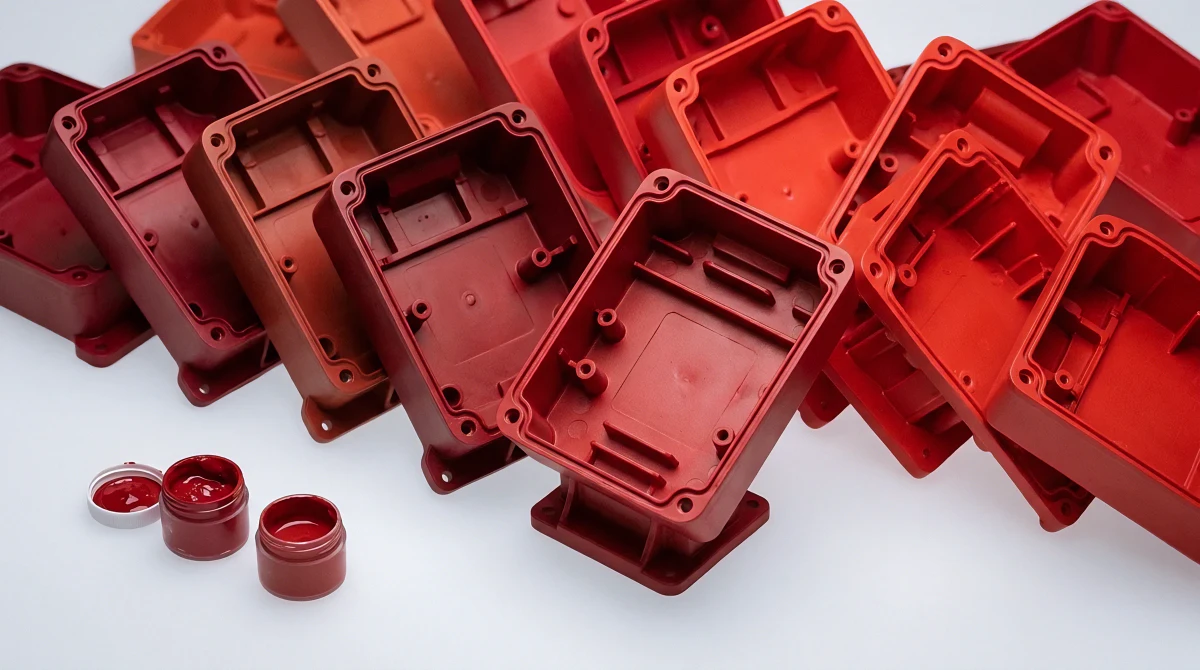
A vacuum cast color is fixed as a weighed recipe on an approved first article, measured with an agreed formula and tolerance, and repeated for every pour.

How a Vacuum Cast Batch Is Matched to a RAL or Pantone ColorA vacuum cast batch is matched to a reference by pigmenting each pour with a paste dosed within the resin maker's limit, casting a first part, measuring it against the reference under agreed conditions, adjusting the recipe, and then holding that recipe for every pour, with parts checked against the approved first article. Renishaw describes the casting system as producing typically 30 to 50 color-matched parts from a single mold, which is the batch size the recipe has to stay steady over.
Wall Thickness Limits for Vacuum Cast Polyurethane Parts

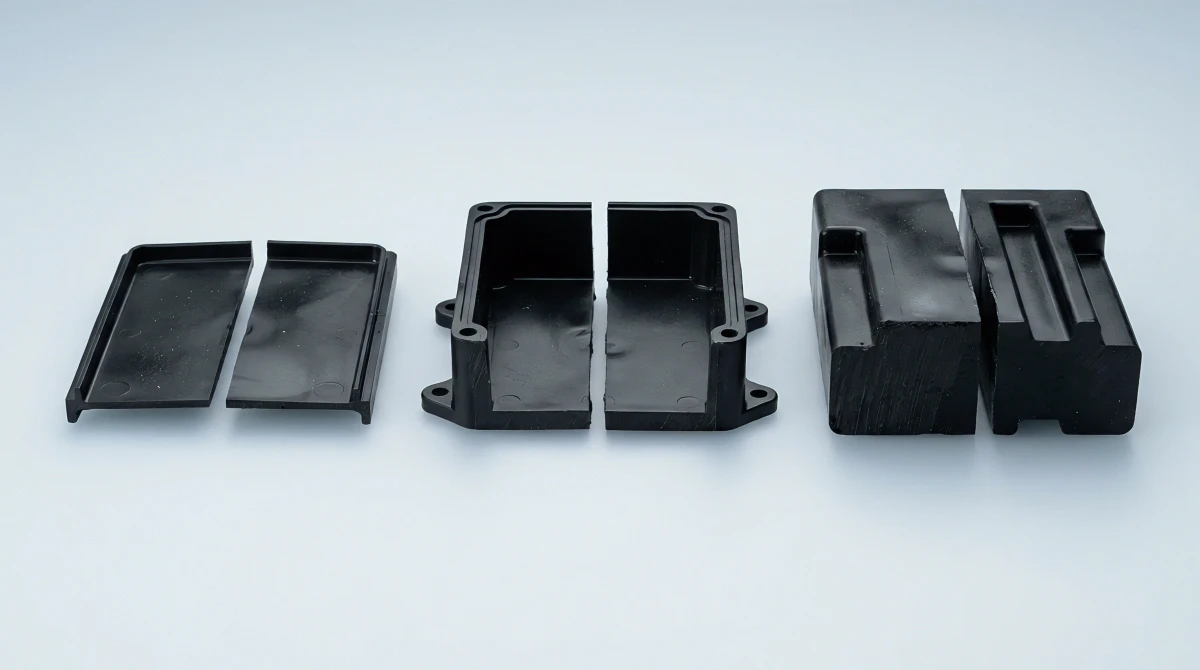
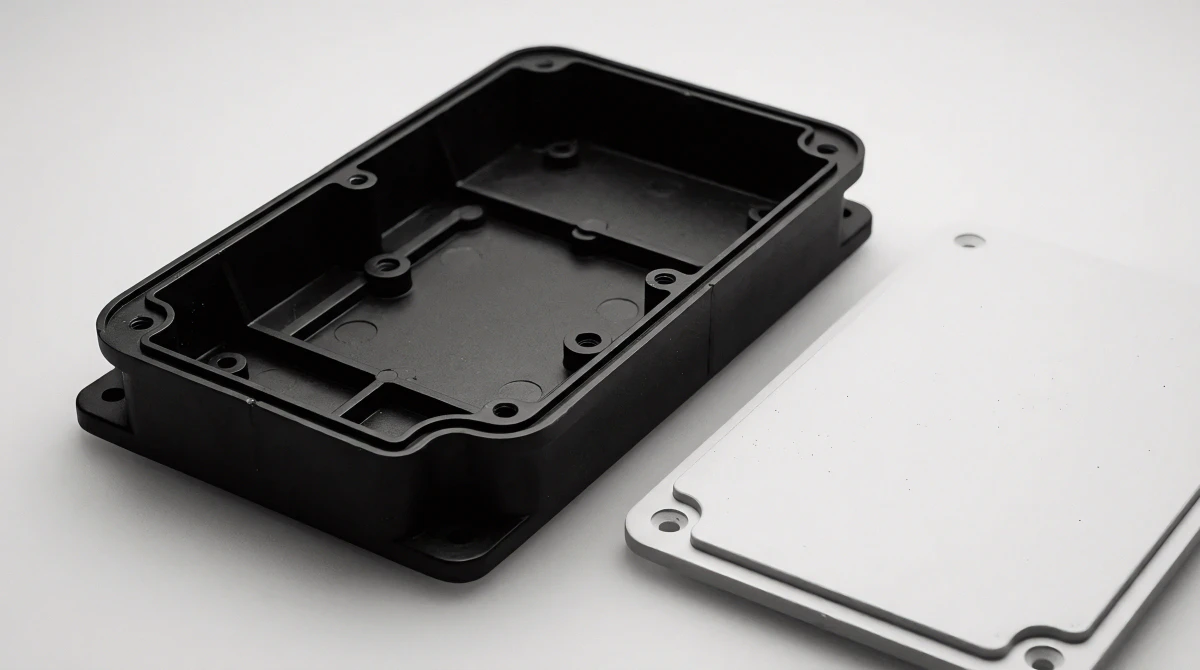
Each casting resin carries a maximum thickness printed by its maker, and every property on its sheet describes a specimen of one stated thickness, not the whole part.

Maximum Casting Thickness as the Maker Prints ItSeveral Sika sheets print a line titled maximum casting thickness, and Sika's text for PX522 and PX523 words the same idea as parts until 10 mm or until 100 mm thickness by vacuum casting in silicone molds. Renishaw's resin sheets for 6230 and 8263 print no such line.

Send the Drawing of Your Cast Part

Send the 2D drawing and the 3D file, with the quantity and the stage of the project. An engineer replies within 1 working day.

The quote form, the mutual NDA and the private folder for your files are on Protolis Atelier, with Vacuum Casting chosen.

Request a Quote