Polyol

The polyol is the component of a two-part polyurethane casting resin that reacts with the isocyanate to form the cured part.

Every Polyol article of the Vacuum Casting Resources, newest first, each written from published standards, research and makers’ data.

Meaning

The polyol is the component of a two-part polyurethane casting resin that reacts with the isocyanate to form the cured part. In Sika’s clear systems the polyol is what differs from grade to grade, while the isocyanate PX521 is shared. It is also the component that receives the pigment on Sika’s sheets. Like the isocyanate, it absorbs moisture from the air.

Pigment Carrier Role

Sika adds 1 % color paste to the polyol of PX331 and of its clear grades. It names its own tested color pastes for the purpose. The pigment has to be free of moisture before it goes in. A flame rating read from the sheet does not say whether the rated bar carried that pigment.
Read More

Moisture Uptake

ResinLab’s bulletin states that both polyols and isocyanates are hygroscopic. Water in the polyol meets the isocyanate at mixing and forms carbon dioxide, which shows as bubbles. Water in polyol rarely shows, while a wet isocyanate often turns cloudy. Closing the container at once after use is the guard the makers name.

Crystallization

After long cold storage a component can crystallize. Sika reverses this by warming the affected component to at most 70 °C (158 °F) until the crystals are gone. The polyol then returns to working temperature before weighing. The check for crystals in the polyol belongs to the start of every pour after cold storage.

Cup Order

On a casting machine the polyol and the isocyanate go into separate cups. PX523 puts the polyol in the upper cup, where PX522, PX331 and PX205 put the isocyanate. The weighing allowance for cup residue sits on whichever component is in the upper cup. A room that switches grades writes the cup order on the bench.

Vacuum Casting Defects in a Batch Traced to Their Cause

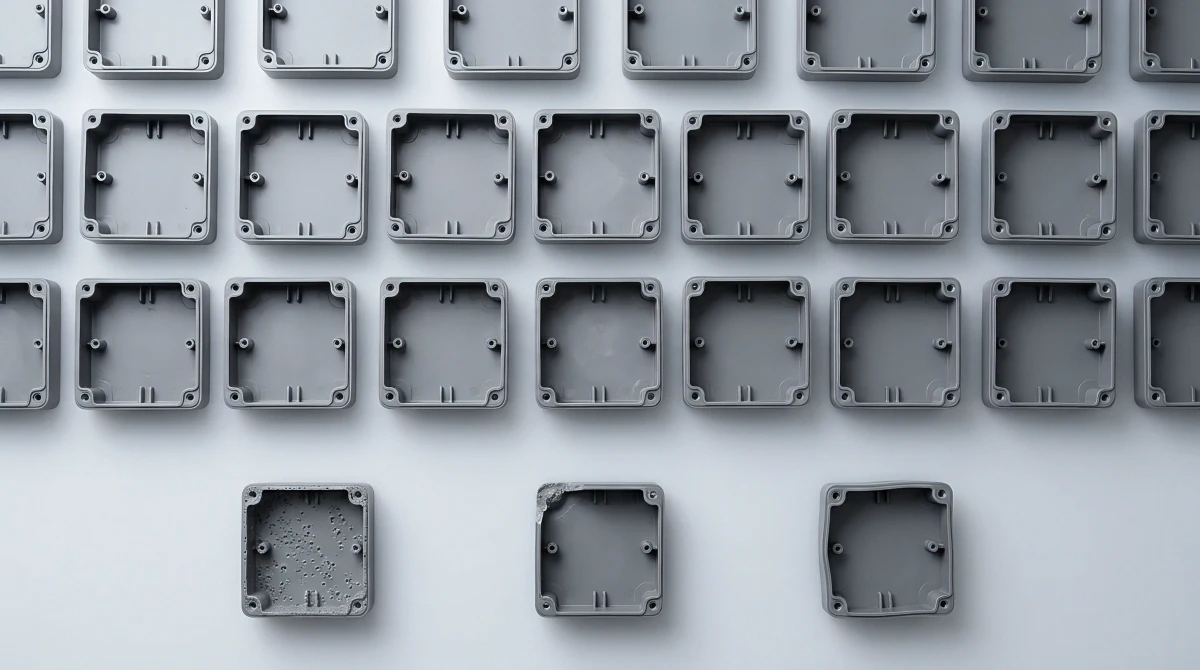
A vacuum casting defect points to its cause by where it sits on the part and which castings of the batch show it, from one wet pour to a mold near its end.

The List of Casting Defects and the Cause Behind EachVacuum casting defects trace to six causes: moisture in the components, air folded in during mixing and pouring, a mixing ratio upset by weighing or crystallization, a mold or master fault copied into every part, a cure or demold cut short, and a silicone mold wearing out over the run. The table pairs the defects named in the opened documents with those causes and with what a buyer or inspector sees.
Rubber-Like Polyurethane Resins From Shore 30 A to 90 A

A rubber-like urethane is specified by grade, hardness method and a tested service temperature, because hardness alone leaves strength and heat behavior open.

Rubber-Like Vacuum Casting Grades and the Hardness Each CoversRubber-like vacuum casting resins are two- or three-component polyurethanes that cure in a silicone mold to an elastomer, with a Shore A hardness chosen for the part. The variable-hardness systems reach the range by adding a third component to a fixed A:B pair.

Degassing Silicone and Resin in Vacuum Casting

Each resin component is evacuated alone for about ten minutes, the silicone twice, and the air returns before the pot life ends.

Why Silicone and Resin Are Degassed Under VacuumMixing puts air into any liquid. Stirring two viscous components together folds the surface into the bulk, and a general guide from the mold supplier ArtMolds puts the air picked up by mixing at 5 % to 20 % of the volume, calling it the primary cause of bubbles in cast parts.

Clear Polyurethane Casting Resin for Vacuum Casting

A clear polyurethane grade is chosen by section thickness first, and its post-cure has a printed ceiling that protects the color of the part.

How Clear a Casting Resin Is in Datasheet NumbersOn a datasheet, clear is a claim with two numbers behind it at most. PX522 is described as water clear, with a coefficient of light transmission of 89 percent measured by the laboratory LNE, and PX523 prints a refractive index of 1.511.

ABS-Like Polyurethane Casting Resins for Vacuum Casting

An ABS-like polyurethane resin is a stiff thermoset named for its use, and its datasheet numbers depend on post-cure, thickness and test method.

Why a Polyurethane Resin Is Called ABS-LikeThe phrase is a maker's shorthand, not a standard. Sika describes its SikaBiresin PX331 as having mechanical properties similar to thermoplastics like filled ABS, and Renishaw lists its 6230 as having properties similar to ABS.

Send the Drawing of Your Cast Part

Send the 2D drawing and the 3D file, with the quantity and the stage of the project. An engineer replies within 1 working day.

The quote form, the mutual NDA and the private folder for your files are on Protolis Atelier, with Vacuum Casting chosen.

Request a Quote