Heat Deflection Temperature

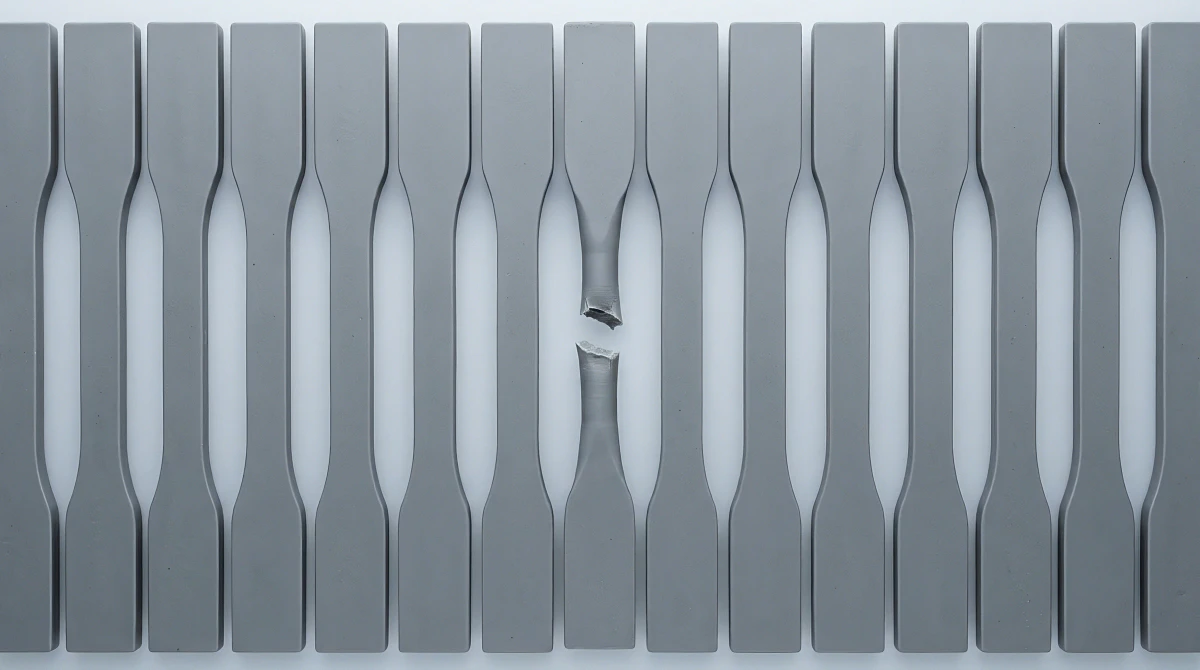
Heat deflection temperature is the temperature at which a plastic bar under a fixed bending load deflects by a set amount as it is heated.

Every Heat Deflection Temperature article of the Vacuum Casting Resources, newest first, each written from published standards, research and makers’ data.

Meaning

Heat deflection temperature is the temperature at which a plastic bar under a fixed bending load deflects by a set amount as it is heated. It is abbreviated HDT and is often called heat distortion temperature. Its use is to rank materials under one fixed test. It does not tell how hot a part can run in service.

Figures on File

The casting sheets on file print a wide range. PX205 gives 55 °C (131 °F) and PX331 gives 90 °C (194 °F), both under ISO 75A. The clear grades PX522 and PX523 both give 85 °C (185 °F). Renishaw 6230 gives 98 °C (208 °F) at 1.80 MPa (261 psi), and 8263 gives 80 °C (176 °F) with no method named. PX 223 HT prints no heat deflection at all.
Read More

Process Temperature Margin

A cast part leaves its 70 °C (158 °F) tool at about that temperature. PX205 demolds 15 °C (27 °F) above its own heat deflection. Its post-cure runs 25 °C (45 °F) above it, and those of PX522 and PX523 run 15 °C (27 °F) above theirs. The parts survive because the test loads its bar at 1.80 MPa (261 psi), and an oven part carries only its weight. The risk left is sag, which a conformer prevents.

Cure Basis

Each printed value assumes the sheet’s complete post-cure. The PX331 figure rests on 17 hours at 70 °C to 80 °C (158 °F to 176 °F). Parts shipped at demold miss that cure. Such a part resists heat less well than the sheet implies.

Stiffness Caveat

Fair comparison needs similar stiffness at room temperature. The casting resins on file run from 500 MPa (73 ksi) to 3,700 MPa (537 ksi) in flexural modulus. A stiff and a soft grade therefore rank poorly against each other. A sheet that prints HDT without a method letter also leaves the stress unknown.

Service Selection Method

A working order keeps the standard’s limits in view. The service temperature and load come first, then a margin well below the printed HDT. The post-cure behind the figure is planned for the delivered part. The wall is checked against the 3 mm (0.12 in) lower bound of ASTM D648. Finally, a first article is held at the service temperature under its working load.

Enclosure Example

Take an enclosure at 60 °C (140 °F) against PX522’s 85 °C (185 °F), a gap of 25 °C (45 °F). The load, the wall and the post-cure still decide it. For a part that sees 85 °C (185 °F), only PX331 and 6230 print a higher figure. Their margins are 5 °C and 13 °C (9 °F and 23 °F).
Flatness and Warp of Large Vacuum Cast Parts

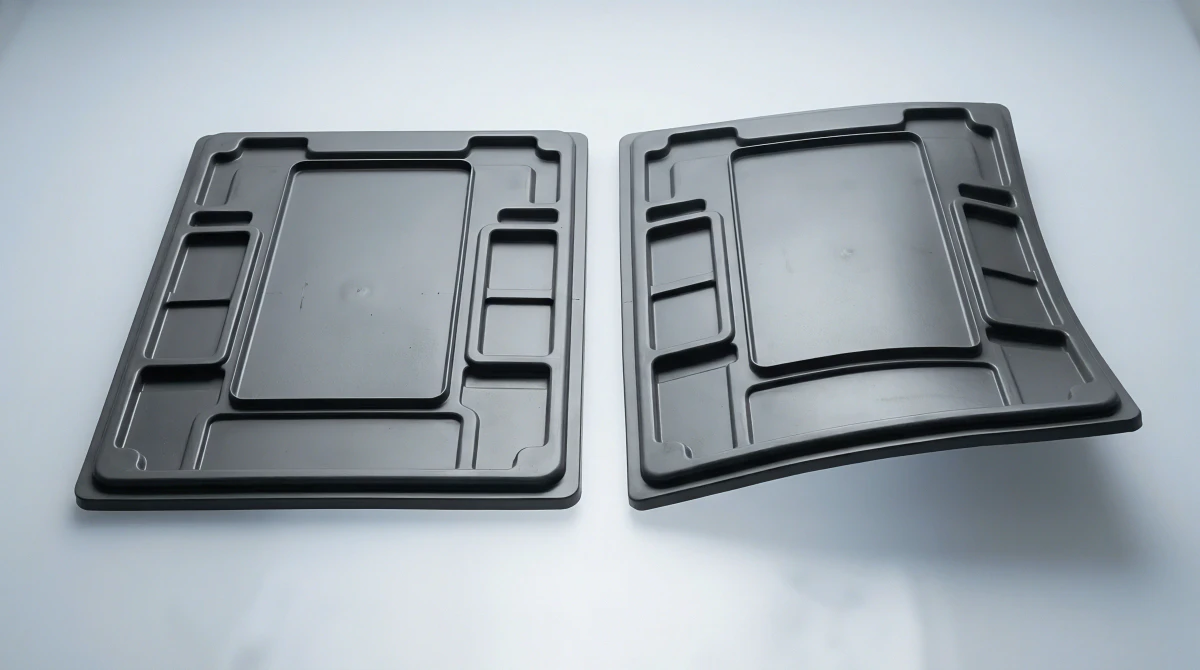
Large vacuum cast panels stay flat through a uniform thin wall, a slow cure, a conformer in post-cure and a temperature kept well below heat deflection.

What Sets Flatness and Warp on a Large Vacuum Cast PartFlatness on a large vacuum cast part is set by five conditions: the heat the resin releases as it cures, the wall thickness against the grade's maximum, how evenly and how long the part cures before demold, whether it is supported during post-cure, and the temperature it later works at. No resin maker, guide or study opened for this piece prints a flatness or warp tolerance for vacuum cast parts.

ISO 527 Tensile Values on Polyurethane Casting Resin Data Sheets

A tensile value on a casting resin sheet belongs to standard bars after one stated cure, so a requirement on parts is set on bars cast and cured with the batch.

What ISO 527 Covers on a Casting Resin Data SheetISO 527 is the international method for tensile properties of plastics, and casting resins fall inside it. The scope of ISO 527-1, as published by the Estonian standards body, sets out the general principles for determining tensile strength, tensile modulus and other aspects of the stress and strain relationship under defined conditions.

Rubber-Like Polyurethane Resins From Shore 30 A to 90 A

A rubber-like urethane is specified by grade, hardness method and a tested service temperature, because hardness alone leaves strength and heat behavior open.

Rubber-Like Vacuum Casting Grades and the Hardness Each CoversRubber-like vacuum casting resins are two- or three-component polyurethanes that cure in a silicone mold to an elastomer, with a Shore A hardness chosen for the part. The variable-hardness systems reach the range by adding a third component to a fixed A:B pair.

PP-Like and PE-Like Polyurethane Casting Resins for Vacuum Casting

PP-like and PE-like urethanes trade stiffness for elongation by grade, and their heat figures depend on cure, so the first cast part is tested in its real duty.

What PP-Like and PE-Like Mean on a Casting Resin Data SheetA PP-like or PE-like grade is a two- or three-component polyurethane formulated so that a part cast in a silicone mold behaves, in hand and in a snap fit, more like polypropylene or polyethylene than like a stiff ABS replica. The makers say so in their own words.

When a Vacuum Cast Run Should Move to an Injection Mold

Silicone molds carry a pilot, and a hard tool follows once the quantity, colors and repeat orders outgrow a handful of tools.

Where Silicone Tools Stop and the First Injection Mold StartsInjection molds are rated in classes by the construction they are built to and the cycles they are expected to give. The classification belongs to the plastics industry's trade body, PLASTICS, formerly the Society of the Plastics Industry, and its own text was not opened for this piece.

Demolding and Post-Curing Vacuum Cast Parts

Each grade prints its own demold time and its own post-cure, and thin or long parts are supported in the oven while it runs.

Demolding Vacuum Cast Parts at 70 °CDemolding means opening the silicone tool and taking the copy out once the resin has gelled and hardened far enough to hold its form. In every sheet on file the tool stays at 70 °C (158 °F) in the oven for that time.

Heat Deflection Temperature of Cast Polyurethane Under ISO 75 and ASTM D648

Heat deflection temperature ranks materials under one loaded test and does not set a service ceiling, so it is read together with post-cure and part geometry.

Heat Deflection as One Loaded Bar TestThe test bends a bar under a fixed load while the temperature climbs, and it records the temperature at which the bar has deflected by a set amount. ISO 75-1 describes the general method for determining the temperature of deflection under load, with flexural stress applied in three-point loading.

Clear Polyurethane Casting Resin for Vacuum Casting

A clear polyurethane grade is chosen by section thickness first, and its post-cure has a printed ceiling that protects the color of the part.

How Clear a Casting Resin Is in Datasheet NumbersOn a datasheet, clear is a claim with two numbers behind it at most. PX522 is described as water clear, with a coefficient of light transmission of 89 percent measured by the laboratory LNE, and PX523 prints a refractive index of 1.511.

ABS-Like Polyurethane Casting Resins for Vacuum Casting

An ABS-like polyurethane resin is a stiff thermoset named for its use, and its datasheet numbers depend on post-cure, thickness and test method.

Why a Polyurethane Resin Is Called ABS-LikeThe phrase is a maker's shorthand, not a standard. Sika describes its SikaBiresin PX331 as having mechanical properties similar to thermoplastics like filled ABS, and Renishaw lists its 6230 as having properties similar to ABS.

Send the Drawing of Your Cast Part

Send the 2D drawing and the 3D file, with the quantity and the stage of the project. An engineer replies within 1 working day.

The quote form, the mutual NDA and the private folder for your files are on Protolis Atelier, with Vacuum Casting chosen.

Request a Quote