Color

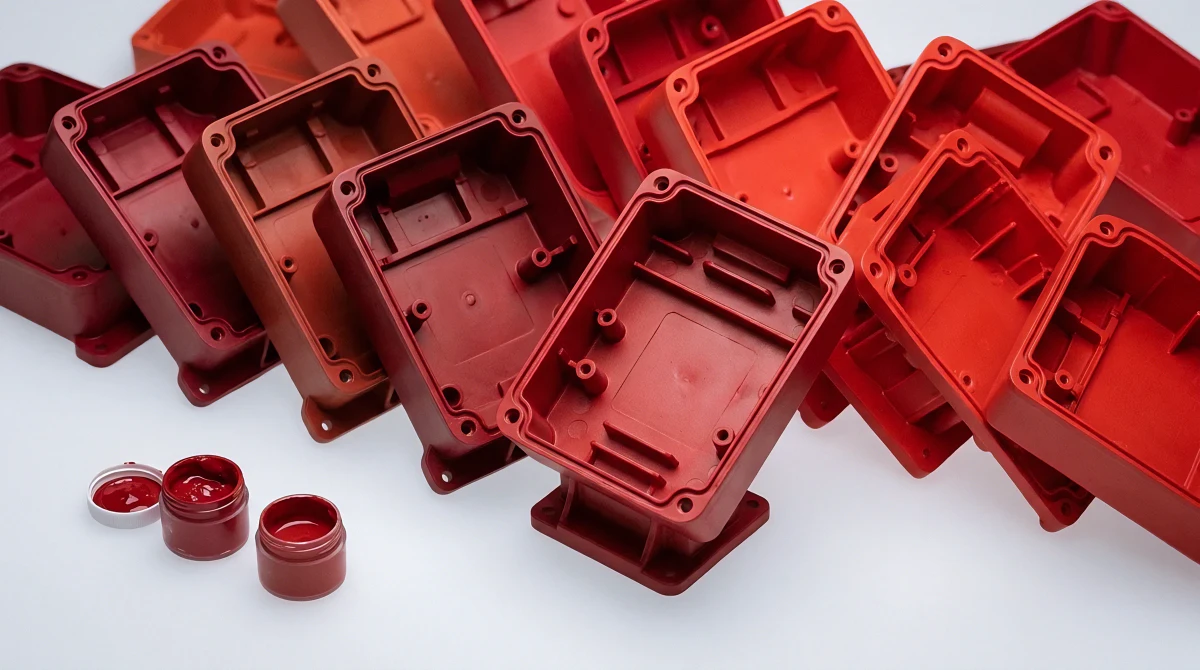
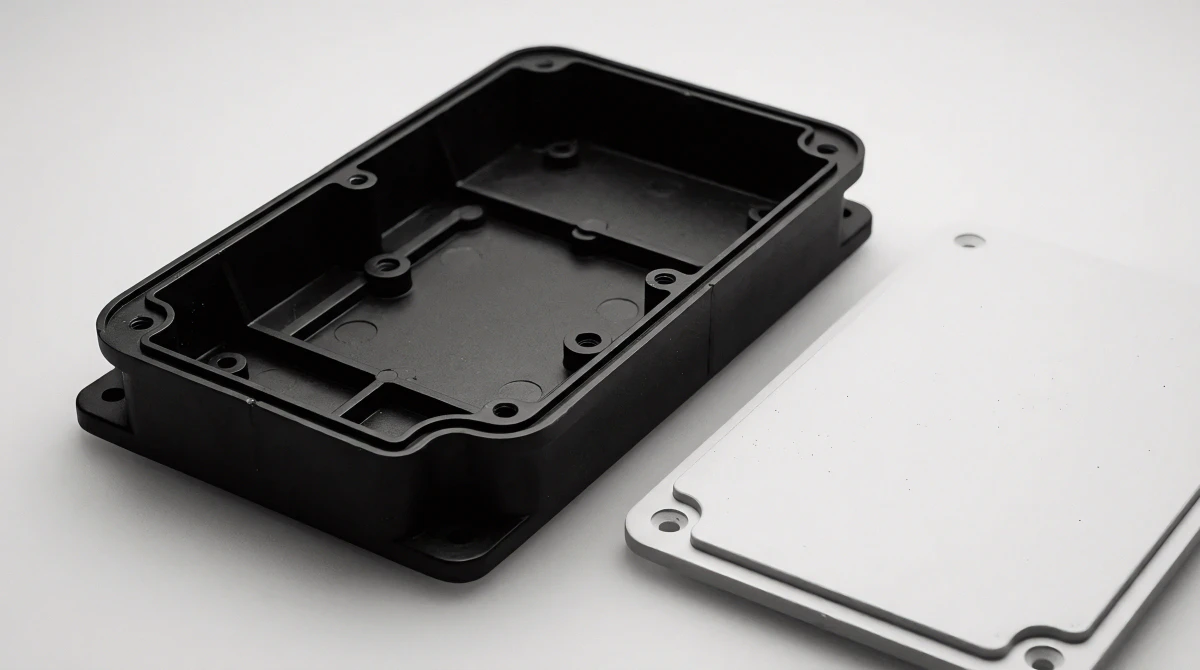
Color is the shade a cast part has to match, set by the pigment in each pour and held from tool to tool.

Every Color article of the Vacuum Casting Resources, newest first, each written from published standards, research and makers’ data.

Meaning

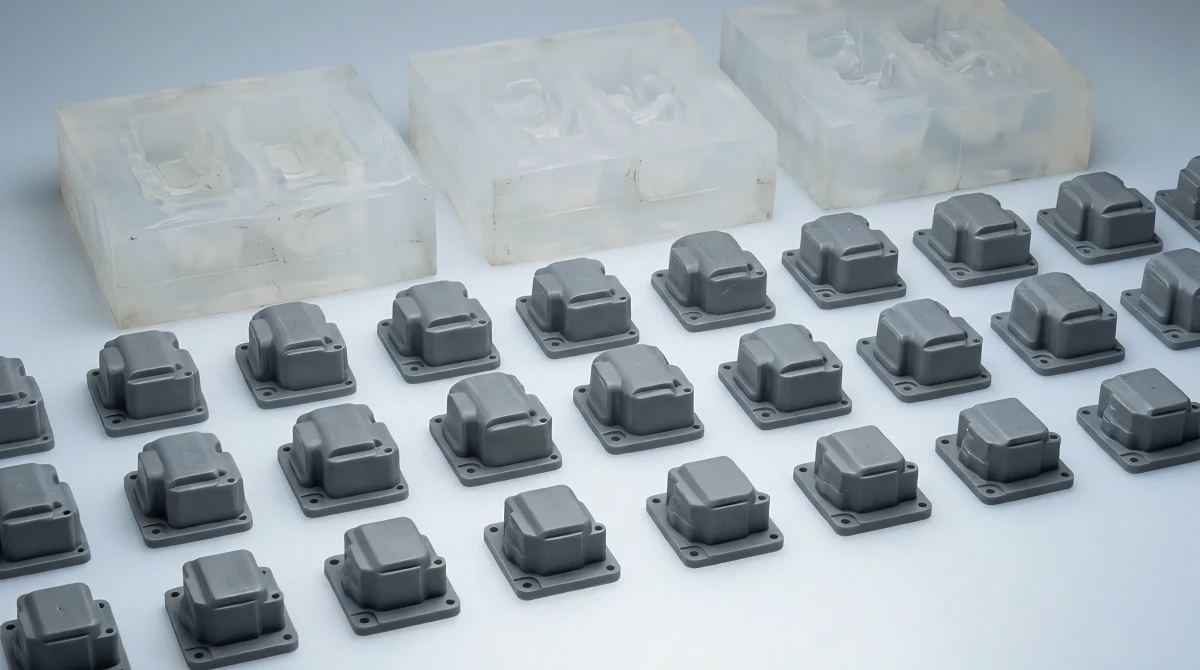
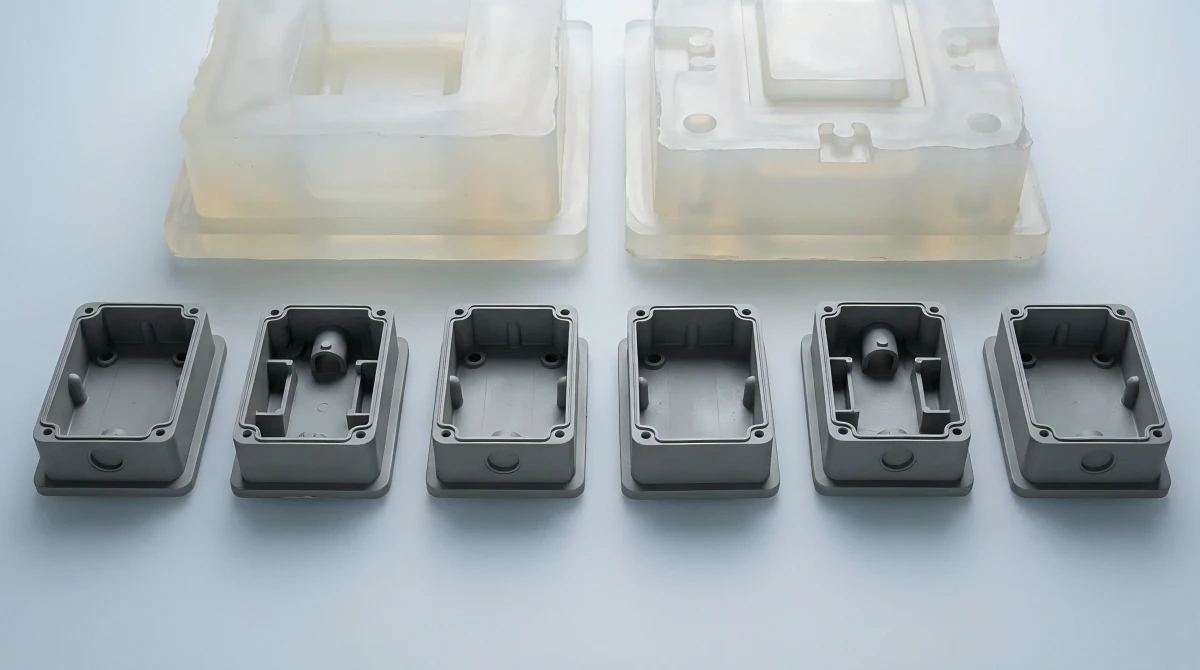
Color is the shade a cast part has to match, set by the pigment in each pour and held from tool to tool. Renishaw counts the typical output of a silicone mold as color-matched parts. The count of usable copies therefore includes looking alike, as well as coming out whole. Every color is a separate pour, and often a separate tool.

Batch Split by Color

A batch described as one quantity is rarely one color. A single color of 300 parts takes 10 tools at 30 copies each. The same 300 parts in 3 colors of 100 need 12, and in 7 colors they need 14. At 50 copies per mold most of the extra tools vanish. An uneven split still leaves a color a few parts over a multiple, as a four-color case of 100, 80, 70 and 50 parts shows.
Read More

Copies per Tool by Color

Changing color mid-batch means a new pour and a new pigment weighing. Renishaw’s yield of 30 to 50 per mold is a count of matching copies. An order in 3 colors behaves like 3 separate orders for tooling. A buyer asks for the copy count a supplier plans with, and the color it was taken on.

Flame Rating Condition

A flame rating belongs to a material at a thickness and a color. Pigment is one of the factors ASTM D635 says can shift burning behavior. The 2 flame-rated sheets on file do not state the color or pigment condition of their bars. A quote names the color condition, or says the sheet does not state it.

Color Check

A color check belongs on parts from each pour. It is made under the same light as the reference sample. A check under a different light from the reference is not a color check.

Production Color Match

Color matching restarts when a part moves to injection molding. The cast reference sample carries over as the target. The production resin is matched to it in its own right. Each grade and color in the plan is listed before the first mold is ordered.
Vacuum Casting Defects in a Batch Traced to Their Cause

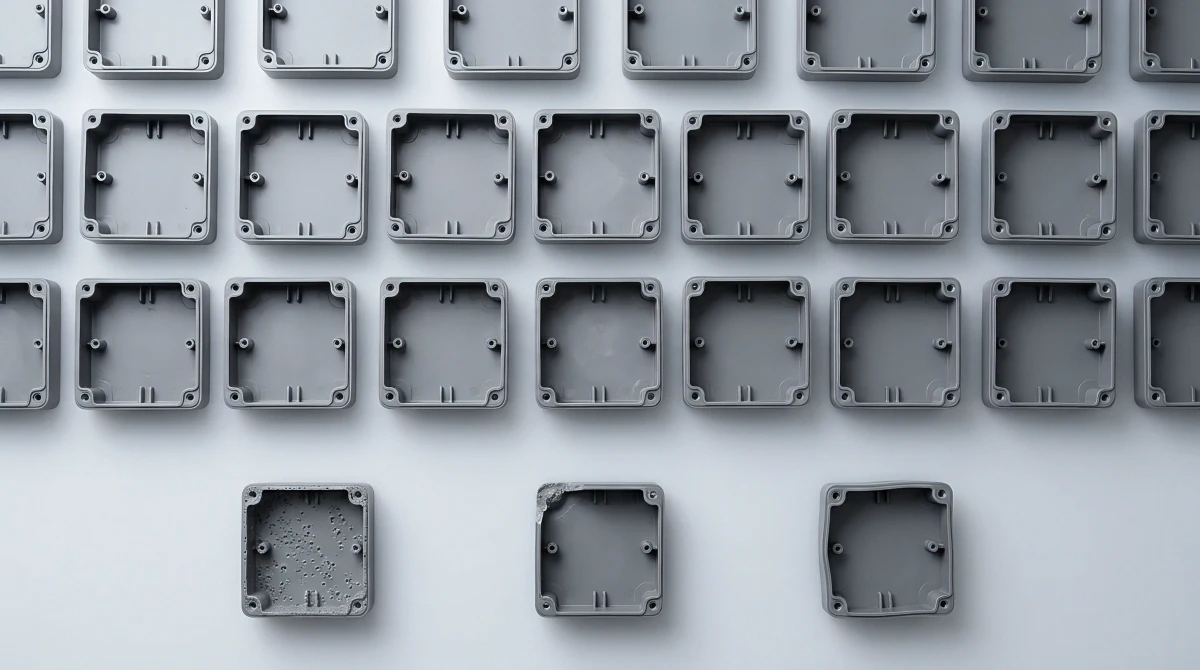
A vacuum casting defect points to its cause by where it sits on the part and which castings of the batch show it, from one wet pour to a mold near its end.

The List of Casting Defects and the Cause Behind EachVacuum casting defects trace to six causes: moisture in the components, air folded in during mixing and pouring, a mixing ratio upset by weighing or crystallization, a mold or master fault copied into every part, a cure or demold cut short, and a silicone mold wearing out over the run. The table pairs the defects named in the opened documents with those causes and with what a buyer or inspector sees.

Color Matching a Vacuum Cast Batch to a RAL or Pantone Reference

A vacuum cast color is fixed as a weighed recipe on an approved first article, measured with an agreed formula and tolerance, and repeated for every pour.

How a Vacuum Cast Batch Is Matched to a RAL or Pantone ColorA vacuum cast batch is matched to a reference by pigmenting each pour with a paste dosed within the resin maker's limit, casting a first part, measuring it against the reference under agreed conditions, adjusting the recipe, and then holding that recipe for every pour, with parts checked against the approved first article. Renishaw describes the casting system as producing typically 30 to 50 color-matched parts from a single mold, which is the batch size the recipe has to stay steady over.

Painting and Texturing Vacuum Cast Parts After Demold

A cast urethane part is painted only after its release agent is washed off and its surface keyed, with flexible coatings on parts that bend.

Painting Vacuum Cast Parts Step by StepA vacuum cast part is painted by removing the release agent, keying and degreasing the surface, applying an adhesion promoter where the substrate calls for one, priming, and then applying the color and clear coats, with flexible additives in every layer when the part bends. The car refinish makers write the sequence most completely, because they paint new plastic parts every day.

PP-Like and PE-Like Polyurethane Casting Resins for Vacuum Casting

PP-like and PE-like urethanes trade stiffness for elongation by grade, and their heat figures depend on cure, so the first cast part is tested in its real duty.

What PP-Like and PE-Like Mean on a Casting Resin Data SheetA PP-like or PE-like grade is a two- or three-component polyurethane formulated so that a part cast in a silicone mold behaves, in hand and in a snap fit, more like polypropylene or polyethylene than like a stiff ABS replica. The makers say so in their own words.

When a Vacuum Cast Run Should Move to an Injection Mold

Silicone molds carry a pilot, and a hard tool follows once the quantity, colors and repeat orders outgrow a handful of tools.

Where Silicone Tools Stop and the First Injection Mold StartsInjection molds are rated in classes by the construction they are built to and the cycles they are expected to give. The classification belongs to the plastics industry's trade body, PLASTICS, formerly the Society of the Plastics Industry, and its own text was not opened for this piece.

Silicone Molds, Pours and Lead Time for a Vacuum Cast Batch

A batch needs one silicone mold per set of copies, per resin and per color, and pours run one at a time through the chamber.

How Many Silicone Molds a Vacuum Cast Batch NeedsThe tool count is the quantity divided by the copies one tool gives, rounded up. Renishaw states that a mold can produce up to 50 parts before retooling and typically between 30 and 50 colour matched parts.

Send the Drawing of Your Cast Part

Send the 2D drawing and the 3D file, with the quantity and the stage of the project. An engineer replies within 1 working day.

The quote form, the mutual NDA and the private folder for your files are on Protolis Atelier, with Vacuum Casting chosen.

Request a Quote