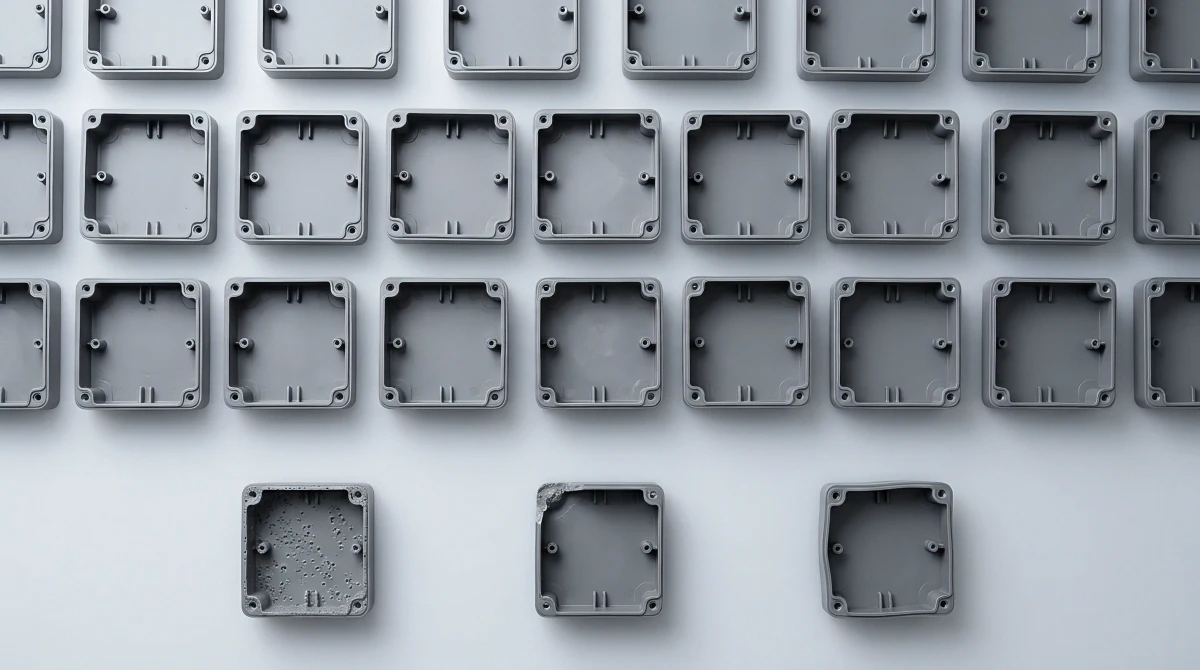
Parting Line

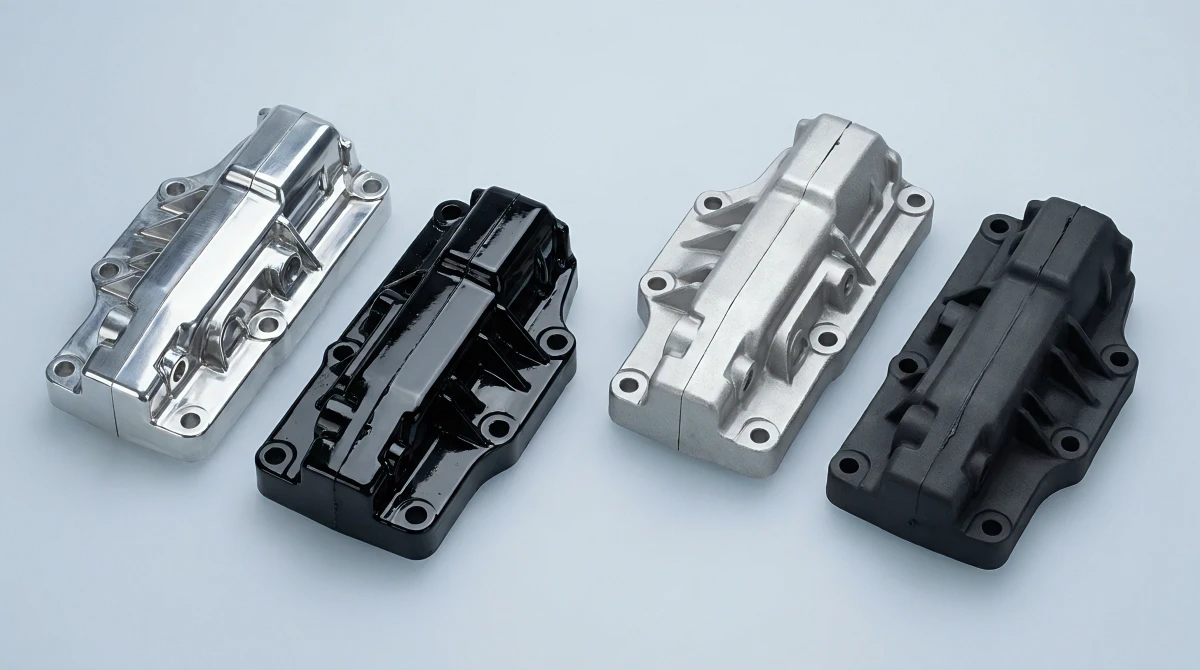
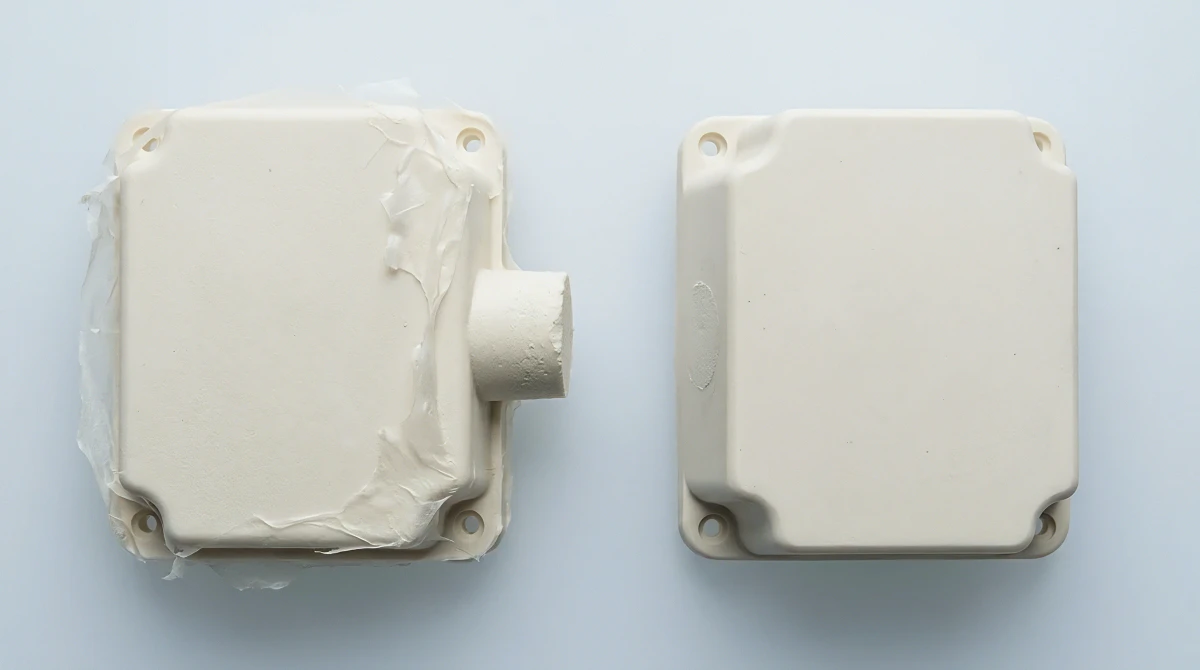
The parting line is the seam where a silicone tool was cut open to release its master, which every copy carries as a faint line.

Every Parting Line article of the Vacuum Casting Resources, newest first, each written from published standards, research and makers’ data.

Meaning

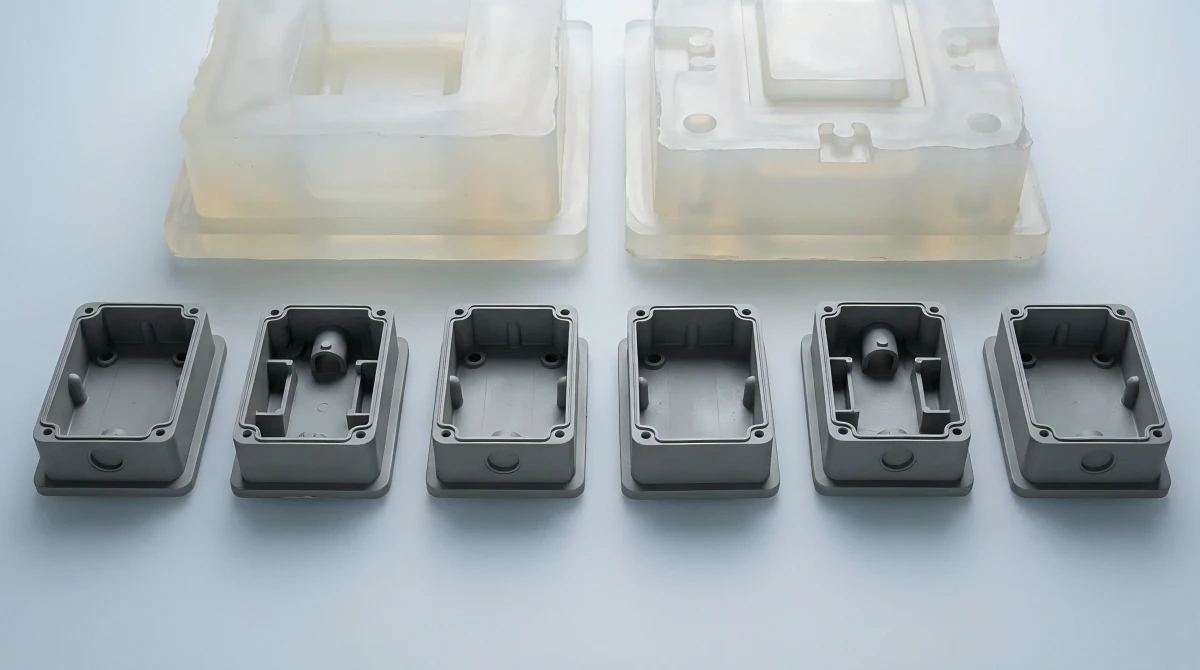
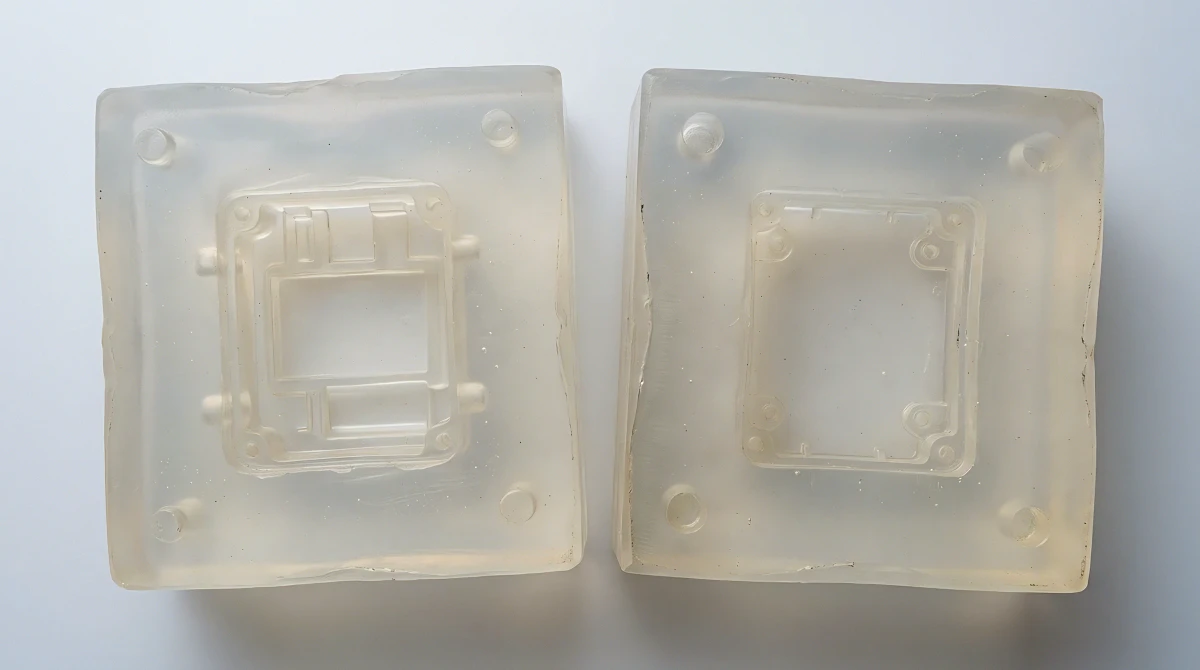
The parting line is the seam where a silicone tool was cut open to release its master, which every copy carries as a faint line. Renishaw describes the cured block being cut open to form a split line before the master is removed. Each extra segment of a complex tool adds another parting line. Where the line falls is decided when the master is prepared.

Line Formation

A 2004 dissertation builds a two-part mold on a clay bed. The master is set halfway into clay, and the first half is poured over it. Every trace of clay is then removed to keep the split clean. A wavelike edge on the clay bed makes the 2 halves fit together in one way only. Release agent coats the first half before the second pour.
Read More

Silicone Hardness Effect

The silicone in that 2004 dissertation was fairly soft on the Shore scale. The author tied it to seams on the castings that disturbed his dimensional averages. Silicones of higher hardness reached the market later. Softness helps release, and stiffness holds a crisp parting line.

Parting Line Faults

A part opened too early can show a distorted parting line. As a tool nears the end of its life, the parting line can be expected to show more flash. That expectation rests on reasoning about wear, since no published sequence exists. Growing flash at the seam is one sign that a tool is due for replacement. The first and last copies of a tool reveal it.

Extra Segments

For intricate shapes, Renishaw splits the tool into several segments. Every added split leaves one more seam. Each extra seam also adds alignment work.

Vacuum Casting Defects in a Batch Traced to Their Cause

A vacuum casting defect points to its cause by where it sits on the part and which castings of the batch show it, from one wet pour to a mold near its end.

The List of Casting Defects and the Cause Behind EachVacuum casting defects trace to six causes: moisture in the components, air folded in during mixing and pouring, a mixing ratio upset by weighing or crystallization, a mold or master fault copied into every part, a cure or demold cut short, and a silicone mold wearing out over the run. The table pairs the defects named in the opened documents with those causes and with what a buyer or inspector sees.
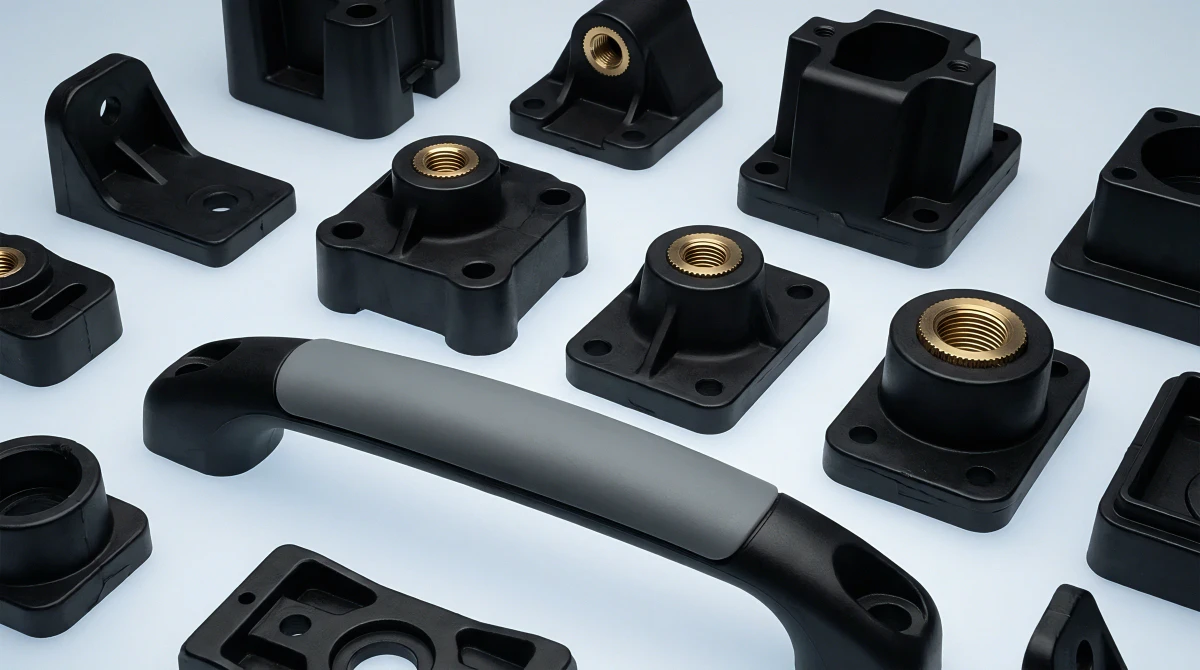
Overmolding and Inserts in Vacuum Casting Step by Step

Inserts in a cast part are held by knurls and undercuts, located on pins in the silicone, and surrounded by resin mixed and poured under vacuum.

The Vacuum Casting Steps for a Part With InsertsA vacuum cast part with molded-in inserts is made in eight steps: the insert is chosen and shaped for mechanical retention, the master is prepared so the mold can locate it, the insert's surface is prepared, it is placed in the opened silicone mold, the mold is closed and preheated, the resin is degassed and mixed under vacuum, the mold is filled and vented, and the part is cured and demolded around the insert. An overmolded part adds a second mold and a second pour.

Making the Master Pattern for Vacuum Casting From SLA or CNC

The master is finished, sealed and fitted with its parting line, gate and risers before the silicone is poured, because the mold copies every mark into the batch.

What the Master Pattern Has to Deliver Before the Silicone Is PouredA master pattern for vacuum casting is the physical original from which the silicone mold is cast, and the mold reproduces it so faithfully that every cast part inherits its shape, its surface and its faults. Loughborough University's vacuum casting guide puts it plainly: the mold replicates the master extremely faithfully, so the master's surface finish and accuracy are what the moldings will have.

Surface Finish of Vacuum Cast Parts and How the Master Sets It

A vacuum cast part copies its master's roughness and comes out slightly smoother, so the finish is specified and measured on the master before the mold is poured.

How Closely a Vacuum Cast Surface Follows Its MasterA vacuum cast part's surface roughness is set by its master within about a tenth of the master's value, in the two studies on file. In the 2020 study by Mustafa and co-authors, parts cast from FDM, SLA and multi jet fusion (MJF) masters all came out smoother than the master, by 1.84 %, 9.62 % and 6.09 % respectively.

Demolding and Post-Curing Vacuum Cast Parts

Each grade prints its own demold time and its own post-cure, and thin or long parts are supported in the oven while it runs.

Demolding Vacuum Cast Parts at 70 °CDemolding means opening the silicone tool and taking the copy out once the resin has gelled and hardened far enough to hold its form. In every sheet on file the tool stays at 70 °C (158 °F) in the oven for that time.

Silicone Rubber for Vacuum Casting Molds

Mold silicone is an addition-cure rubber chosen for hardness and resin resistance, checked against every material it touches, and treated as a consumable.

Silicone Rubber as the Mold Material in Vacuum CastingA mold silicone is a two-component liquid rubber that is poured round a master, cured at room temperature or a little above, and cut open to release the master. Renishaw describes Vacusil 2000 as a two-component addition-cure liquid silicone rubber designed for mold making, curing at room temperature to a translucent, high-strength elastic rubber, and names vacuum casting of polyurethane resins among its uses.

Send the Drawing of Your Cast Part

Send the 2D drawing and the 3D file, with the quantity and the stage of the project. An engineer replies within 1 working day.

The quote form, the mutual NDA and the private folder for your files are on Protolis Atelier, with Vacuum Casting chosen.

Request a Quote