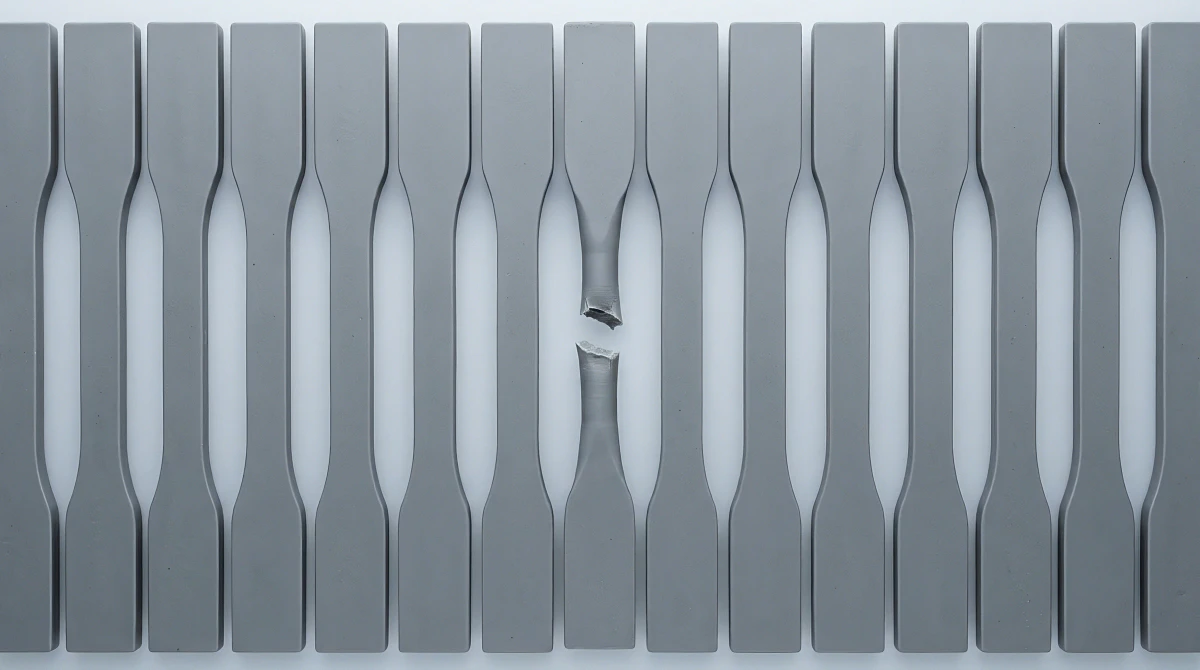
Tensile Strength

Tensile strength is the highest stress a test specimen carries when pulled apart, read from a tensile test such as ISO 527.

Every Tensile Strength article of the Vacuum Casting Resources, newest first, each written from published standards, research and makers’ data.

Meaning

Tensile strength is the highest stress a test specimen carries when pulled apart, read from a tensile test such as ISO 527. Casting resin sheets print it beside flexural strength and elongation at break. It ranks grades by how much pull they take before breaking. Like every sheet value, it belongs to one specimen under one cure.

Strength by Grade

The ABS-like grades give 55 MPa (8.0 ksi) for PX331 and 60 MPa (8.7 ksi) for PX 223 HT. Renishaw 6230 gives 67 MPa (9.7 ksi) and 8263 gives 68 N/mm² (9.9 ksi). Clear PX522 reaches 66 MPa (9.6 ksi) and PX523 68 MPa (9.9 ksi). PX205 gives 25 MPa (3.6 ksi). The rubber-like 8020-2 gives 8 N/mm² (1.16 ksi).
Read More

Method Basis

ISO 527-1 lays down how tensile properties are measured. Different materials get different specimen shapes under it. Each tensile value only means something beside its method. Comparing a molded resin’s tensile figure with a cast grade’s means comparing 2 sets of conditions unless both name the same method.

Post-Cure Basis

Sika’s tensile values follow the post-cure in the sheet’s footnote. A copy shipped at demold sits below that value. Renishaw tests its grades as demolded.

Silicone Pull Limit

Mold silicones print tensile strength too, as a limit of a single pull. Vacusil 2000 gives 4.5 MPa (653 psi), with an elongation of 380 %. The rubber is stretched at each opening of the tool, and no sheet prints a fatigue figure.

Interpretation Limits

A tensile figure from a bar does not say how a snap hook will flex or how a part ages. It is read with elongation and flexural figures and confirmed on a sample part.

ISO 527 Tensile Values on Polyurethane Casting Resin Data Sheets

A tensile value on a casting resin sheet belongs to standard bars after one stated cure, so a requirement on parts is set on bars cast and cured with the batch.

What ISO 527 Covers on a Casting Resin Data SheetISO 527 is the international method for tensile properties of plastics, and casting resins fall inside it. The scope of ISO 527-1, as published by the Estonian standards body, sets out the general principles for determining tensile strength, tensile modulus and other aspects of the stress and strain relationship under defined conditions.
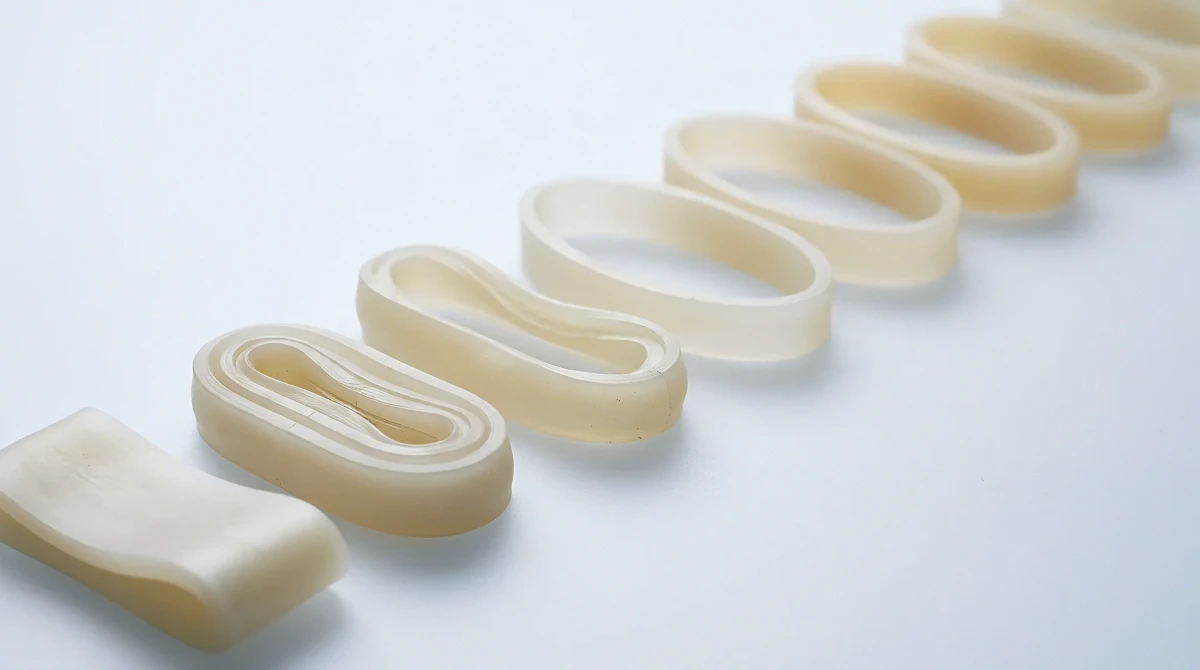
Rubber-Like Polyurethane Resins From Shore 30 A to 90 A

A rubber-like urethane is specified by grade, hardness method and a tested service temperature, because hardness alone leaves strength and heat behavior open.

Rubber-Like Vacuum Casting Grades and the Hardness Each CoversRubber-like vacuum casting resins are two- or three-component polyurethanes that cure in a silicone mold to an elastomer, with a Shore A hardness chosen for the part. The variable-hardness systems reach the range by adding a third component to a fixed A:B pair.

PP-Like and PE-Like Polyurethane Casting Resins for Vacuum Casting

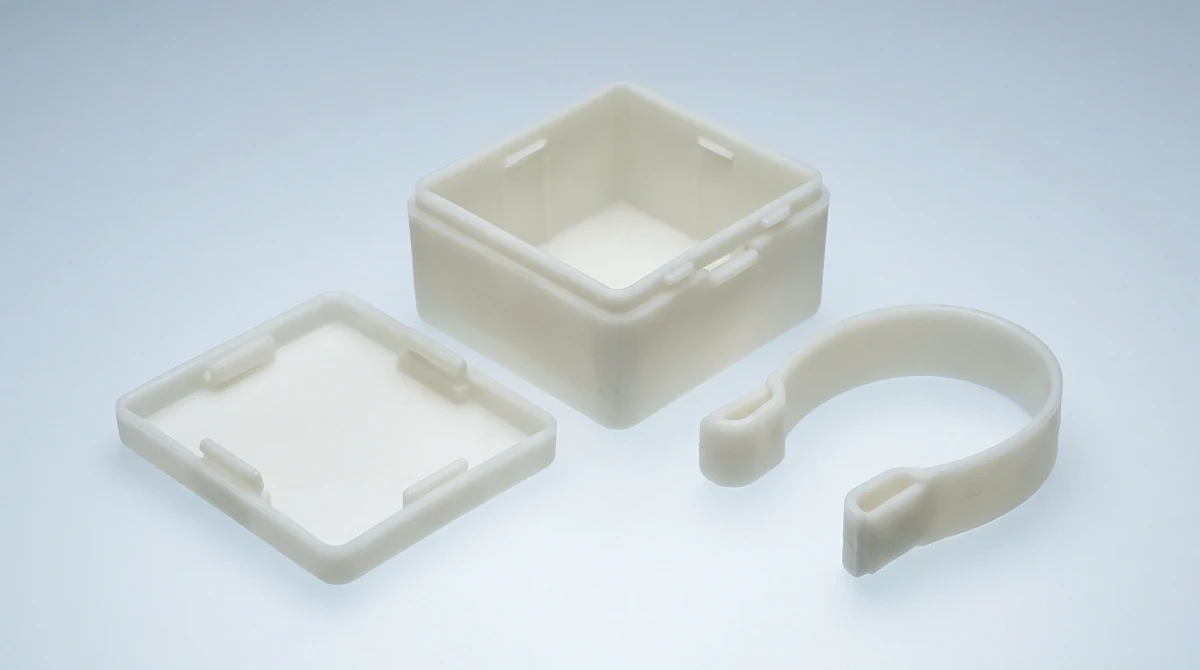
PP-like and PE-like urethanes trade stiffness for elongation by grade, and their heat figures depend on cure, so the first cast part is tested in its real duty.

What PP-Like and PE-Like Mean on a Casting Resin Data SheetA PP-like or PE-like grade is a two- or three-component polyurethane formulated so that a part cast in a silicone mold behaves, in hand and in a snap fit, more like polypropylene or polyethylene than like a stiff ABS replica. The makers say so in their own words.

When a Vacuum Cast Run Should Move to an Injection Mold

Silicone molds carry a pilot, and a hard tool follows once the quantity, colors and repeat orders outgrow a handful of tools.

Where Silicone Tools Stop and the First Injection Mold StartsInjection molds are rated in classes by the construction they are built to and the cycles they are expected to give. The classification belongs to the plastics industry's trade body, PLASTICS, formerly the Society of the Plastics Industry, and its own text was not opened for this piece.

Shore Hardness Standards for Cast Polyurethane Parts

Shore hardness is a control number tied to a scale, a temperature, a cure state and a reading time, and a drawing callout needs all four.

Hardness Standards Behind a Cast Polyurethane Shore ValueThree documents appear most often around cast polyurethane. ISO 868 is the plastics method named on the resin sheets, ASTM D2240 is the American test method that reaches rubber and some plastics, and ISO 48-4 is the rubber method that covers softer grades.

Silicone Rubber for Vacuum Casting Molds

Mold silicone is an addition-cure rubber chosen for hardness and resin resistance, checked against every material it touches, and treated as a consumable.

Silicone Rubber as the Mold Material in Vacuum CastingA mold silicone is a two-component liquid rubber that is poured round a master, cured at room temperature or a little above, and cut open to release the master. Renishaw describes Vacusil 2000 as a two-component addition-cure liquid silicone rubber designed for mold making, curing at room temperature to a translucent, high-strength elastic rubber, and names vacuum casting of polyurethane resins among its uses.

Send the Drawing of Your Cast Part

Send the 2D drawing and the 3D file, with the quantity and the stage of the project. An engineer replies within 1 working day.

The quote form, the mutual NDA and the private folder for your files are on Protolis Atelier, with Vacuum Casting chosen.

Request a Quote