Undercut

An undercut is a part feature, such as a lip or a recess, that would lock the part in a rigid mold.

Every Undercut article of the Vacuum Casting Resources, newest first, each written from published standards, research and makers’ data.

Meaning

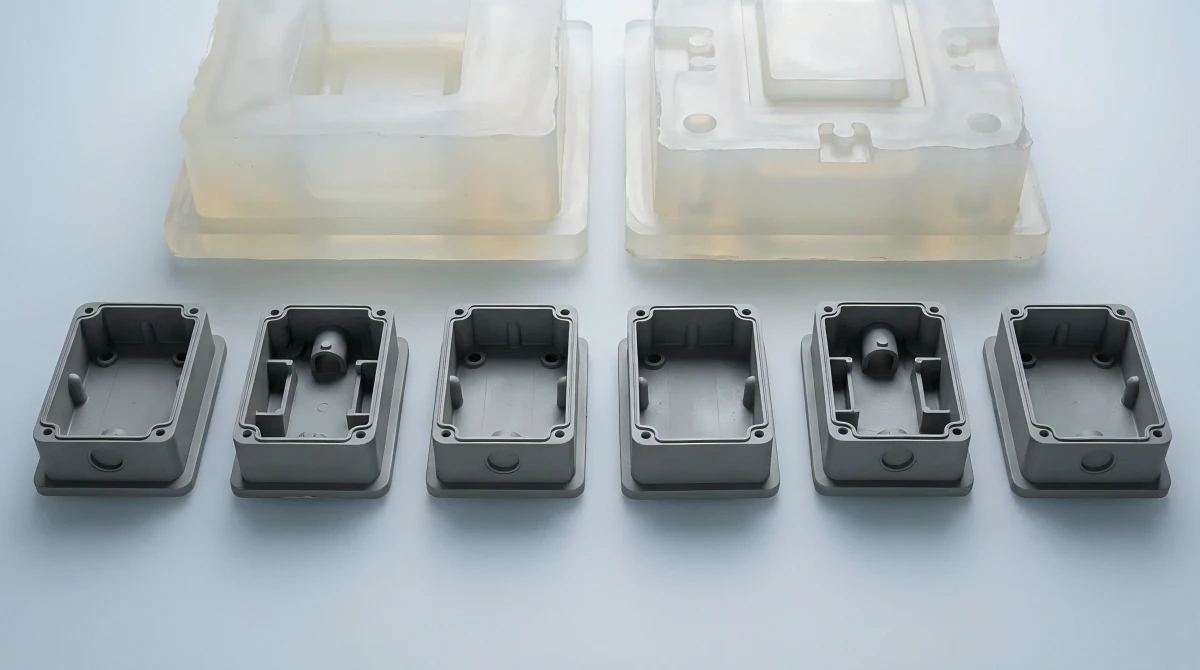
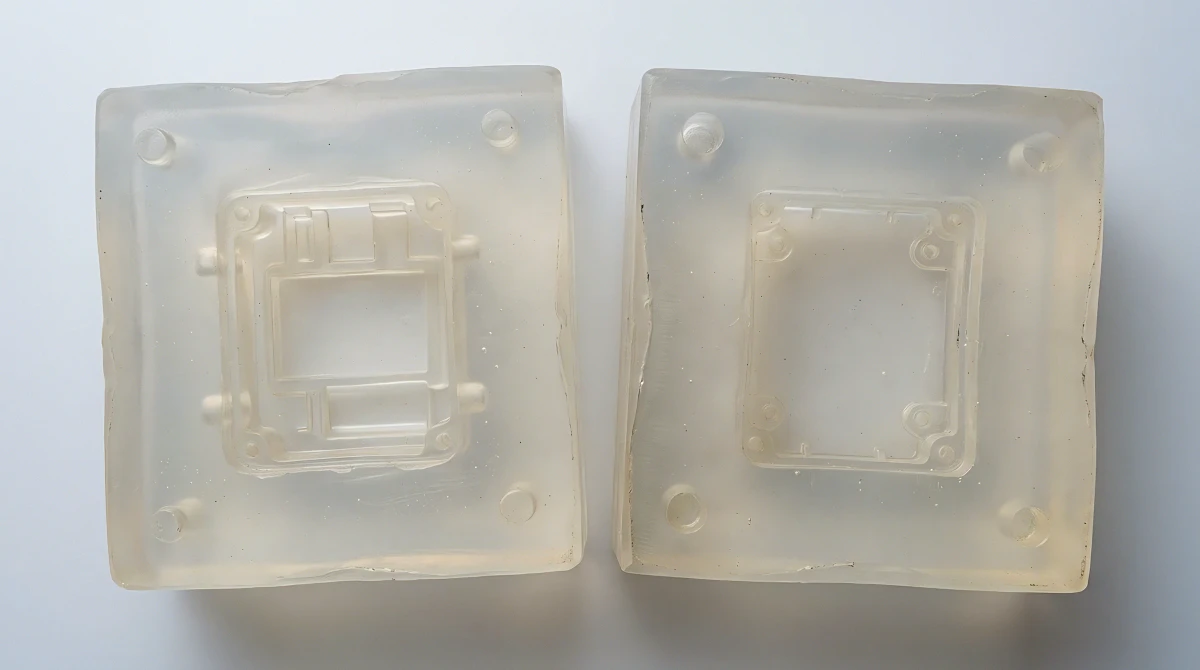
An undercut is a part feature, such as a lip or a recess, that would lock the part in a rigid mold. A silicone tool can release many undercuts because the rubber flexes. Each release stretches the rubber through the undercut. Undercuts are therefore both a strength of vacuum casting and a cause of tool wear.

Flex Release

Opening a silicone tool stretches the rubber around the part and, at every undercut, through it. Lower-hardness rubber yields more readily over an undercut. Wacker lists deeply undercut models as a use for its 28 Shore A silicone. A mold softer than the part it holds suits that job, as with a 37 A mold around a 60 A part.
Read More

Undercut Wear

A rough case shows the strain involved. A lip of silicone passing a 2 mm (0.08 in) undercut on a 10 mm (0.39 in) bridge is strained about 20 %. That is far below Vacusil 2000’s 380 % elongation at break. The single pull is not the limit, and repeated stretching is what wears the tool. Undercuts and deep ribs therefore shorten a tool’s copy count.

Trapped Air Risk

The silicone is degassed a second time after it is poured round the master. This frees air caught beneath the master or in its undercuts. A void left there sits against the master’s surface and repeats on every copy.

Multi-Segment Tooling

Where 2 halves cannot release a part, Renishaw uses multi-segment molds. Each extra segment adds a parting line and a seam on the copy. A deep undercut, a thin rib or a resin that attacks the silicone each shorten the count. No sheet gives a formula for how much.

Overmolding and Inserts in Vacuum Casting Step by Step

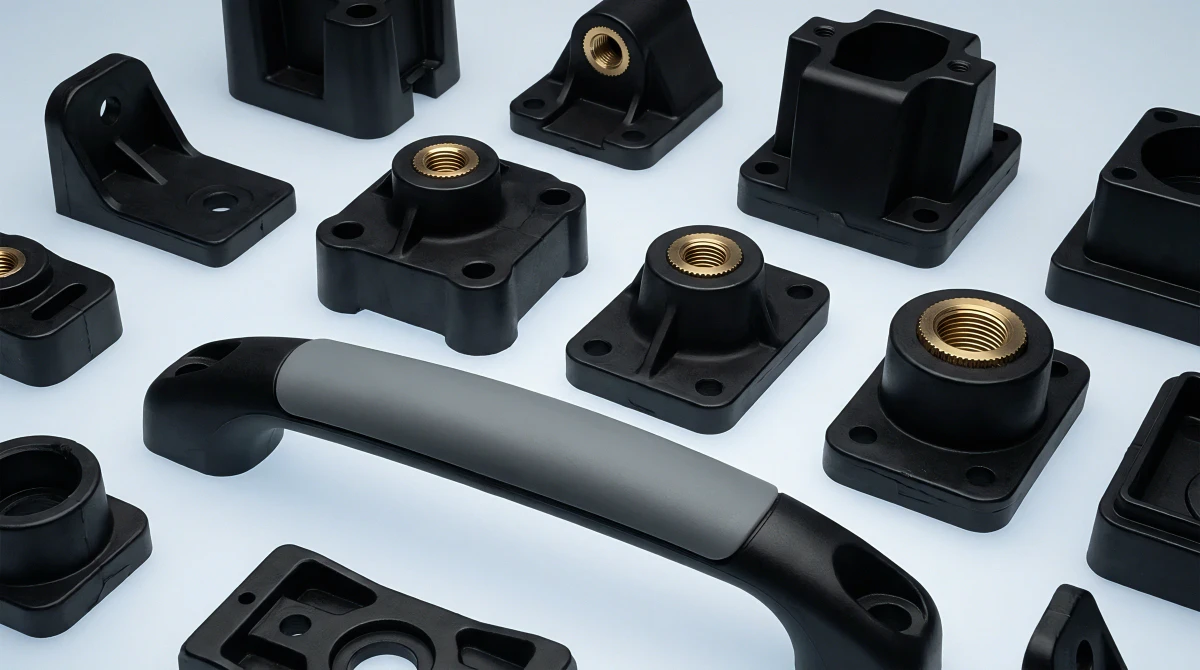
Inserts in a cast part are held by knurls and undercuts, located on pins in the silicone, and surrounded by resin mixed and poured under vacuum.

The Vacuum Casting Steps for a Part With InsertsA vacuum cast part with molded-in inserts is made in eight steps: the insert is chosen and shaped for mechanical retention, the master is prepared so the mold can locate it, the insert's surface is prepared, it is placed in the opened silicone mold, the mold is closed and preheated, the resin is degassed and mixed under vacuum, the mold is filled and vented, and the part is cured and demolded around the insert. An overmolded part adds a second mold and a second pour.
Making the Master Pattern for Vacuum Casting From SLA or CNC

The master is finished, sealed and fitted with its parting line, gate and risers before the silicone is poured, because the mold copies every mark into the batch.

What the Master Pattern Has to Deliver Before the Silicone Is PouredA master pattern for vacuum casting is the physical original from which the silicone mold is cast, and the mold reproduces it so faithfully that every cast part inherits its shape, its surface and its faults. Loughborough University's vacuum casting guide puts it plainly: the mold replicates the master extremely faithfully, so the master's surface finish and accuracy are what the moldings will have.

Rubber-Like Polyurethane Resins From Shore 30 A to 90 A

A rubber-like urethane is specified by grade, hardness method and a tested service temperature, because hardness alone leaves strength and heat behavior open.

Rubber-Like Vacuum Casting Grades and the Hardness Each CoversRubber-like vacuum casting resins are two- or three-component polyurethanes that cure in a silicone mold to an elastomer, with a Shore A hardness chosen for the part. The variable-hardness systems reach the range by adding a third component to a fixed A:B pair.

Shore Hardness Standards for Cast Polyurethane Parts

Shore hardness is a control number tied to a scale, a temperature, a cure state and a reading time, and a drawing callout needs all four.

Hardness Standards Behind a Cast Polyurethane Shore ValueThree documents appear most often around cast polyurethane. ISO 868 is the plastics method named on the resin sheets, ASTM D2240 is the American test method that reaches rubber and some plastics, and ISO 48-4 is the rubber method that covers softer grades.

Silicone Rubber for Vacuum Casting Molds

Mold silicone is an addition-cure rubber chosen for hardness and resin resistance, checked against every material it touches, and treated as a consumable.

Silicone Rubber as the Mold Material in Vacuum CastingA mold silicone is a two-component liquid rubber that is poured round a master, cured at room temperature or a little above, and cut open to release the master. Renishaw describes Vacusil 2000 as a two-component addition-cure liquid silicone rubber designed for mold making, curing at room temperature to a translucent, high-strength elastic rubber, and names vacuum casting of polyurethane resins among its uses.

Send the Drawing of Your Cast Part

Send the 2D drawing and the 3D file, with the quantity and the stage of the project. An engineer replies within 1 working day.

The quote form, the mutual NDA and the private folder for your files are on Protolis Atelier, with Vacuum Casting chosen.

Request a Quote