Standard Atmospheres for Conditioning

Standard atmospheres for conditioning are the fixed temperature and humidity conditions ISO 291 sets for conditioning and testing plastics.

Every Standard Atmospheres for Conditioning article of the Vacuum Casting Resources, newest first, each written from published standards, research and makers’ data.

Meaning

Standard atmospheres for conditioning are the fixed temperature and humidity conditions ISO 291 sets for conditioning and testing plastics. Its scope spans every plastic and specimen type, held at constant conditions. A part conditioned to one of them is in a known state before it is measured. Readings then compare across tools, batches and labs.

Need for Cast Parts

A cast part goes from a 100 °C (212 °F) oven to the bench in a state that keeps changing. A reading taken then differs from one taken after the part rests in a conditioned room. An order can demand conditioning in a named atmosphere before parts are inspected. Atmosphere and rest time come first, the tolerance after.
Read More

Use With ISO 20457

ISO 20457, the tolerance standard for plastic molded parts, does not name vacuum casting. A buyer who applies its classes to cast parts writes them into the order. The conditioning atmosphere goes in beside them, so readings agree across tools and deliveries.

Molding Transition

Conditioning before measurement carries into injection molding as well. First molded parts measured warm from the machine and parts rested in a conditioned room are different parts for a tolerance. The atmosphere is therefore named again for the first molded articles. Who approves them, against which dimensions and after which conditioning are settled before the mold is ordered.

Linked Standards

ISO 1 fixes the standard reference temperature for specifying dimensional properties. Together with ISO 291, it gives the convention a buyer asks a sheet to state. When a sheet omits the measuring temperature of its bar, its figure carries a small doubt.
When a Vacuum Cast Run Should Move to an Injection Mold

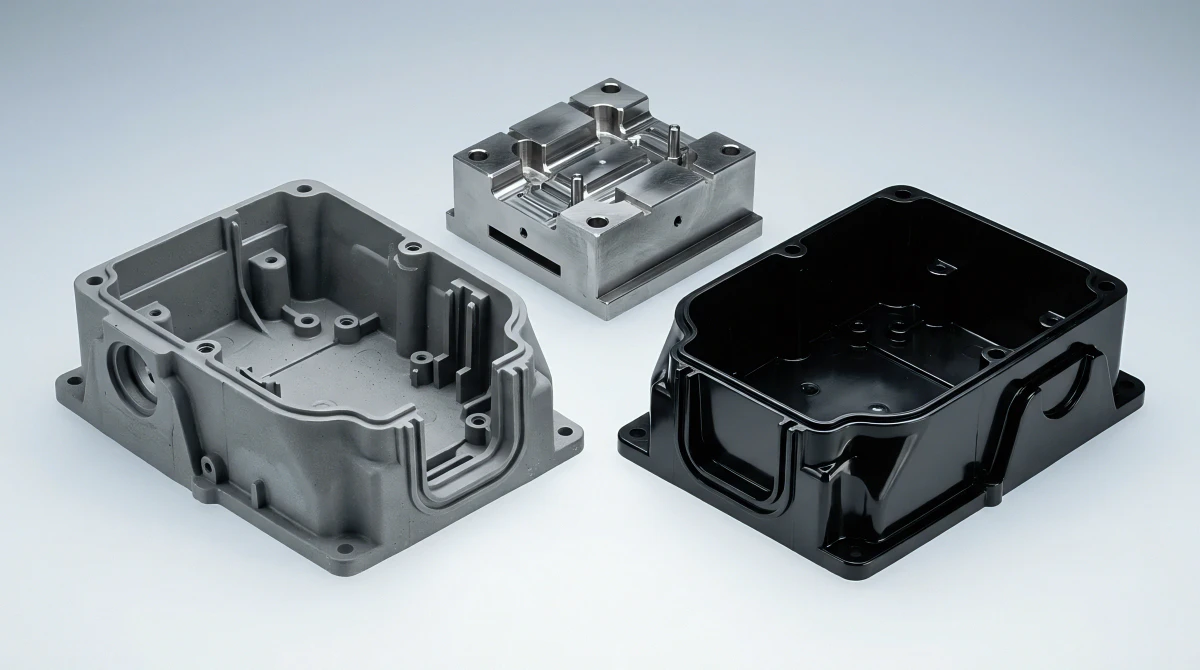
Silicone molds carry a pilot, and a hard tool follows once the quantity, colors and repeat orders outgrow a handful of tools.

Where Silicone Tools Stop and the First Injection Mold StartsInjection molds are rated in classes by the construction they are built to and the cycles they are expected to give. The classification belongs to the plastics industry's trade body, PLASTICS, formerly the Society of the Plastics Industry, and its own text was not opened for this piece.

Silicone Molds, Pours and Lead Time for a Vacuum Cast Batch

A batch needs one silicone mold per set of copies, per resin and per color, and pours run one at a time through the chamber.

How Many Silicone Molds a Vacuum Cast Batch NeedsThe tool count is the quantity divided by the copies one tool gives, rounded up. Renishaw states that a mold can produce up to 50 parts before retooling and typically between 30 and 50 colour matched parts.

Demolding and Post-Curing Vacuum Cast Parts

Each grade prints its own demold time and its own post-cure, and thin or long parts are supported in the oven while it runs.

Demolding Vacuum Cast Parts at 70 °CDemolding means opening the silicone tool and taking the copy out once the resin has gelled and hardened far enough to hold its form. In every sheet on file the tool stays at 70 °C (158 °F) in the oven for that time.

Send the Drawing of Your Cast Part

Send the 2D drawing and the 3D file, with the quantity and the stage of the project. An engineer replies within 1 working day.

The quote form, the mutual NDA and the private folder for your files are on Protolis Atelier, with Vacuum Casting chosen.

Request a Quote