ISO 179

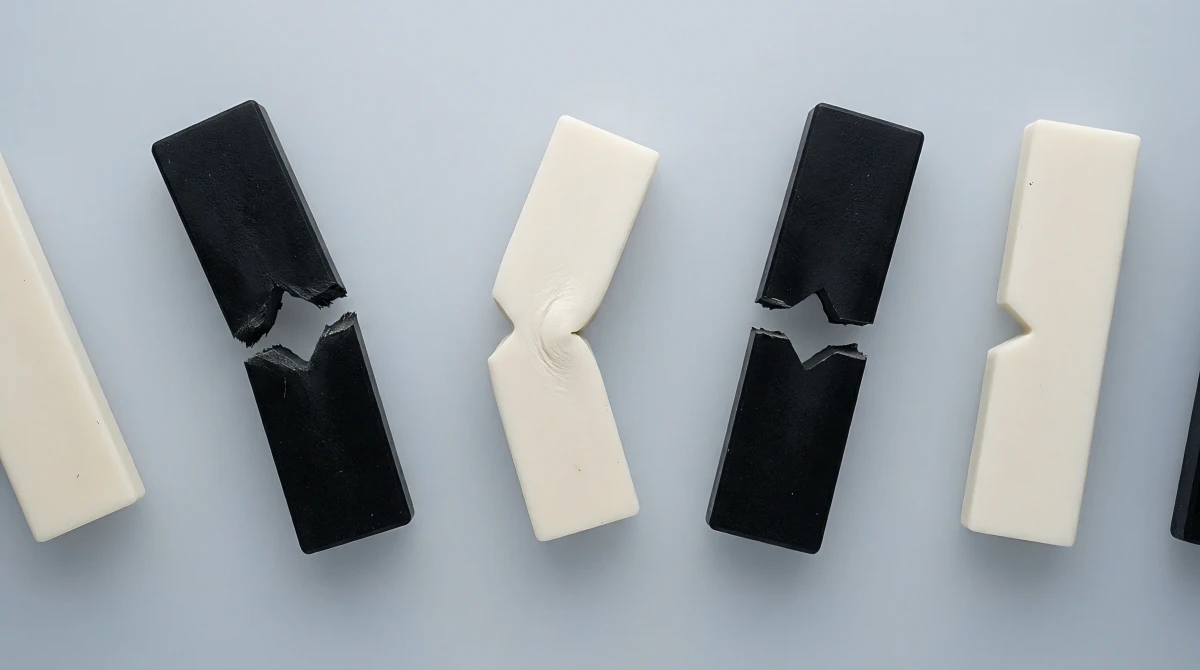
ISO 179 is the international standard for the Charpy impact test of plastics, in which a bar resting on two supports is struck in the middle by a pendulum and the absorbed energy is reported in kJ/m².

Every ISO 179 article of the Vacuum Casting Resources, newest first, each written from published standards, research and makers’ data.

Meaning

ISO 179 is the international standard for the Charpy impact test of plastics, in which a bar resting on two supports is struck in the middle by a pendulum and the absorbed energy is reported in kJ/m². Part 1 covers the conventional, non-instrumented test; part 2 records a force-deflection diagram with instrumented equipment. ZwickRoell notes that ISO 10350-1 prefers ISO 179-1, ideally on unnotched bars struck edgewise, for single-point material data.

Values on Casting Resin Sheets

Sika’s German sheets print ISO 179 impact for its vacuum casting resins: 26 kJ/m² (12.4 ft·lb/in²) for PX331, 48 kJ/m² (22.8 ft·lb/in²) for PX522 and 42 kJ/m² (20.0 ft·lb/in²) for PX523, each after a stated post-cure. The elastomeric UR390 prints “no break”, and PX 223 HT prints more than 60 kJ/m² (more than 29 ft·lb/in²) with a footnote that the bars did not break.
Read More

Standard Limits

The ISO 179-2 scope states that results compare only when specimen preparation and test conditions are the same, and that the impact behavior of finished products cannot be predicted directly from the test. A “no break” result is a limit set by the hammer used, not a ranking.

Low Temperature Testing

ZwickRoell points out that Charpy suits low temperature testing better than Izod, because the supports sit further from the notch and a cooled bar loses less cold between the cooling device and the tester.

Drawing Requirement

A drawing or order that calls for ISO 179 names part 1 or 2, notched or unnotched bars, the cure of the bars, and whether they are cast with the batch or machined from a cast plate.
ISO 179 and ISO 180 Impact Strength on Cast Resin Data Sheets

Impact values on cast resin sheets are comparisons tied to method, notch, specimen and cure, so a part's toughness is set by tests on batch bars or the part.

What ISO 179 and ISO 180 Measure on a Cast ResinBoth standards measure how much energy a pendulum hammer loses breaking a small bar of plastic at a high strain rate. ZwickRoell, a maker of the testing machines, describes the principle in its pages on both methods: a hammer of specified energy and drop height strikes the specimen, does not swing back to its starting height, and the height difference is taken as the energy absorbed.

Clear Polyurethane Casting Resin for Vacuum Casting

A clear polyurethane grade is chosen by section thickness first, and its post-cure has a printed ceiling that protects the color of the part.

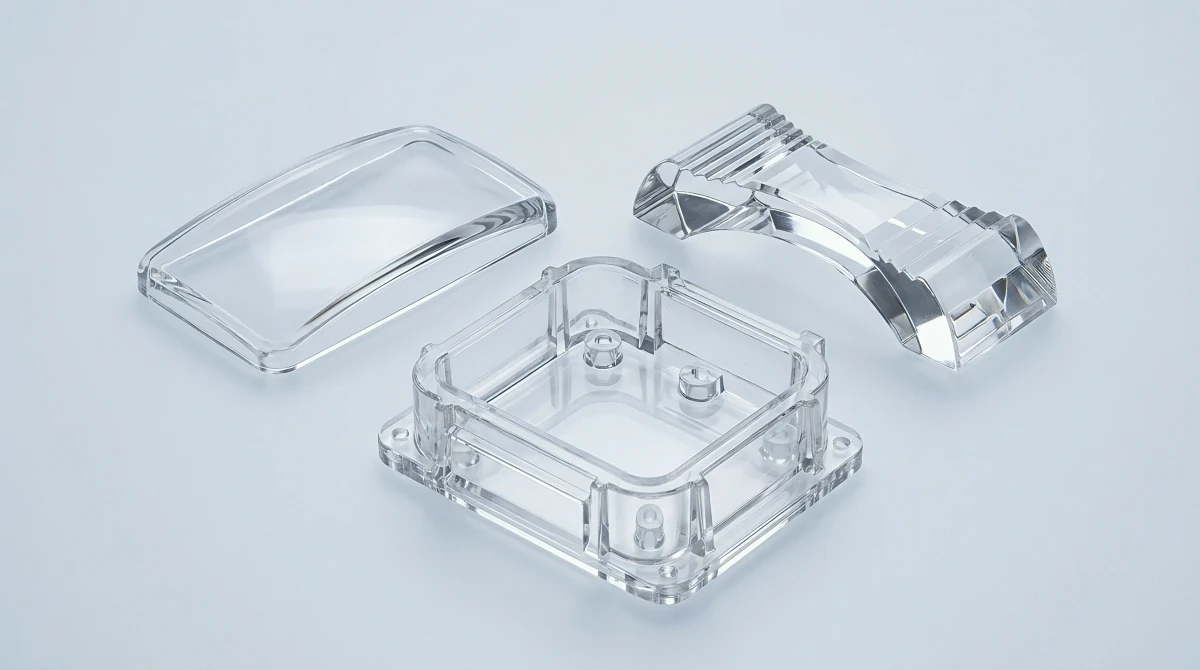
How Clear a Casting Resin Is in Datasheet NumbersOn a datasheet, clear is a claim with two numbers behind it at most. PX522 is described as water clear, with a coefficient of light transmission of 89 percent measured by the laboratory LNE, and PX523 prints a refractive index of 1.511.

ABS-Like Polyurethane Casting Resins for Vacuum Casting

An ABS-like polyurethane resin is a stiff thermoset named for its use, and its datasheet numbers depend on post-cure, thickness and test method.

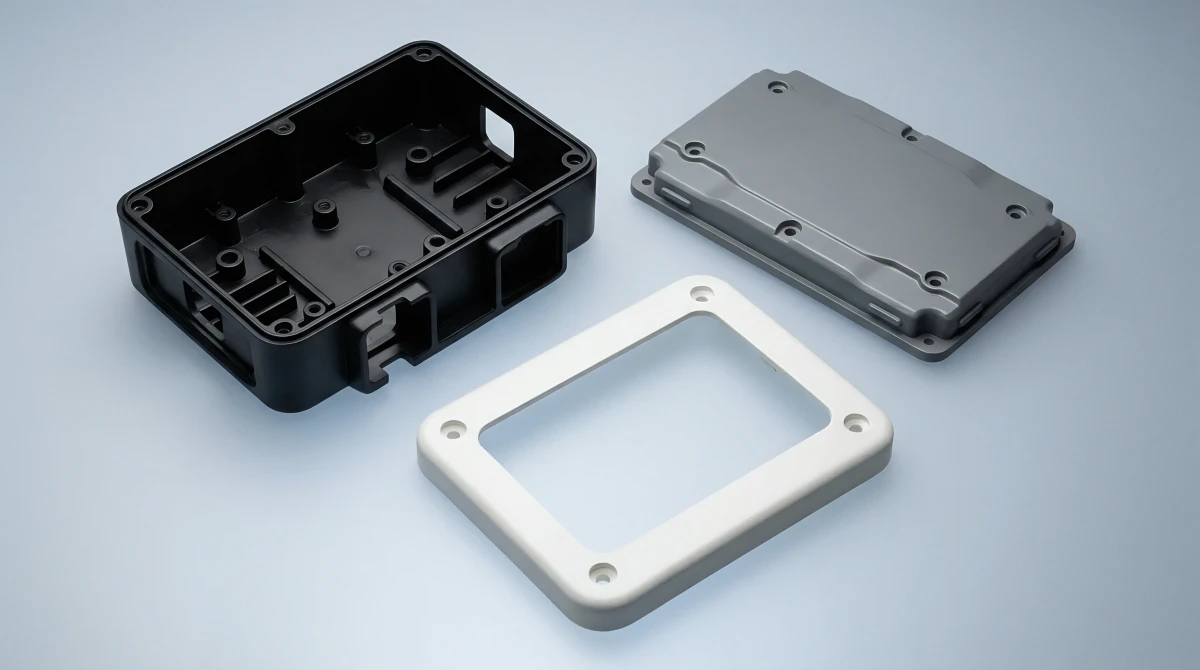
Why a Polyurethane Resin Is Called ABS-LikeThe phrase is a maker's shorthand, not a standard. Sika describes its SikaBiresin PX331 as having mechanical properties similar to thermoplastics like filled ABS, and Renishaw lists its 6230 as having properties similar to ABS.

Send the Drawing of Your Cast Part

Send the 2D drawing and the 3D file, with the quantity and the stage of the project. An engineer replies within 1 working day.

The quote form, the mutual NDA and the private folder for your files are on Protolis Atelier, with Vacuum Casting chosen.

Request a Quote